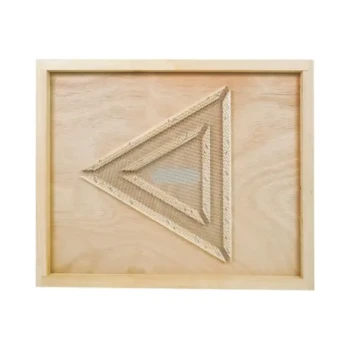
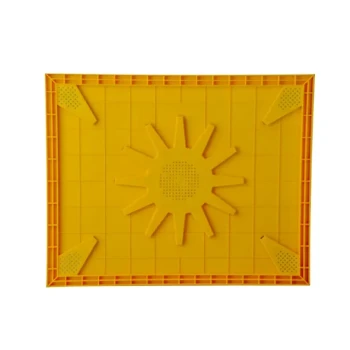
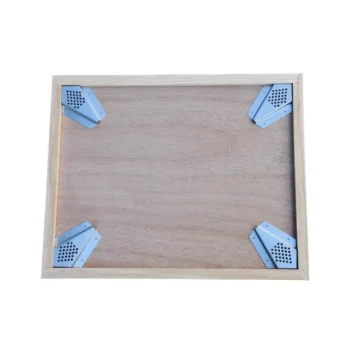
A screened beehive bottom board functions as the structural floor of the hive, distinguishing itself from traditional solid boards by utilizing a wire mesh grid. Its primary purpose is to regulate the colony's internal environment through enhanced ventilation and temperature control, while simultaneously serving as a mechanical aid in pest management strategies.
Core Takeaway While it bears the weight of the hive like a standard floor, the screened bottom board is effectively a passive climate control and sanitation system. It prevents the buildup of lethal moisture and heat while allowing parasitic mites to fall out of the colony, preventing them from re-attaching to your bees.
Regulating the Internal Environment
Enhancing Hive Ventilation
The most immediate function of the screened board is to facilitate superior airflow. In hot climates or during the peak of summer, hives located in full sun are susceptible to dangerous heat buildup.
The open mesh allows air to circulate from the bottom up, working with the bees' natural fanning behavior to keep the brood nest cool.
Controlling Moisture and Condensation
Beyond heat, moisture is a critical threat to colony survival, particularly in winter. Bees exhale moisture, which can condense on the inner cover and rain down on the cluster, freezing them.
A screened bottom board allows this excess moisture to drain out and escape the hive. By reducing internal humidity, you create a drier, healthier environment that significantly improves overwintering success rates.
Pest Management and Monitoring
Passive Varroa Mite Reduction
The screened board acts as a mechanical barrier against Varroa mites. When mites are groomed off bees or naturally fall, gravity pulls them through the mesh and out of the hive.
Unlike solid boards, where mites can crawl back onto a passing bee, the screen ensures that fallen mites are permanently removed from the colony.
Monitoring Infestation Levels
These boards are essential tools for data-driven beekeeping. They often function in tandem with a "sticky board" insert—a grid placed beneath the screen.
This allows you to count the number of mites falling over a specific period. This data helps you estimate the total infestation level and decide if chemical intervention is necessary.
Structural Defense
The mesh is typically a #8 size wire, which is specifically calibrated for apiary use. This size is large enough to let debris and mites fall through, but small enough to act as a physical wall against larger intruders.
It effectively prevents predators such as wasps, hornets, and mice from entering the hive from below.
Understanding the Trade-offs
Not a Standalone Cure
While effective, a screened bottom board is not a complete treatment for Varroa mite infestations. It is a mitigation tool that reduces the population growth rate but generally must be combined with other treatment methods for full control.
Managing Cold Drafts
The increased ventilation can be a liability during extreme cold or high winds. Most screened bottom boards include a removable wooden or plastic insert to convert the screen back into a solid floor. Failing to utilize this insert during harsh weather can stress the colony as they struggle to maintain cluster warmth.
Making the Right Choice for Your Goal
When configuring your hive, consider how the screened bottom board aligns with your specific environmental challenges:
- If your primary focus is reducing summer stress: Utilize the screened board without the insert to maximize airflow and prevent overheating in full sun.
- If your primary focus is pest monitoring: Use the board in conjunction with a sticky insert to perform regular mite counts and track the efficacy of your treatments.
- If your primary focus is winter survival: Ensure you have the capability to close the screen with an insert to block drafts while still allowing for necessary moisture drainage.
The screened bottom board is a versatile foundation that offers the beekeeper control over the hive's microclimate, turning a static structural component into an active management tool.
Summary Table:
| Function | Key Benefit | Mechanism |
|---|---|---|
| Climate Control | Prevents overheating & moisture buildup | Enhanced airflow through #8 wire mesh |
| Pest Management | Reduces Varroa mite populations | Allows mites to fall out; prevents re-entry |
| Health Monitoring | Accurate infestation tracking | Integrated sticky board for mite counts |
| Hive Security | Predator defense | Blocks wasps, hornets, and mice from below |
| Winter Survival | Reduces lethal condensation | Facilitates drainage and moisture escape |
Elevate Your Apiary Operations with HONESTBEE
Maximize your colony productivity and health with professional-grade equipment from HONESTBEE. As a premier partner for commercial apiaries and global distributors, we offer a comprehensive wholesale portfolio designed for scale and durability.
From advanced screened bottom boards and specialized beekeeping tools to industrial honey-filling machines and hive-making hardware, we provide the full spectrum of equipment and consumables your business needs to thrive.
Ready to scale your wholesale supply or upgrade your commercial apiary?
Contact HONESTBEE Today to Get a Quote
Related Products
- Langstroth Screen Bottom Board for Beekeeping Wholesale
- Australian Pine Wood Langstroth Screen Bottom Board for Wholesale
- Langstroth Solid Bottom Board for Beekeeping
- Solid Bottom Board Australian Pine Wood Langstroth Bottom Board for Wholesale
- HONESTBEE Top Bar & Bottom Bar Forming Machine | Bee Frame Machine
People Also Ask
- Why is the combination of a screen bottom board and a sticky trap board essential for monitoring Varroa mite? Guide
- What is the primary function of a standard screen bottom board when assessing honeybee grooming behavior? - Key Mite Data
- What role do screen bottom boards and monitoring inserts play in assessing Varroa mite mortality and maintaining hive hygiene in Langstroth hives?
- What is the primary function of a screen bottom board? Achieve Accurate Varroa Mite Assessment in Your Apiary
- Why might a screen bottom board be less effective for pest control? Understanding the 'Mixed Sunlight' Complication