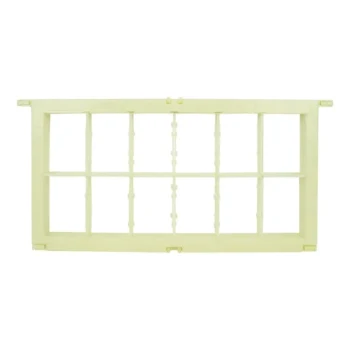
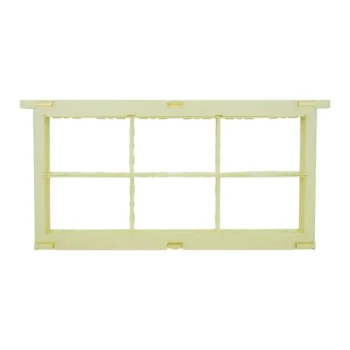
Pre-cleaned empty honeycomb frames are strictly required to function as a standardized control variable in honeybee reproductive capacity testing. By ensuring the honeycomb is physically ready and hygienically sound, researchers eliminate the risk that a queen will delay or refuse egg-laying due to the condition of the hardware.
In reproductive experiments, valid data depends on isolating biological intent from environmental constraints. Using pre-cleaned frames ensures that any observed decline in egg production is caused by the colony's biological status or labor capacity, rather than the physical inability to utilize the hive space.
Eliminating Environmental Variables
To accurately measure reproductive capacity, researchers must remove non-biological barriers that could skew the results.
Removing Hygiene Barriers
In a natural setting, worker bees must clean and polish cells before a queen will utilize them.
If frames are introduced without being pre-cleaned, the colony must divert labor to sanitation duties before reproduction can begin.
This creates a time lag that interferes with the "initial stages" of the experiment, distorting the timeline of data collection.
Ensuring Physical Uniformity
The primary reference highlights the need for uniform specifications.
Standardized consumables ensure that every colony in a test group starts from the exact same baseline.
Without this standardization, variations in frame quality could introduce "physical space" factors that limit where eggs can be deposited.
Isolating Queen Performance
The ultimate goal of these tests is to measure the reproductive output of the queen and the colony.
Preventing Egg-Laying Refusal
A queen bee is highly selective; she will generally refuse to lay eggs in cells that are not meticulously prepared.
Using pre-cleaned frames eliminates the possibility of refusal based on hardware conditions.
This ensures that a lack of eggs is a sign of biological failure, not a rejection of the environment.
Accurate Data Attribution
When researchers observe a decline in egg production, they need to know the cause with certainty.
By removing hardware limitations, any drop in productivity can be confidently attributed to biological factors or labor shortages within the colony.
This distinction is critical for the scientific validity of the reproductive assessment.
Understanding the Trade-offs
While necessary for scientific rigor, using pre-cleaned frames imposes specific demands on the experimental setup.
The Preparation Burden
Obtaining "worker-cleaned" frames requires significant preparation before the actual experiment begins.
Researchers must introduce frames to strong colonies beforehand solely for the purpose of cleaning and polishing.
Risk of Handling Contamination
While the frames start clean, the process of transferring them to the test hives must be managed carefully.
Improper handling during transfer can re-introduce hygiene factors, negating the benefit of the pre-cleaning process.
Ensuring Experimental Success
To obtain reliable data on honeybee reproductive capacity, you must prioritize the integrity of your consumables.
- If your primary focus is accurate baseline data: Ensure all frames are pre-cleaned by workers to identical specifications to prevent "start-up" delays in egg laying.
- If your primary focus is troubleshooting low egg counts: Verify that the frames provided were standardized; if not, the low count may be a hardware rejection rather than a biological issue.
By controlling the physical environment, you empower the data to tell the true story of the colony's health.
Summary Table:
| Factor | Benefit of Pre-Cleaned Frames | Impact on Test Accuracy |
|---|---|---|
| Hygiene | Removes debris and ensures cell polishing | Eliminates time lags caused by worker sanitation duties |
| Physical Space | Provides uniform specifications across test groups | Ensures every colony starts from an identical baseline |
| Queen Behavior | Prevents egg-laying refusal due to cell condition | Confirms that egg count reflects biological performance |
| Data Integrity | Isolates labor shortages from hardware limitations | Allows for precise attribution of reproductive declines |
Maximize Your Apiary Productivity with HONESTBEE
At HONESTBEE, we understand that precision is the backbone of successful beekeeping operations, whether you are conducting scientific research or managing a commercial honey farm. As a premier partner for commercial apiaries and global distributors, we offer a comprehensive wholesale selection of professional-grade beekeeping tools and advanced machinery.
From standardized honeycomb frames and high-precision hive-making machines to efficient honey-filling lines, our products are designed to meet the rigorous demands of the modern industry. We also provide a wide array of essential consumables and honey-themed cultural merchandise to help you scale your brand effectively.
Ready to upgrade your equipment and streamline your supply chain?
Contact us today to explore our full catalog and wholesale opportunities!
References
- Shihao Dong, James C. Nieh. Honey bee social collapse arising from hornet attacks. DOI: 10.1127/entomologia/2023/1825
This article is also based on technical information from HonestBee Knowledge Base .
Related Products
- Plastic Honey Comb Frames Cassette Box for Honey
- Assembled Wooden Bee Frames with Beeswax Foundation Ready to Use by HONESTBEE
- Heart-Shaped Comb Honey Frame and Honeycomb Cassette
- Professional Sectional Comb Honey Frame with 250g Cassette System for Beekeeping
- Professional 500g Sectional Comb Honey Frame System for Beekeeping
People Also Ask
- How are honeybee combs utilized for non-destructive colony monitoring? Master Population Density Tracking
- What is the significance of sampling honeycomb frames and hive bottoms? A Guide to Scientific Sanitation Monitoring
- What is a honeycomb frame? The Key to Modern, Sustainable Beekeeping
- What is the technical purpose of exchanging honeycomb frames? Master Apiary Equalization for Growth
- What frame to use for honeycomb? Choose the Right System for Pure, Edible Comb