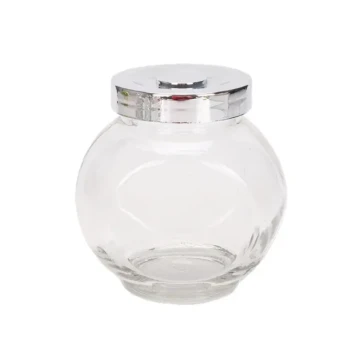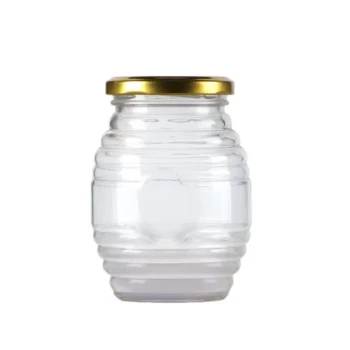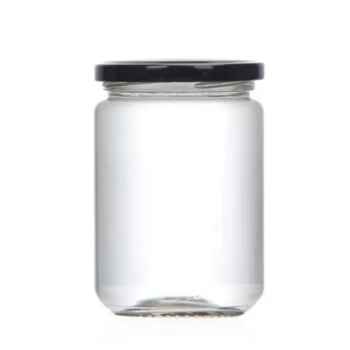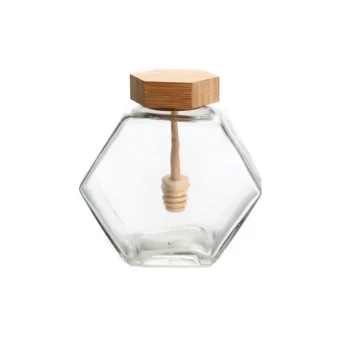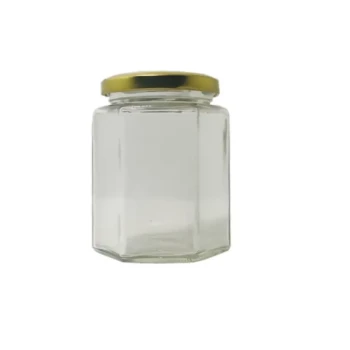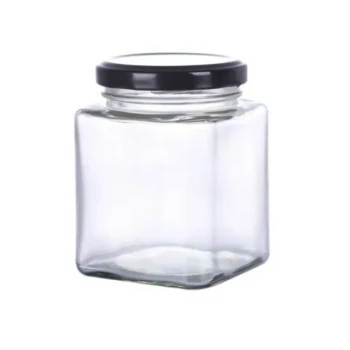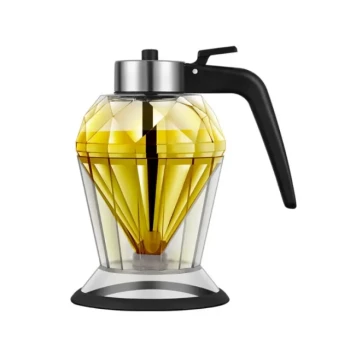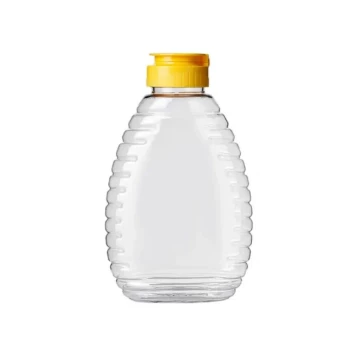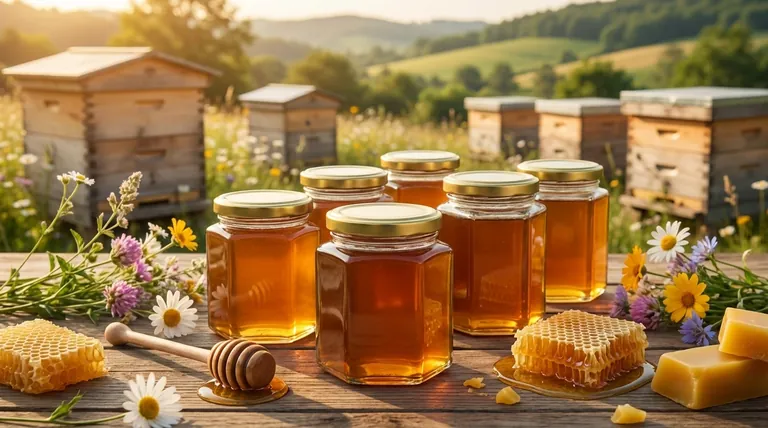
For honey producers and distributors committed to quality and sustainability, glass jars offer unmatched advantages in preserving honey’s natural properties while aligning with eco-conscious values. This article explores the science behind glass packaging and its role in enhancing brand trust.
The Science Behind Glass as a Honey Preservation Material
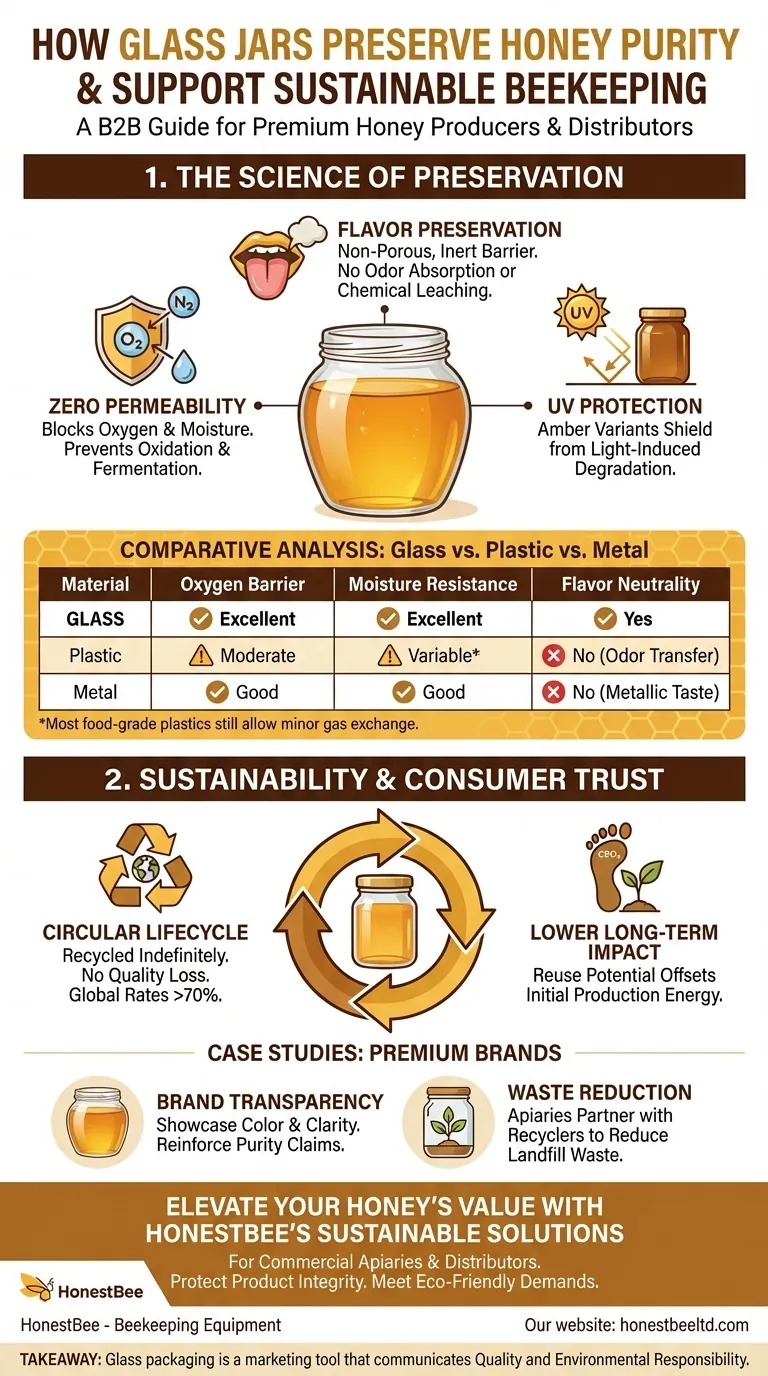
Glass remains the gold standard for honey storage due to its unique molecular properties. Unlike plastic or metal, glass provides an inert, non-porous barrier that safeguards honey’s delicate composition.
Molecular Barrier Properties of Glass
- Zero Permeability: Glass blocks oxygen and moisture infiltration, preventing oxidation and fermentation.
- Flavor Preservation: Unlike plastic, glass doesn’t absorb odors or leach chemicals, ensuring honey retains its original taste.
- UV Protection: Amber or tinted glass variants shield honey from light-induced degradation.
Comparative Analysis: Glass vs. Plastic/Metal
| Material | Oxygen Barrier | Moisture Resistance | Flavor Neutrality |
|---|---|---|---|
| Glass | Excellent | Excellent | Yes |
| Plastic | Moderate | Variable* | No (odor transfer) |
| Metal | Good | Good | No (metallic taste) |
*Depends on plastic grade; most food-grade plastics still allow minor gas exchange.
Why this matters: Research shows honey stored in glass maintains its viscosity and antioxidant levels significantly longer than alternatives.
Sustainability and Consumer Trust in Glass Packaging
Eco-conscious consumers increasingly favor glass for its recyclability and minimal environmental impact—a critical factor for premium honey brands.
Glass Recycling Rates and Carbon Footprint in Apiculture
- Circular Lifecycle: Glass can be recycled indefinitely without quality loss, with global recycling rates exceeding 70% in many regions.
- Lower Long-Term Impact: While glass production requires more energy initially, its reuse potential offsets carbon emissions over time.
Case Studies: Premium Honey Brands Using Glass Jars
- Brand Transparency: High-end honey producers use glass jars to showcase product color and clarity, reinforcing purity claims.
- Waste Reduction: Some apiaries partner with local recyclers to repurpose jars, reducing landfill waste.
Takeaway: Glass packaging isn’t just functional—it’s a marketing tool that communicates quality and environmental responsibility.
Elevate Your Honey’s Value with HONESTBEE’s Sustainable Solutions
For commercial apiaries and distributors, HONESTBEE provides beekeeping equipment designed to protect product integrity and meet eco-friendly demands. Explore our wholesale-focused range to align with the growing market for premium, sustainable honey.
Next Step: Consider how switching to glass jars could enhance your brand’s shelf appeal and reduce environmental impact.
Visual Guide
Related Products
- Classic Drum Shaped Glass Honey Jar with Airtight Lid
- Classic Glass Honey Jar with Metal Lug Cap for Beehive Storage
- Classic Round Glass Honey Jar with Lid
- Hexagonal Glass Honey Jar with Wooden Lid Integrated Dipper Elegant Functional Storage
- Hexagonal Glass Honey Jars with Metal Lug Caps Elegant Versatile Packaging
Related Articles
- The Chemistry of Immortality: Why a Honey Jar is More Than Just a Container
- Anatomy of a Honey Jar: A Story of Chemistry, Psychology, and Logistics
- The Hidden Threat After Harvest: Why a Simple Lid Prevents Apiary Disaster
- How to Choose Honey Storage Containers That Prevent Spoilage and Extend Shelf Life
- How Honey Storage Science Preserves Nutrients: Temperature, Light & Container Insights