The Unspoken Contract of a Container
Before a customer ever tastes your honey, they hold the container. That container makes a promise.
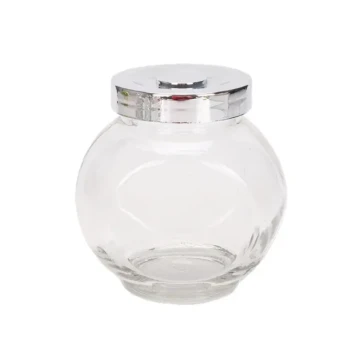
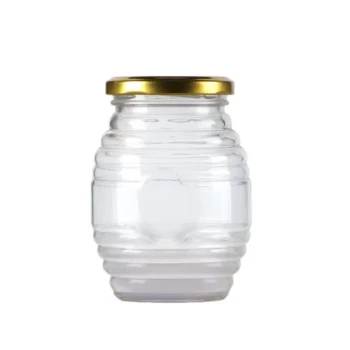
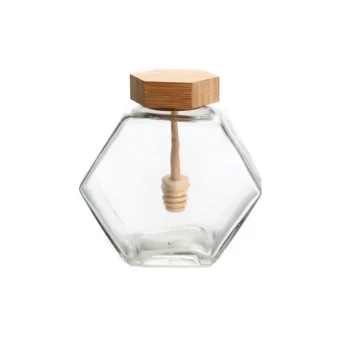
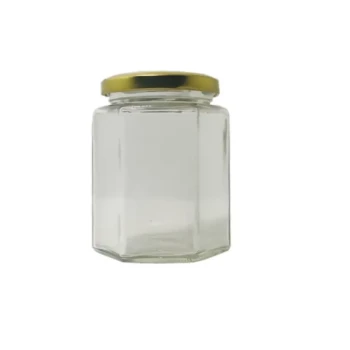
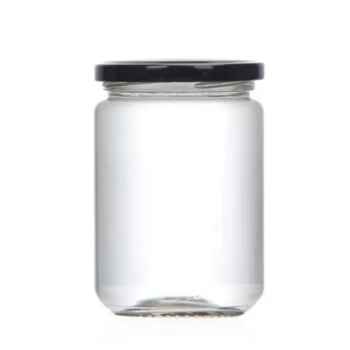
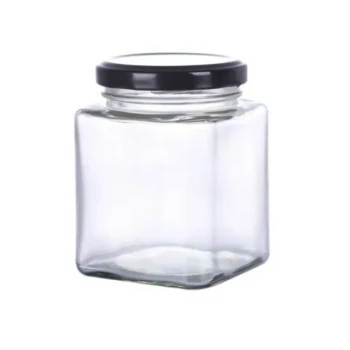
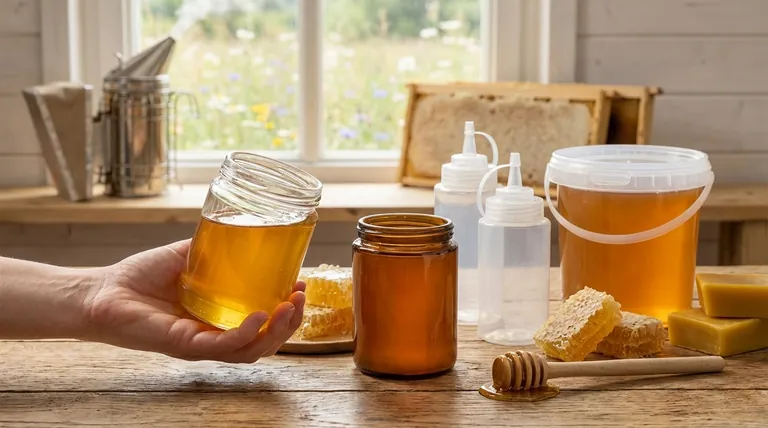
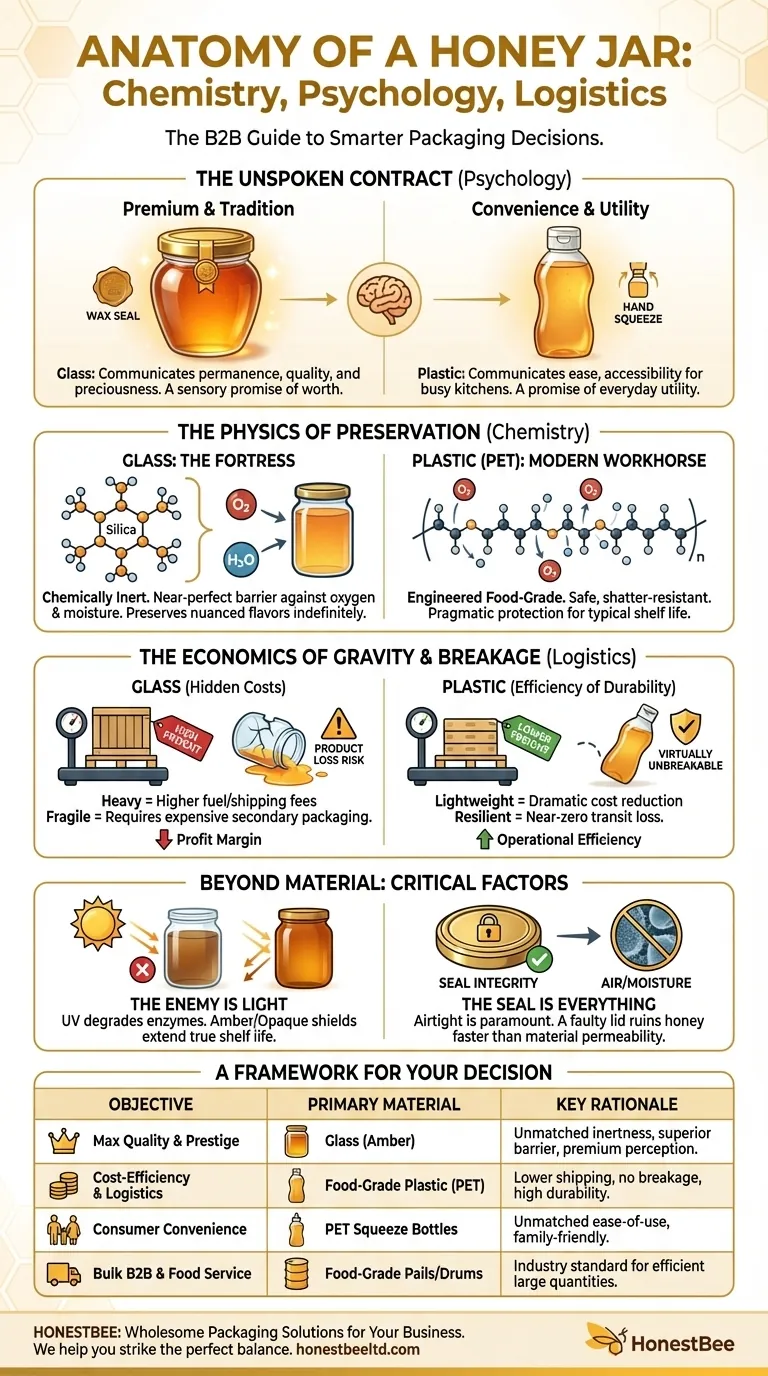
A heavy glass jar feels substantial. It communicates permanence, quality, and a connection to tradition. It suggests the contents are precious and worth protecting. This is a psychological contract based on sensory input.
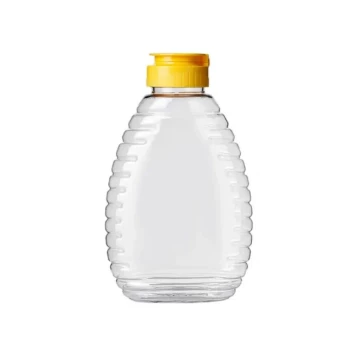
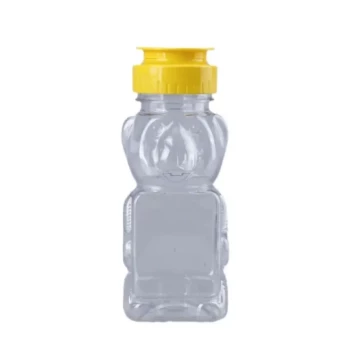
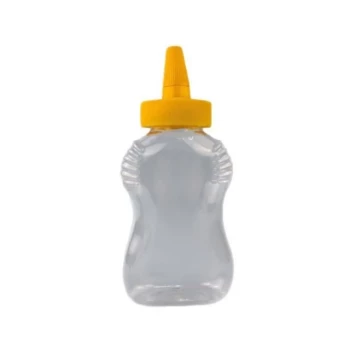
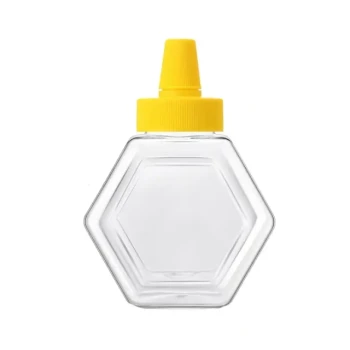
A lightweight, clear plastic squeeze bottle communicates something different: convenience, ease, and accessibility. It's a promise of utility, perfect for a busy family kitchen.
The choice between glass and plastic is not merely a materials science decision. It's the first sentence in the story you tell your customer.
The Physics of Preservation
At its core, honey is a supersaturated solution of sugars, containing delicate enzymes and aromatic compounds. Its greatest enemies are moisture, oxygen, and light. Your packaging is its only defense.
Glass: The Fortress
Glass is chemically inert. It is a fortress of silica, completely neutral, imparting no flavor and leaching nothing into the honey. Its molecular structure is a near-perfect barrier against the ingress of oxygen and environmental moisture.
For a beekeeper producing a single-origin, raw honey with nuanced floral notes, this chemical inertia is non-negotiable. Glass ensures that the honey a customer tastes in a year is the exact same honey you harvested, preserving its most subtle and valuable characteristics.
Food-Grade Plastic: The Modern Workhorse
The term "plastic" is unfairly broad. Modern food-grade polyethylene terephthalate (PET) is a marvel of engineering, specifically designed for safe, long-term contact with food. It is lightweight, shatter-resistant, and optically clear.
While technically more permeable than glass over very long periods, the practical difference for honey's shelf life is often negligible, especially when compared to the catastrophic failure of a poor seal. For most applications, PET is a pragmatic and perfectly safe choice that protects the product effectively.
The Economics of Gravity and Breakage
Imagine a pallet of honey jars ready for shipment. This is where the abstract qualities of the material become concrete operational costs.
The Hidden Costs of 'Premium'
Glass is heavy. That weight translates directly into higher fuel consumption and shipping fees, whether it's a single case or a full truckload. It is also fragile. A single dropped case can mean total product loss, and preventing this requires more robust, expensive secondary packaging and careful handling.
These are not just inconveniences; they are direct subtractions from your profit margin.
The Efficiency of Durability
This is where plastic has an undeniable advantage. Its low weight dramatically reduces shipping costs, a crucial factor for any commercial apiary operating at scale.
More importantly, it is virtually unbreakable. The risk of product loss during transit from your facility to a distributor or retail shelf plummets to near zero. This resilience simplifies logistics and protects your investment.
Beyond the Material: The Factors We Forget
The debate often stops at "glass versus plastic," but two other factors can have an even greater impact on quality.
-
The Enemy is Light: Honey is photosensitive. UV radiation from sunlight or even harsh retail lighting degrades its beneficial enzymes and can darken its color. A clear container of any material offers the least protection. Amber glass or opaque plastic acts as a crucial shield, extending the true shelf life of the product.
-
The Seal is Everything: An airtight seal is paramount. A faulty lid on a premium glass jar will allow moisture to creep in, risking fermentation and ruining the honey far faster than the minuscule molecular exchange through a high-quality PET container. The integrity of the closure system cannot be overlooked.
A Framework for Your Decision
Choosing the right container is an exercise in aligning your material with your mission. There is no single "best" answer, only the best answer for your specific goals.
| Objective | Primary Material | Key Rationale |
|---|---|---|
| Maximum Quality & Brand Prestige | Glass (especially amber) | Unmatched chemical inertness, superior barrier, premium consumer perception. |
| Cost-Efficiency & Logistics | Food-Grade Plastic (PET) | Lower shipping costs, eliminates breakage risk, high durability. |
| Consumer Convenience | PET Squeeze Bottles | Unmatched ease-of-use, family-friendly, ideal for high-volume consumer markets. |
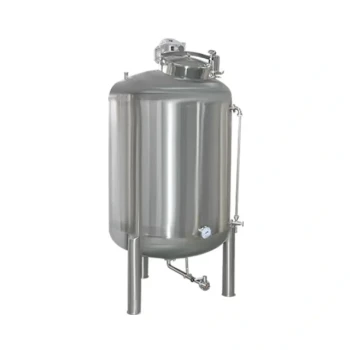
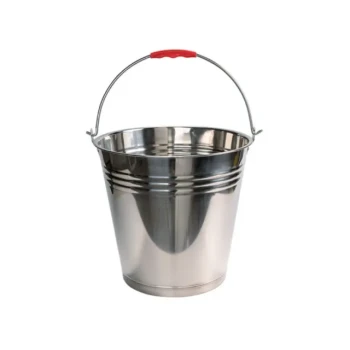
| Bulk B2B & Food Service | Food-Grade Pails/Drums | The industry standard for transporting and storing large quantities efficiently. |
At HONESTBEE, we understand that you're not just selling honey; you're running a business. We supply commercial apiaries and distributors with the full spectrum of wholesale packaging solutions because we know the right choice depends on your product, your market, and your bottom line.
Making the right choice balances product integrity with operational reality, and we have the materials to help you strike that perfect balance. Contact Our Experts
Visual Guide
Related Products
- Classic Drum Shaped Glass Honey Jar with Airtight Lid
- Classic Glass Honey Jar with Metal Lug Cap for Beehive Storage
- Hexagonal Glass Honey Jar with Wooden Lid Integrated Dipper Elegant Functional Storage
- Squeezable No-Drip Beehive-Shaped Honey Jars with Flip-Top Cap
- Hexagonal Glass Honey Jars with Metal Lug Caps Elegant Versatile Packaging
Related Articles
- The Chemistry of Immortality: Why a Honey Jar is More Than Just a Container
- How Glass Jars Preserve Honey Purity While Supporting Sustainable Beekeeping
- The Hidden Threat After Harvest: Why a Simple Lid Prevents Apiary Disaster
- How to Choose Honey Storage Containers That Prevent Spoilage and Extend Shelf Life
- How Honey Storage Science Preserves Nutrients: Temperature, Light & Container Insights