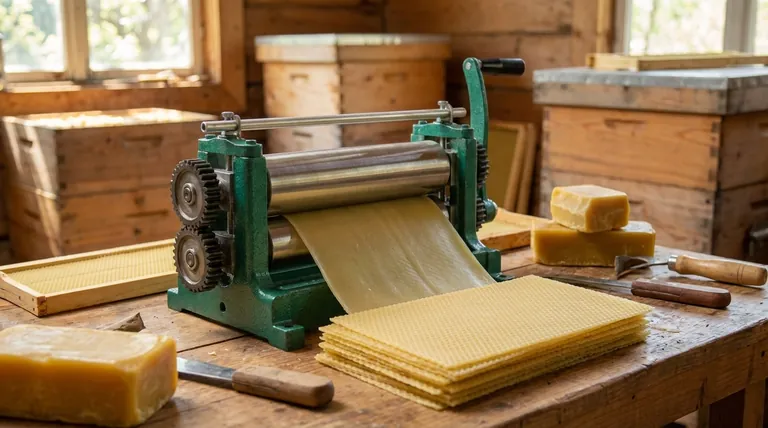
Modern beekeeping thrives on efficiency and sustainability—two goals achievable through pure beeswax foundation sheets. These sheets, crafted using manual tablet presses, are more than just hive components; they’re catalysts for colony health and honey yield. Let’s explore why beekeepers are adopting this method and how it outperforms alternatives.
The Essential Role of Foundation Sheets in Modern Beekeeping
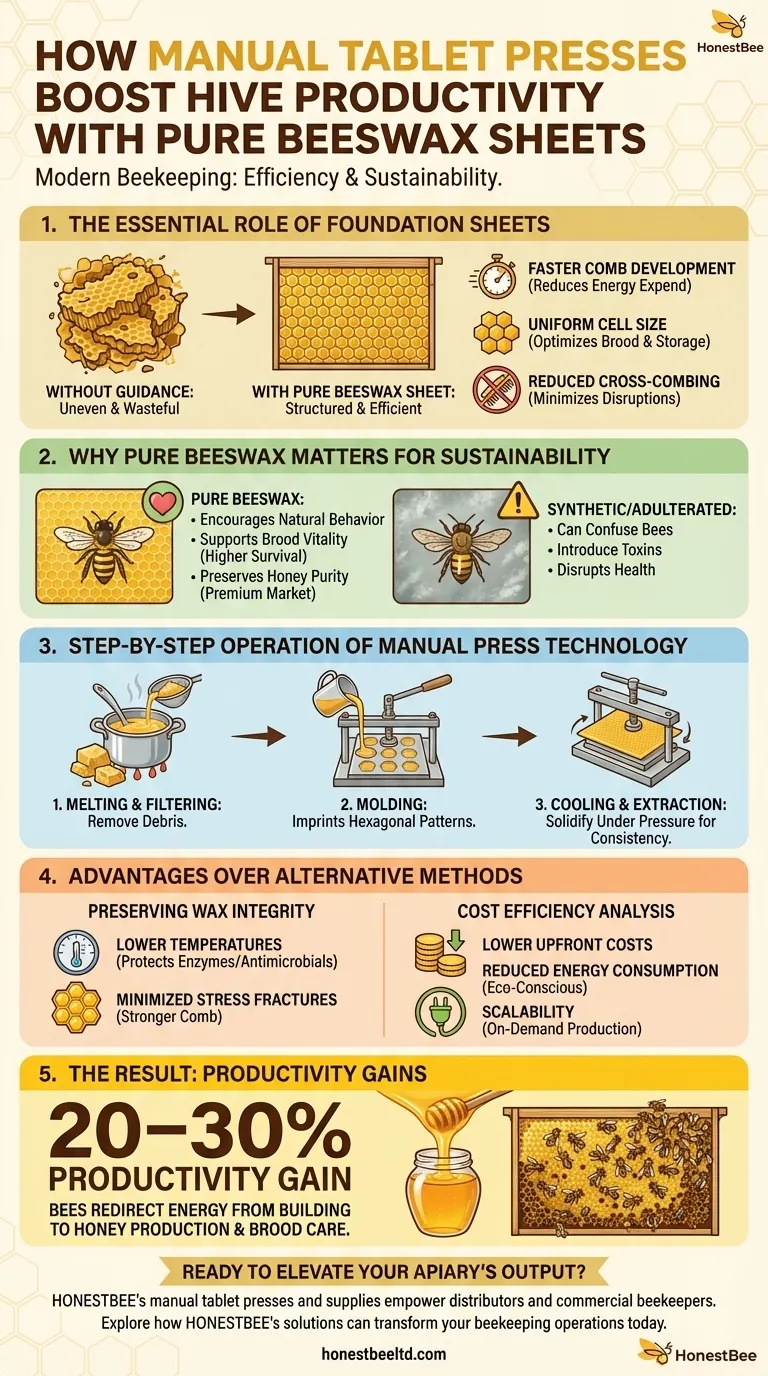
Foundation sheets are the backbone of organized honeycomb construction. Bees naturally build comb, but without guidance, the process can be uneven and wasteful. Pure beeswax sheets provide a structured template, ensuring:
- Faster comb development, reducing the energy bees expend on building from scratch.
- Uniform cell size, which optimizes brood rearing and honey storage.
- Reduced cross-combing, minimizing hive disruptions during inspections.
Why Pure Beeswax Matters for Colony Sustainability
Beeswax isn’t just a building material; it’s a biological signal. Synthetic or adulterated foundations can confuse bees or introduce toxins, disrupting brood health and hive morale. Pure beeswax, however:
- Encourages natural behavior: Bees readily accept and expand on uncontaminated wax.
- Supports brood vitality: Studies show larvae reared in pure beeswax cells have higher survival rates.
- Preserves honey purity, a critical factor for commercial apiaries targeting premium markets.
Step-by-Step Operation of Manual Press Technology
Manual tablet presses transform raw beeswax into standardized sheets through a simple yet precise process:
- Melting and Filtering: Raw wax is gently melted to remove debris.
- Molding: Liquid wax is poured into the press, which imprints hexagonal cell patterns.
- Cooling and Extraction: Sheets solidify under controlled pressure, ensuring durability.
This method retains wax’s natural properties while achieving consistency—a balance automated systems often struggle with.
Advantages Over Alternative Sheet Production Methods
Preserving Wax Integrity During Compression
Industrial extrusion or rolling machines generate heat that degrades beeswax’s enzymatic benefits. Manual presses avoid this by:
- Operating at lower temperatures, protecting wax’s antimicrobial compounds.
- Minimizing stress fractures, which weaken comb stability.
Cost Efficiency Analysis for Small-Scale Apiaries
For beekeeping equipment distributors and commercial apiaries, manual presses offer:
- Lower upfront costs compared to automated systems.
- Reduced energy consumption, aligning with eco-conscious practices.
- Scalability: Produce sheets on-demand without overstocking.
Research confirms that hives using pure beeswax foundations see productivity gains of 20–30%, as bees redirect energy from comb-building to honey production and brood care.
Ready to Elevate Your Apiary’s Output?
HONESTBEE’s manual tablet presses and beekeeping supplies empower distributors and commercial beekeepers to harness the full potential of pure beeswax. Invest in equipment that prioritizes hive health and honey quality—because sustainable practices shouldn’t compromise efficiency.
Explore how HONESTBEE’s solutions can transform your beekeeping operations today.
Visual Guide
Related Products
- Manual Beeswax Flat Sheet Machine for Beeswax Processing
- Beeswax Machine Press Embosser Wax Foundation Mold Printer Bee Hive Equipment Making Sheet
- Stainless Steel Manual Honey Press with Guard for Pressing Honey and Wax
- Manual Beeswax Comb Foundation Machine Wax Foundation Mill Embossing Machine
- Economy Manual Beeswax Embossing Mill Wax Foundation Machine Roller
Related Articles
- How Precision-Engineered Beeswax Sheets Boost Hive Health and Honey Production
- How to Transform Old Beeswax into Profitable and Sustainable Products
- How to Create Flawless Beeswax Sheets: Mastering Temperature and Mold Science
- The Thermal Dance: Why Temperature is Everything in Beeswax Foundation Milling
- How to Choose Between Roller and Press Systems for Perfect Beeswax Sheets


