When producing beeswax sheets, the flattening method directly impacts quality, efficiency, and cost. This guide compares roller and press mechanisms—helping commercial producers match technology to their specific goals in cosmetics, candle making, or other applications.
Beeswax Flattening Technologies Demystified
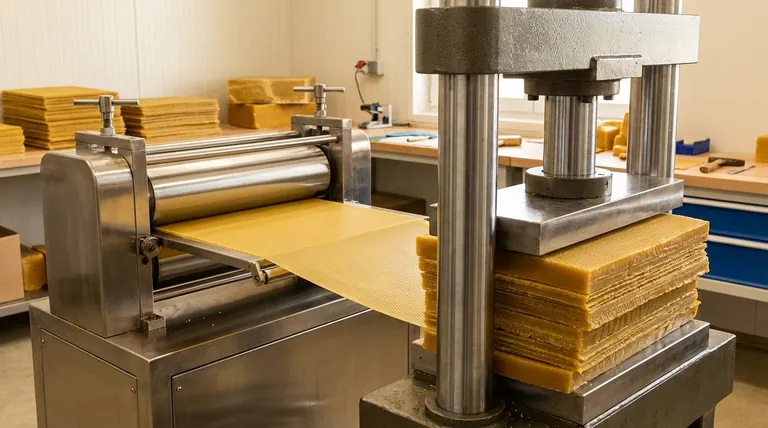
Beeswax sheets require uniform thickness and smooth surfaces, achievable through two primary methods: roller systems and press mechanisms. Each offers distinct advantages depending on your production priorities.
Roller Systems: Precision for High-Volume Production
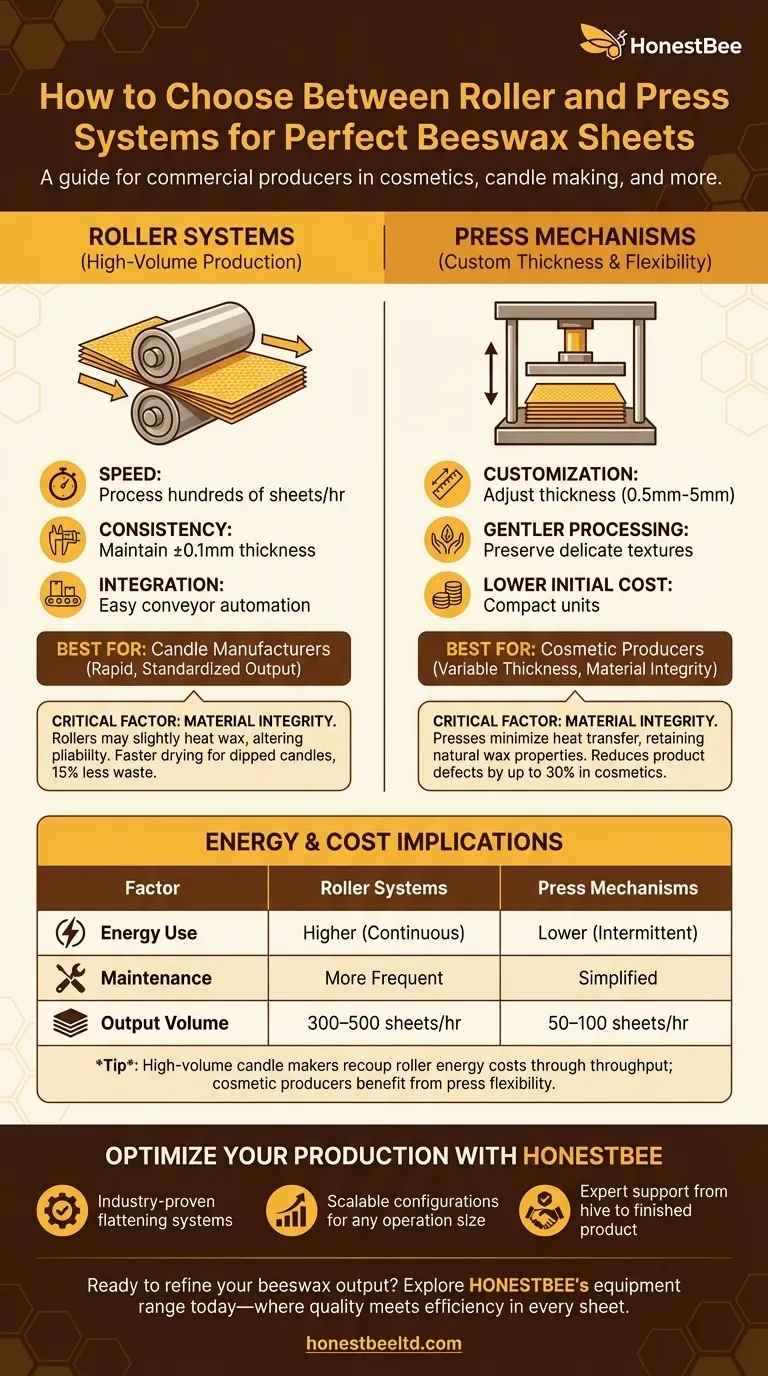
Rollers apply continuous pressure to beeswax, creating sheets with consistent thickness. Ideal for large-scale operations, they excel in:
- Speed: Process hundreds of sheets per hour
- Consistency: Maintain ±0.1mm thickness tolerance
- Integration: Pair easily with conveyor systems for automation
Best for: Candle manufacturers needing rapid, standardized output.
Press Mechanisms: Flexibility for Custom Thickness
Hydraulic or mechanical presses flatten beeswax in batches, allowing adjustments per cycle. Key benefits include:
- Customization: Adjust pressure to create sheets from 0.5mm to 5mm thick
- Gentler Processing: Preserve delicate textures for cosmetic-grade wax
- Lower Initial Cost: Compact units suit small-batch producers
Best for: Cosmetic producers prioritizing variable thickness and material integrity.
Critical Factors in Method Selection
Material Integrity vs. Operational Speed
- Rollers may slightly heat wax during compression, which can alter pliability—critical for artisanal products.
- Presses minimize heat transfer, retaining natural wax properties favored in skincare formulations.
Energy Consumption and Cost Implications
| Factor | Roller Systems | Press Mechanisms |
|---|---|---|
| Energy Use | Higher (continuous) | Lower (intermittent) |
| Maintenance | More frequent | Simplified |
| Output Volume | 300–500 sheets/hr | 50–100 sheets/hr |
Tip: High-volume candle makers recoup roller energy costs through throughput, while cosmetic producers benefit from press flexibility.
Industry Applications and Success Stories
Cosmetic-Grade Sheets: Why Presses Dominate
Leading skincare brands use pressed beeswax for:
- Sheer layers in lip balm bases
-
Air-pocket prevention in cream formulations
Research shows pressed sheets reduce product defects by up to 30% versus rolled alternatives.
Candle Manufacturing: Roller Efficiency Case Study
A Midwest apiary increased output by 140% after switching to rollers, citing:
- Faster drying times for dipped candles
- 15% less material waste from uniform sheets
Optimize Your Production with the Right Equipment
Whether you need the speed of rollers or the precision of presses, HONESTBEE’s beekeeping equipment helps commercial producers achieve flawless beeswax sheets. Our wholesale solutions ensure you get:
- Industry-proven flattening systems
- Scalable configurations for any operation size
- Expert support from hive to finished product
Ready to refine your beeswax output? Explore HONESTBEE’s equipment range today—where quality meets efficiency in every sheet.
Visual Guide
Related Products
- Beeswax Machine Press Embosser Wax Foundation Mold Printer Bee Hive Equipment Making Sheet
- Manual Beeswax Flat Sheet Machine for Beeswax Processing
- Electric Beeswax Flat Sheet Machine with Operating Tray for Wax Processing
- Electric Flatting and Embossing Machine with Tray for Beekeeping
- Electric Beeswax Foundation Machine With Operating Tray and Wax Foundation Roller
Related Articles
- Why Your In-House Beeswax Foundation is Failing Your Business—And How to Fix It
- Beyond the Embosser: The Systems Thinking Behind Perfect Beeswax Foundation
- How Beeswax Foundation Machines Transform Beekeeping Efficiency
- How Beeswax Foundation Machines and Smart Equipment Transform Beekeeping Efficiency
- Why Your Beeswax Foundation Fails: The Hidden Physics Behind Embossing