Sustainable beekeeping isn't just about honey production—it's about minimizing waste while maximizing hive health. One often-overlooked opportunity lies in recycling foundation scraps, which can reduce costs by up to 30% per season while supporting colony resilience. This guide reveals practical methods to repurpose wax remnants safely, backed by proven techniques from commercial apiaries.
Sustainable Wax Management in Beekeeping
The Importance of Recycling Foundation Scraps
Every beekeeper generates wax scraps during hive maintenance, but discarding them wastes a valuable resource. Recycled foundation wax:
- Reduces operational costs: Reusing scraps cuts the need for new wax purchases.
- Supports hive hygiene: Bees prefer working with their own wax, which retains colony-specific pheromones.
- Minimizes environmental impact: Less waste means a smaller footprint for your apiary.
Did you know? A single hive can produce over 1.5 lbs of reusable wax scraps annually.
Step-by-Step Process for Safe Scrap Reuse
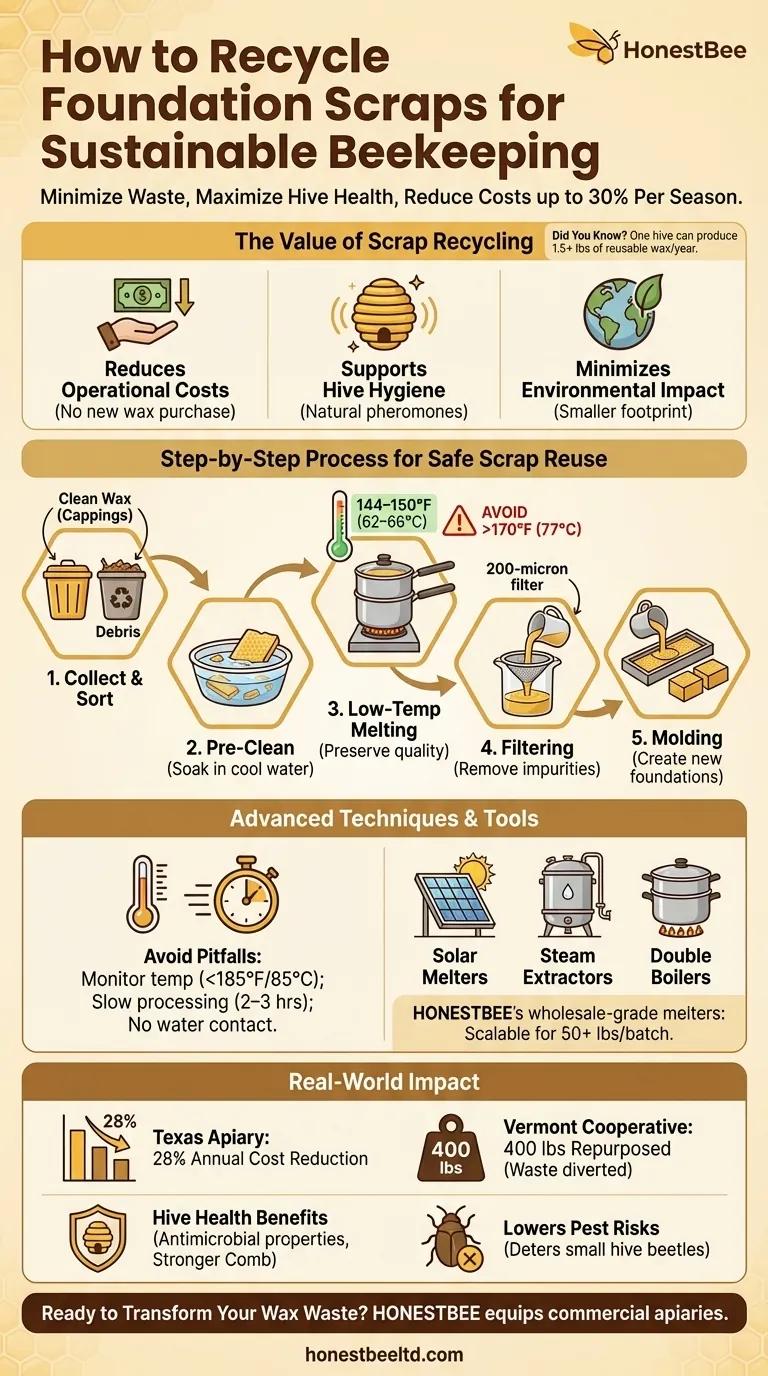
- Collect and Sort: Separate clean wax (e.g., cappings) from debris-laden pieces.
- Pre-Clean: Soak in cool water to loosen propolis or honey residues.
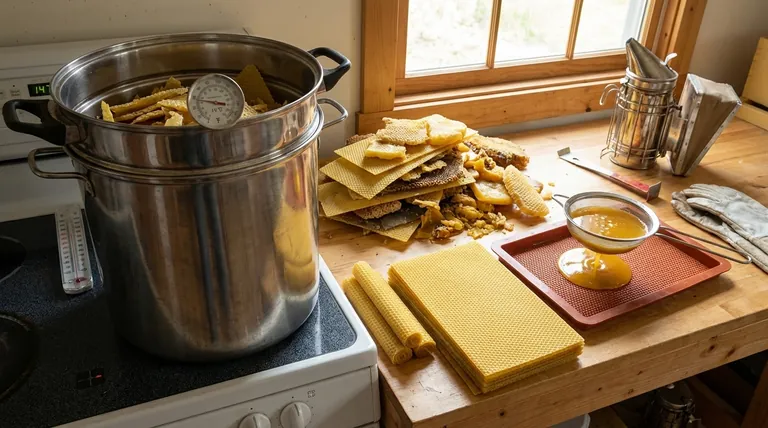
- Low-Temperature Melting: Use a double boiler to melt wax at 144–150°F (62–66°C)—the optimal range to preserve quality (see Tools and Equipment for recommendations).
- Filtering: Pour melted wax through a 200-micron filter to remove impurities.
- Molding: Pour purified wax into foundation molds or storage blocks.
Pro Tip: Avoid overheating beyond 170°F (77°C) to prevent discoloration and fragrance loss.
Advanced Techniques for Optimal Wax Recovery
Avoiding Common Pitfalls in Wax Remelting
- Temperature control: Use a candy thermometer to monitor heat; beeswax degrades rapidly above 185°F (85°C).
- Slow processing: Rushing melting can trap contaminants. Allow 2–3 hours for thorough purification.
- Avoid water contact: Moisture causes wax to foam or splatter during melting.
Tools and Equipment for Efficient Recycling
Commercial apiaries rely on:
- Solar wax melters: Energy-free melting for sunny climates.
- Steam-powered extractors: Ideal for large-scale operations.
- Double boilers: Prevents direct heat exposure.
For distributors: HONESTBEE’s wholesale-grade melters offer scalable solutions for processing 50+ lbs of scraps per batch.
Real-World Impact of Scrap Recycling
Case Studies: Cost Savings and Waste Reduction
- A Texas apiary reduced annual wax expenses by 28% after implementing scrap recycling.
- A Vermont cooperative repurposed 400 lbs of wax scraps into new foundations, diverting waste from landfills.
Long-Term Benefits for Hive Health
Recycled wax maintains natural antimicrobial properties, which:
- Strengthens brood comb durability.
- Lowers pest infestation risks (e.g., small hive beetles avoid clean, pheromone-rich wax).
Ready to Transform Your Wax Waste?
HONESTBEE equips commercial apiaries and distributors with high-capacity recycling tools—because sustainable beekeeping starts with smarter resource management. Explore our wholesale solutions to cut costs and boost hive productivity today.
Visual Guide
Related Products
- Beeswax Foundation Sheets Beehive Foundation for Wholesale
- Notebook Style Beeswax Foundation Mould Wax Foundation Mold
- Colorful Silicone Beeswax Foundation Mold Mould for Beekeeping
- Assembled Wooden Bee Frames with Beeswax Foundation Ready to Use by HONESTBEE
- Food Grade Plastic bee Foundation for Bee Frames
Related Articles
- How to Choose and Use Budget-Friendly Tools for Durable Beeswax Foundations
- How Beeswax Foundations Enhance Colony Health and Beekeeping Efficiency
- Stop Blaming Your Rollers: The Real Source of Flawed Beeswax Foundation
- Why Your Beeswax Foundation Fails: A Guide to Preventing Costly Warping and Breakage
- From Liquid to Lattice: Mastering Thermal Control in Beeswax Foundation Stacking