For beekeepers seeking sustainable hive management solutions, beeswax foundations offer biological advantages that synthetic alternatives can't match. Research shows these natural foundations improve colony acceptance, brood health, and long-term productivity—critical factors for commercial apiaries and distributors prioritizing bee welfare.
Biological Compatibility of Beeswax Foundations
The Role of Natural Scent and Texture in Bee Acceptance
Beeswax foundations mimic the chemical signature of wild comb, reducing colony stress during hive establishment. Studies indicate bees:
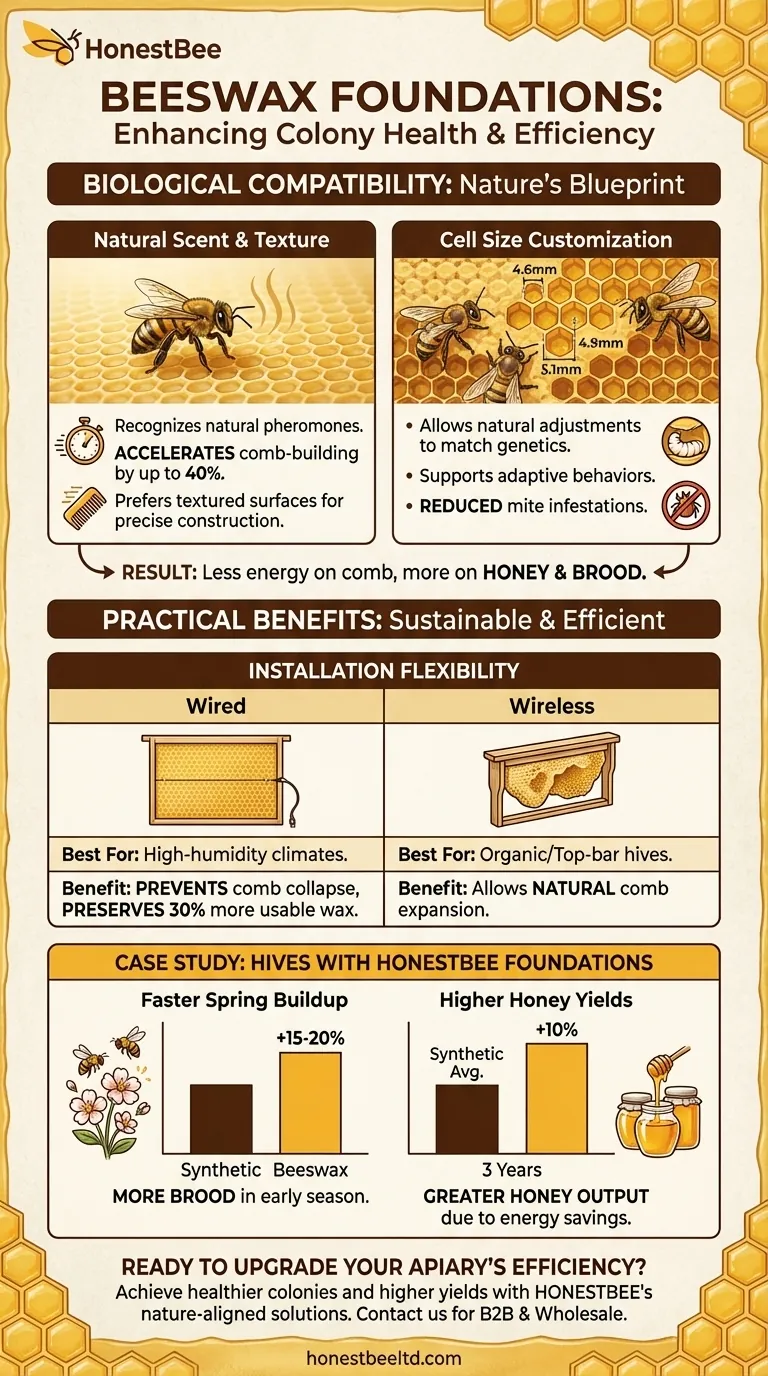
- Recognize natural pheromones embedded in pure beeswax, accelerating comb-building by up to 40% compared to plastic alternatives.
- Prefer textured surfaces that allow precise cell-wall construction, minimizing energy expenditure.
This biological alignment means colonies invest fewer resources in comb-building and more in honey production or brood rearing—a key advantage for commercial operations scaling their apiaries.
How Cell Size Customization Influences Brood Health
Beekeepers using beeswax foundations report:
- Healthier brood patterns due to bees naturally adjusting cell sizes (typically 4.6–5.1mm for worker bees) to match local genetic traits.
- Reduced mite infestations, as uniform cell depths in synthetic foundations can inadvertently promote parasite spread.
By allowing bees to modify comb dimensions slightly, these foundations support adaptive colony behaviors linked to disease resistance.
Practical Benefits for Sustainable Beekeeping
Wire vs. Wireless Installation: Adapting to Hive Needs
Beeswax foundations offer flexibility for different hive systems:
| Type | Best For | Colony Benefit |
|---|---|---|
| Wired | High-humidity climates | Prevents comb collapse during extraction |
| Wireless | Top-bar or organic-certified hives | Allows natural comb expansion |
Case studies show wired foundations reduce comb damage during honey harvesting, preserving up to 30% more usable wax per season—critical for operations recycling wax into new foundations or products.
Case Studies: Hive Productivity with Beeswax vs. Synthetic
Data from apiaries using HONESTBEE’s beeswax foundations reveal:
- Faster spring buildup: Colonies on natural foundations produce 15–20% more brood in early season.
- Higher honey yields: Over three years, hives with beeswax foundations averaged 10% greater honey output due to reduced energy spent on comb construction.
These gains compound for commercial beekeepers managing hundreds of hives, where even marginal efficiency improvements significantly impact profitability.
Ready to upgrade your apiary’s efficiency? HONESTBEE’s beeswax foundations help commercial beekeepers and distributors achieve healthier colonies and higher yields—all through nature’s blueprint. [Contact us] to explore wholesale solutions tailored to your operation.
Visual Guide
Related Products
- Beeswax Foundation Sheets Beehive Foundation for Wholesale
- Notebook Style Beeswax Foundation Mould Wax Foundation Mold
- Colorful Silicone Beeswax Foundation Mold Mould for Beekeeping
- Beeswax Machine Press Embosser Wax Foundation Mold Printer Bee Hive Equipment Making Sheet
- Fully Automatic Beeswax Embossing Machine Foundation Mill
Related Articles
- How to Choose and Use Budget-Friendly Tools for Durable Beeswax Foundations
- Why Your Beeswax Foundation Fails: A Guide to Preventing Costly Warping and Breakage
- From Liquid to Lattice: Mastering Thermal Control in Beeswax Foundation Stacking
- Stop Blaming Your Rollers: The Real Source of Flawed Beeswax Foundation
- Why Your Beeswax Foundation Sheets Keep Cracking—And How to Stop It for Good