Requeening a hive is one of the most critical yet challenging tasks in beekeeping. When done incorrectly, colonies may reject the new queen, leading to productivity losses or even collapse. The 5-frame nuc (nucleus colony) transfer method offers a biologically grounded solution—but only when executed with precision. This guide breaks down the science-backed protocol, operational best practices, and troubleshooting strategies to ensure your requeening efforts succeed.
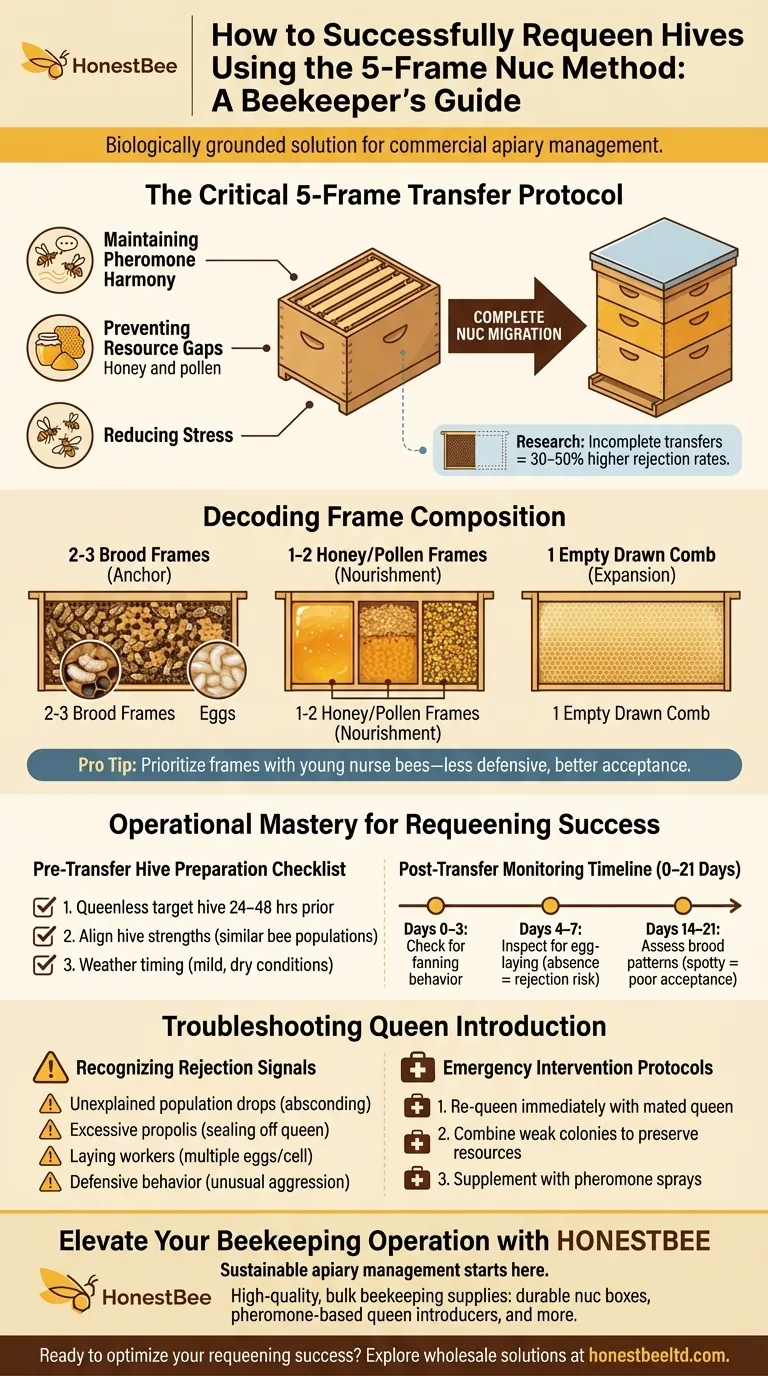
The Critical 5-Frame Transfer Protocol
Biological Imperative of Complete Nuc Migration
Bees operate as a superorganism, where colony cohesion depends on shared pheromones, brood cycles, and resource distribution. Transferring all 5 frames from a nuc (rather than partial frames) preserves this delicate balance by:
- Maintaining pheromone harmony: The queen’s mandibular pheromones and worker bee "homing signals" remain intact.
- Preventing resource gaps: A full transfer ensures adequate pollen, honey, and brood to sustain the colony during transition.
- Reducing stress: Bees recognize the transferred frames as a unified "unit," minimizing defensive behaviors.
Research shows colonies receiving incomplete frames exhibit 30–50% higher rejection rates due to disrupted chemical communication.
Decoding Frame Composition: Brood, Resources & Pheromones
Each frame in the nuc serves a distinct purpose:
-
Brood frames (2–3 frames): Anchor the colony’s future workforce. Look for:
- Capped worker brood (indicates healthy brood-rearing)
- Eggs/larvae (confirms queen productivity)
- Honey/pollen frames (1–2 frames): Provide immediate nourishment.
- Empty drawn comb (1 frame): Encourages rapid colony expansion.
Pro Tip: Prioritize frames with young nurse bees—they’re less defensive and more likely to accept a new environment.
Operational Mastery for Requeening Success
Pre-Transfer Hive Preparation Checklist
- Queenless the target hive 24–48 hours prior to reduce competition.
- Align hive strengths: Ensure the nuc and recipient hive have similar bee populations (avoid over/underwhelming either group).
- Weather timing: Transfer during mild, dry weather (bees are calmer and forage less aggressively).
Post-Transfer Monitoring Timeline (0–21 Days)
- Days 0–3: Check for fanning behavior (bees orienting to the new queen’s scent).
- Days 4–7: Inspect for egg-laying; absence may indicate queen rejection.
- Days 14–21: Assess brood patterns—spotty brood suggests poor queen acceptance.
Troubleshooting Queen Introduction
Recognizing Rejection Signals
Watch for these warning signs (backed by apicultural studies):
- Unexplained bee population drops (workers absconding)
- Excessive propolis (bees "sealing off" the queen)
- Laying workers (multiple eggs per cell)
- Defensive behavior (unusual aggression during inspections)
Emergency Intervention Protocols
If rejection occurs:
- Re-queen immediately with a mated queen from a trusted supplier.
- Combine weak colonies to preserve resources.
- Supplement with pheromone sprays (e.g., synthetic queen mandibular pheromone) to calm workers.
Elevate Your Beekeeping Operation with HONESTBEE
Requeening is just one aspect of sustainable apiary management. HONESTBEE equips commercial beekeepers and distributors with high-quality, bulk beekeeping supplies—from durable nuc boxes to pheromone-based queen introducers—designed to streamline your workflow and maximize colony health.
Ready to optimize your requeening success? Explore HONESTBEE’s wholesale solutions today.
Visual Guide
Related Products
- 5 Frame Wooden Nuc Box for Beekeeping
- 5 Frame Langstroth Poly Nuc Corrugated Plastic Nuc Boxes
- Styrofoam Mini Mating Nuc Box with Frames Feeder Styrofoam Bee Hives 3 Frame Nuc Box
- Automatic Heat Preservation 6 Frame Pro Nuc Box for Honey Bee Queen Mating
- 4 Frame Plastic Nuc Boxes for Beekeeping Bee Nuc Box
Related Articles
- How Smaller Nuc Box Frames Improve Brood Health Through Thermal Regulation
- The Thermodynamics of a New Colony: Why a Smaller Nuc Box Is a Stronger Start
- Architecting Royalty: The Nuc Box as a Queen's Crucible
- Designing for Instinct: Why the Nuc Box is the Perfect Swarm Trap
- The Architect's Dilemma: How a Nuc Box Solves a Honeybee Swarm's Housing Crisis