
Beekeepers face a critical challenge: how to nourish colonies effectively across changing seasons. The science of sugar syrup ratios holds the key—properly balanced feed supports hive metabolism, prevents starvation, and prepares bees for seasonal challenges. This guide unpacks the biological rationale behind seasonal syrup formulations and provides actionable strategies to implement them.
The Role of Sugar Syrup in Apiculture
Sugar syrup isn’t just a substitute for natural nectar; it’s a metabolic lifeline. Bees convert carbohydrates into energy for flight, brood rearing, and hive maintenance. However, their needs shift dramatically between seasons:
Metabolic Needs of Bees Across Seasons
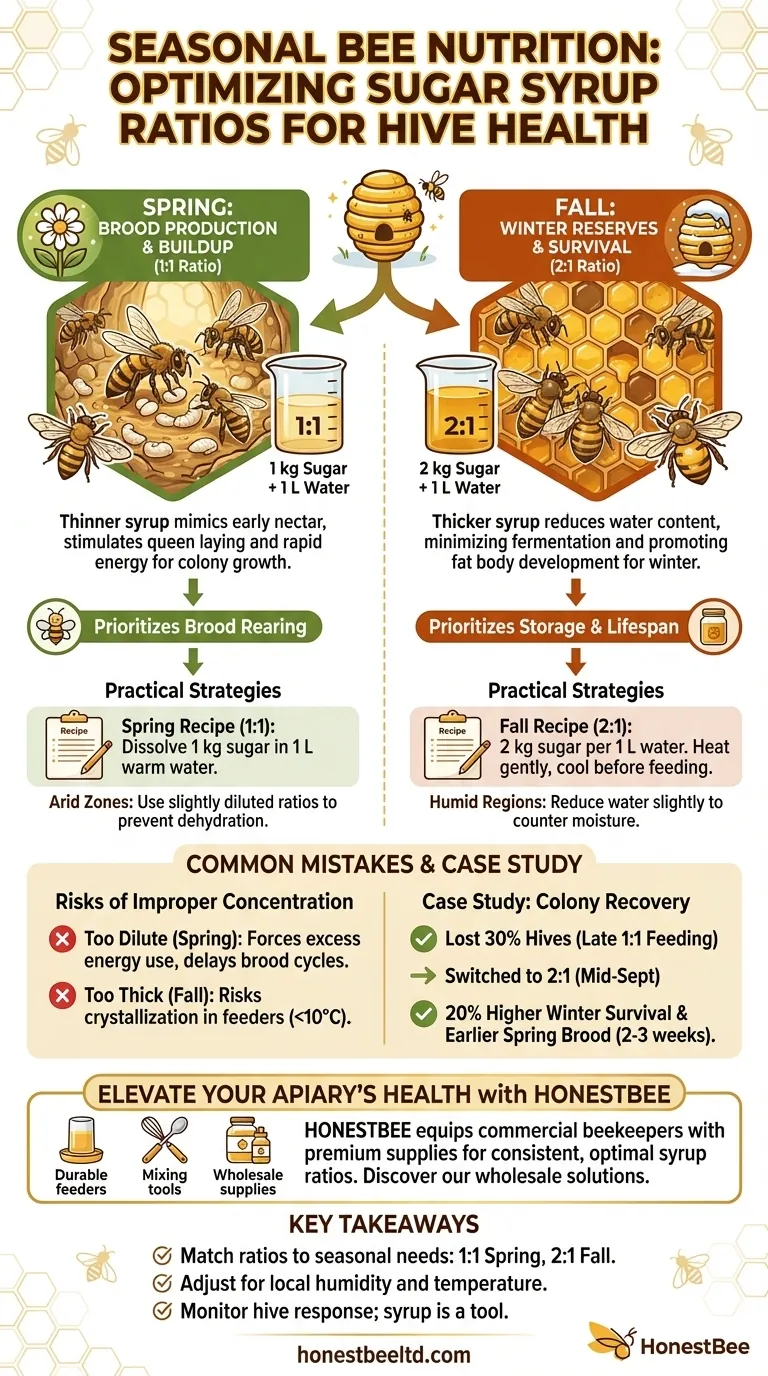
- Spring: Colonies prioritize brood production, requiring rapid energy conversion. A thinner 1:1 sugar-to-water ratio mimics early spring nectar, stimulating queen laying and worker activity.
- Fall: Bees focus on storing winter reserves. A thicker 2:1 ratio reduces water content, minimizing fermentation risk and enabling efficient storage in comb cells.
Fall vs. Spring Hive Priorities
- Fall Survival: Dense syrup promotes fat body development in winter bees, extending their lifespan. Research shows colonies fed 2:1 syrup in autumn exhibit higher spring survival rates.
- Spring Buildup: Light syrup (1:1) supports glandular development in nurse bees, accelerating colony growth to exploit early blooms.
Practical Beekeeping Strategies
Preparing Syrup: Ratios and Techniques
-
Standard Recipes:
- Spring (1:1): 1 kg sugar dissolved in 1 liter warm water (by weight).
- Fall (2:1): 2 kg sugar per 1 liter water. Heat gently to dissolve fully, then cool before feeding.
-
Additives (Optional):
- A pinch of sea salt (under 0.1%) replicates mineral content in natural nectar.
- Avoid acidic additives (e.g., vinegar) unless combating crystallization in cold climates.
Climate-Specific Adjustments
- Humid Regions: Reduce water slightly in fall syrup to counter moisture absorption.
- Arid Zones: Use slightly diluted ratios in spring to prevent rapid dehydration of open feeders.
Common Mistakes and Solutions
Risks of Improper Concentration
- Too Dilute (Spring): Forces bees to expend excess energy processing water, delaying brood cycles.
- Too Thick (Fall): Risks crystallization in feeders, especially below 10°C (50°F).
Case Study: Colony Recovery Through Ratio Correction
A Minnesota apiary lost 30% of hives one winter after feeding 1:1 syrup too late in fall. Switching to 2:1 by mid-September the next year resulted in:
- 20% higher winter survival.
- Earlier spring brood production (by 2–3 weeks).
Ready to Elevate Your Apiary’s Health?
HONESTBEE equips commercial beekeepers and distributors with premium supplies—from durable feeders to precise mixing tools—ensuring your syrup ratios are consistently optimal. Discover how our wholesale solutions can streamline your seasonal feeding protocols.
Key Takeaways:
- Match syrup ratios to seasonal biological needs: 1:1 for spring stimulation, 2:1 for fall storage.
- Adjust for local humidity and temperature to prevent crystallization or fermentation.
- Monitor hive response; syrup is a tool, not a one-size-fits-all solution.
Visual Guide
Related Products
Related Articles
- How Round Hive Top Feeders Solve 3 Critical Beekeeping Challenges
- How to Choose the Right Bee Feeder for Your Hive’s Health and Efficiency
- How to Choose Between Frame and Gravity Feeders for Healthy Honey Bee Colonies
- How to Prevent Bee Drowning in Top Feeders Without Sacrificing Efficiency
- The Winter Fortress: Engineering Colony Survival with the Hive Top Feeder
