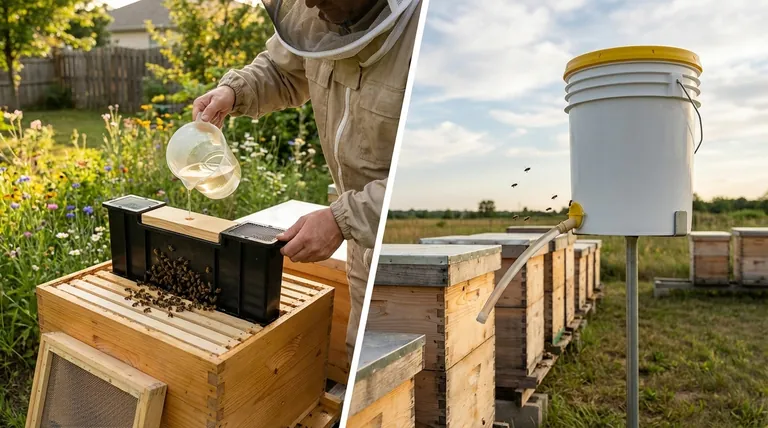
Beekeepers face a critical decision when selecting feeders: frame or gravity? The right choice depends on your colony's size, local climate, and apiary setup. This guide breaks down the pros, cons, and ideal use cases for each feeder type—helping you optimize nutrition delivery while minimizing labor.
Honey Bee Feeder Fundamentals
Bee feeders sustain colonies during nectar scarcity, but their designs vary significantly in functionality.
Anatomy of Frame Feeders
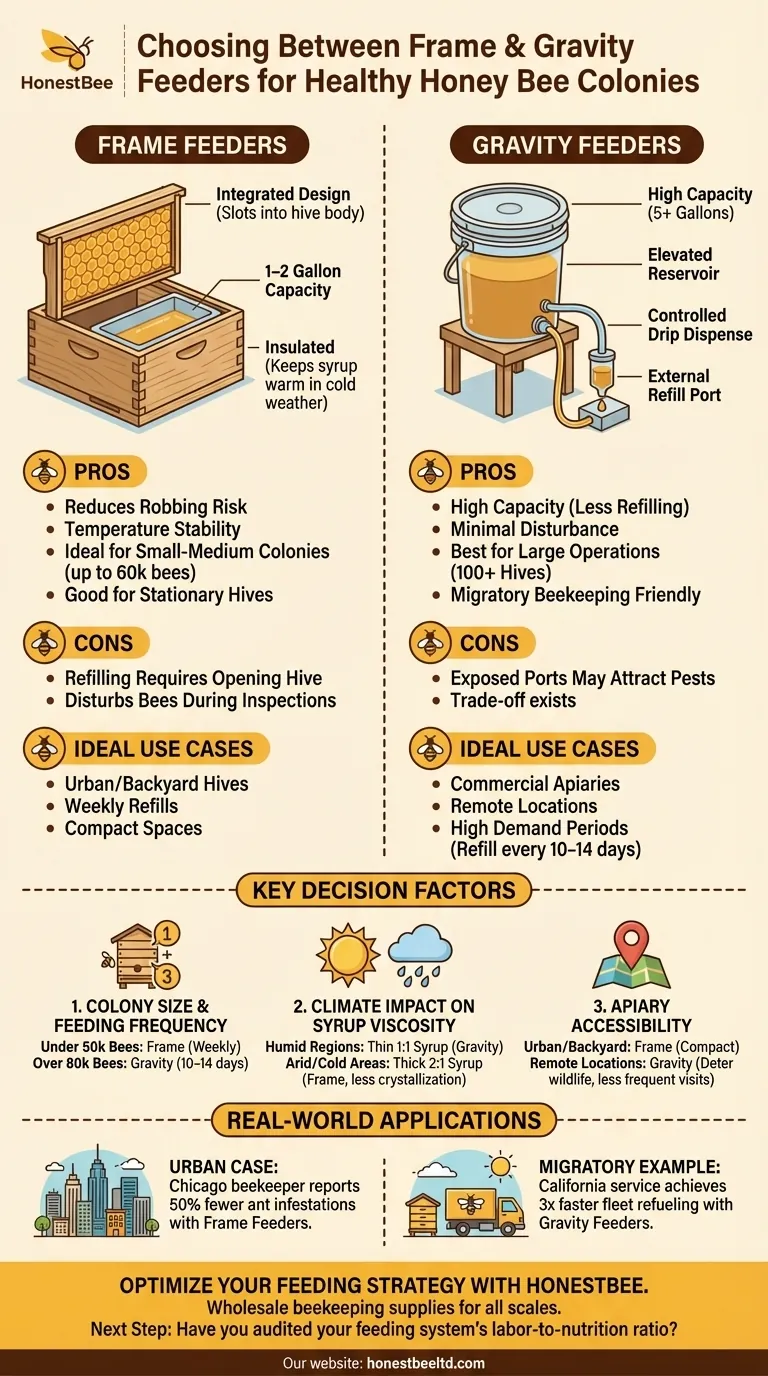
Frame feeders slot directly into hive bodies like standard frames, holding 1–2 gallons of syrup. Their key advantages:
- Integrated Design: Reduces robbing risk by keeping feed inside the hive
- Temperature Stability: Insulated by hive walls, slowing syrup crystallization in cold weather
- Ideal For: Small-to-medium colonies (up to 60,000 bees) and stationary hives
However, refilling requires opening the hive, disturbing bees during inspections.
Mechanics of Gravity Feeders
Gravity feeders (e.g., bucket or barrel styles) dispense syrup from elevated reservoirs via controlled drip. Their strengths:
- High Capacity: Holds 5+ gallons, reducing refill frequency for large operations
- Minimal Disturbance: Refill without dismantling hive components
- Best Suited For: Commercial apiaries with 100+ hives or migratory beekeeping
A trade-off exists: exposed feed ports may attract pests in some environments.
Key Decision Factors
1. Colony Size and Feeding Frequency
- Under 50,000 bees: Frame feeders prevent waste and suit weekly refills
- Over 80,000 bees: Gravity systems meet high demand; refill every 10–14 days
Research shows colonies consume 30–50% more syrup in dearth periods—scale capacity accordingly.
2. Climate Impact on Syrup Viscosity
- Humid Regions: Thin 1:1 sugar syrup flows easily in gravity feeders (USDA recommends this ratio for summer feeding)
- Arid/Cold Areas: Thick 2:1 syrup works better in frame feeders; slower evaporation reduces crystallization
3. Apiary Accessibility Considerations
- Urban/Backyard Hives: Frame feeders win for compact spaces and theft prevention
- Remote Locations: Gravity feeders with locking lids deter wildlife while allowing less frequent visits
Real-World Applications
Urban Backyard Beekeeping Case
A Chicago beekeeper using frame feeders reported:
- 50% fewer ant infestations versus previous entrance feeders
- Easier winter monitoring by checking syrup levels during routine inspections
Migratory Beekeeping Example
A California pollination service using gravity feeders achieved:
- 3x faster fleet refueling during almond bloom season
- Reduced labor costs by servicing 100 hives in half the time
Optimize Your Feeding Strategy with HONESTBEE
Whether you manage five hives or five hundred, HONESTBEE’s wholesale beekeeping supplies help commercial apiaries and distributors balance efficiency with colony health. Our bee feeders are designed by apiarists for real-world conditions—ask about bulk pricing for operations of any scale.
Next Step: Have you audited your feeding system’s labor-to-nutrition ratio this season?
Visual Guide
Related Products
- Rapid Bee Feeder White Plastic 2L Round Top Feeder for 8 or 10-Frame Bee Hives
- White Plastic 0.5L Beekeeping Entrance Feeder for Bees
- HONESTBEE Entrance Bee Feeder Professional Hive Nutrition Solution for Beekeeping
- HONESTBEE Professional Entrance Bee Feeder Hive Nutrition Solution
- Boardman Entrance Bee Feeder Durable Galvanized Steel and Wood Construction for Beekeeping
Related Articles
- How to Choose the Right Bee Feeder for Your Hive’s Health and Efficiency
- Design, Drowning, and the Deceptively Simple Bee Feeder
- The Weight of Winter: A Systems Approach to Pre-Season Bee Feeding
- Beyond the Jar: The Hidden Engineering of Bee Feeder Safety
- How to Accelerate Bee Colony Growth with Science-Backed Feeding Strategies