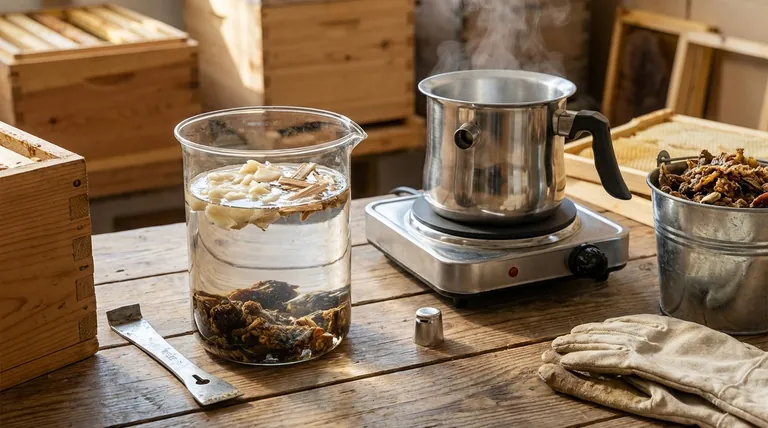
The Bucket of Raw Potential
Imagine a beekeeper, at the end of a long day, staring at a bucket. It’s filled with scrapings from the hive—a messy, sticky clump of propolis, beeswax, and wood splinters. To an untrained eye, it looks like waste.
But to the experienced apiarist, this is a puzzle. It's a test of perception. Buried within that debris is a valuable resin, a raw material waiting to be refined. The challenge isn't one of brute force, but of elegant separation. It's a problem of applied physics.
A Mindset of Separation
Cleaning propolis is less about "washing" and more about exploiting the fundamental nature of the materials involved. You must think like a physicist.
Each component in your bucket of scrapings has a distinct identity, defined by its density and its melting point. Propolis is dense and resinous. Beeswax is light and melts easily. Wood is lighter still. The goal is simply to create an environment where these materials naturally separate themselves.
This isn't just a process; it's a mental model for unlocking hidden value.
Understanding the Puzzle Pieces
Before you begin, know your materials. The raw scrapings are a heterogeneous mixture, and your job is to isolate one key component.
The Treasure: Dense Propolis
Propolis, the resinous "bee glue," is the prize. It is significantly denser than water and the other common contaminants in the hive. This simple fact is the key to the easiest purification method.
The Chaff: Wax and Wood
Beeswax, wood splinters from hive bodies, and other bits of organic debris are the chaff. They are almost universally less dense than water. They float. This difference in buoyancy is their critical weakness.
Method 1: The Elegance of Density
The simplest solutions are often the most beautiful. The cold water soaking method is a perfect example—a technique that relies on nothing more than gravity and buoyancy.
The Underlying Physics
When you place the raw scrapings in a container of cold water, you create a simple sorting machine. The heavy propolis resin immediately sinks. The lighter beeswax, wood particles, and other debris float to the surface. Water becomes the medium that reveals the true nature of each substance.
The Process, Distilled
- Submerge: Place your raw scrapings into a container of cold water.
- Agitate: Gently stir the mixture to break up the clump and encourage separation.
- Skim: Remove all the floating debris from the surface of the water.
- Collect: Once the water is clear of floating material, pour it off and retrieve the clean propolis from the bottom.
This method is the purist's choice. It introduces no heat, posing zero risk of degrading the volatile compounds that give propolis its unique properties. It requires patience, but it guarantees the integrity of the final product.
Method 2: The Calculated Risk of Heat
When your scrapings are heavily contaminated with beeswax, a more assertive approach may be necessary. This method leverages a different physical property: the melting point.
A Lesson in Thermodynamics
Beeswax melts at a much lower temperature (around 145°F or 63°C) than propolis. By heating the mixture in water to a point just below boiling—around 200°F (93°C)—you can liquefy the wax without harming the propolis. The melted wax, being lighter than water, will float to the top for easy removal.
The Process, Controlled
- Combine: Place the scrapings in a pot of water.
- Heat Gently: Slowly bring the temperature to around 200°F (93°C). Do not boil. Boiling can damage the propolis.
- Skim: As the wax melts, it will form a layer on the surface with other debris. Skim this off completely.
- Cool & Collect: Allow the water to cool, then retrieve the consolidated chunk of clean propolis from the bottom.
This method appeals to our desire for efficiency and a pristine result. However, it demands discipline. The temptation to add more heat for a faster result can lead to a degraded product. It's a calculated risk that pays off with careful control.
The Engineer's Choice: A Simple Comparison
Your decision should be guided by your raw material and your ultimate goal. Are you prioritizing absolute integrity or maximum purity?
| Method | Best For | Key Principle | Primary Trade-off |
|---|---|---|---|
| Cold Water Soaking | Small batches, low wax content, preservation | Density Separation (Propolis sinks) | Requires more patience/manual effort |
| Gentle Heat Separation | High wax content, achieving high purity | Melting Point Difference (Wax melts) | Risk of heat damage if uncontrolled |
From a Clean Scrape to a Clean Product
Ultimately, the efficiency of your cleaning process is determined before you even start. The quality of your collection matters immensely. A precise, well-designed hive tool minimizes the amount of wood and paint you scrape away with the propolis, saving you significant time and effort in purification.
This highlights a core principle of any successful operation: the quality of your tools dictates the quality of your workflow. Investing in commercial-grade equipment isn't an expense; it's an investment in efficiency and the final value of your product. At HONESTBEE, we equip commercial apiaries with the durable, high-quality supplies needed to streamline every process, from hive maintenance to final harvest.
If you're ready to improve your workflow and maximize the value of your hive's output, we can help you select the right tools for the job. Contact Our Experts
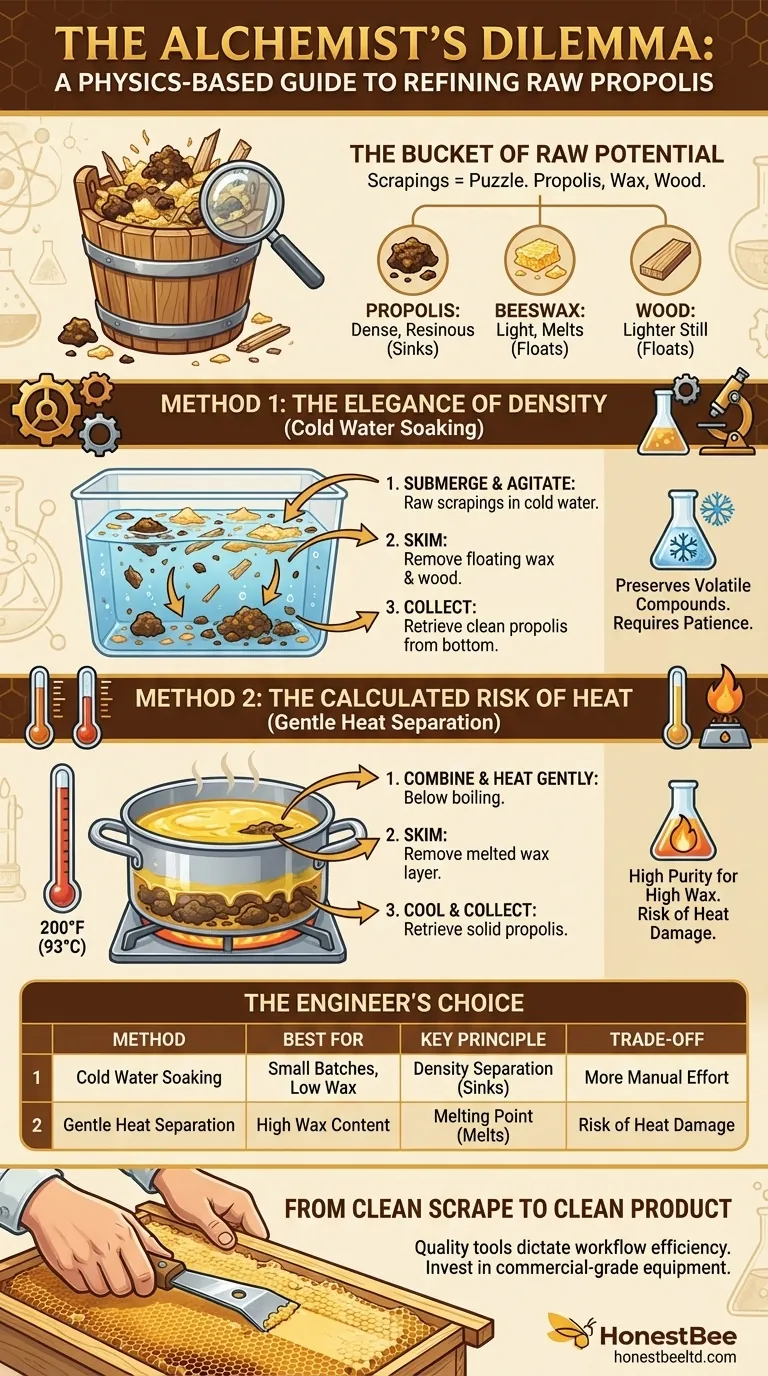
Visual Guide
Related Products
Related Articles
- Systematic Agitation: The Engineering of a Propolis Harvest
- From Raw Resin to Potent Extract: The Engineering Behind Propolis Forms
- The Secret Weapon of Hive Survival: How Bees Transform Resin into Propolis
- How Propolis Reinvents Hive Entrances: Nature’s Blueprint for Survival
- How to Safely Harvest Propolis Without Stressing Your Hive
