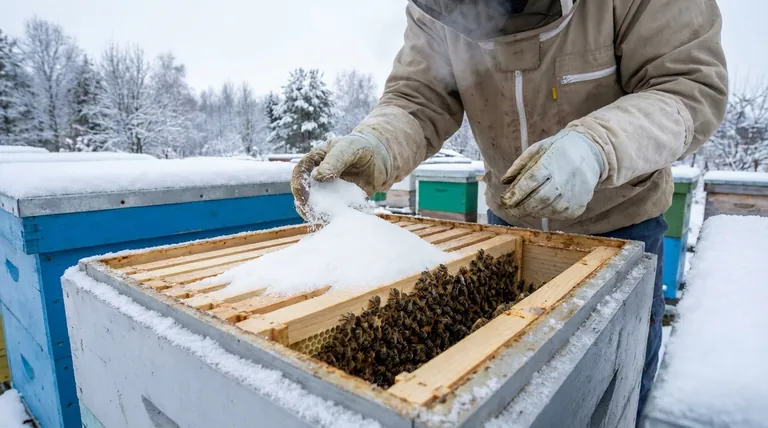
The Beekeeper's Winter Dilemma
Imagine a cold January morning. The air is still, and the apiary is silent. A beekeeper approaches a hive, placing a hand against the wooden box, hoping to feel the faint vibration of a living colony within.
The greatest fear in this moment isn't that the bees have frozen, but that they have starved. The second greatest fear? That the beekeeper's own attempt to help has inadvertently harmed them.
This is the central paradox of winter beekeeping: providing life-sustaining food can introduce a deadly threat—moisture.
The Thermodynamics of the Winter Cluster
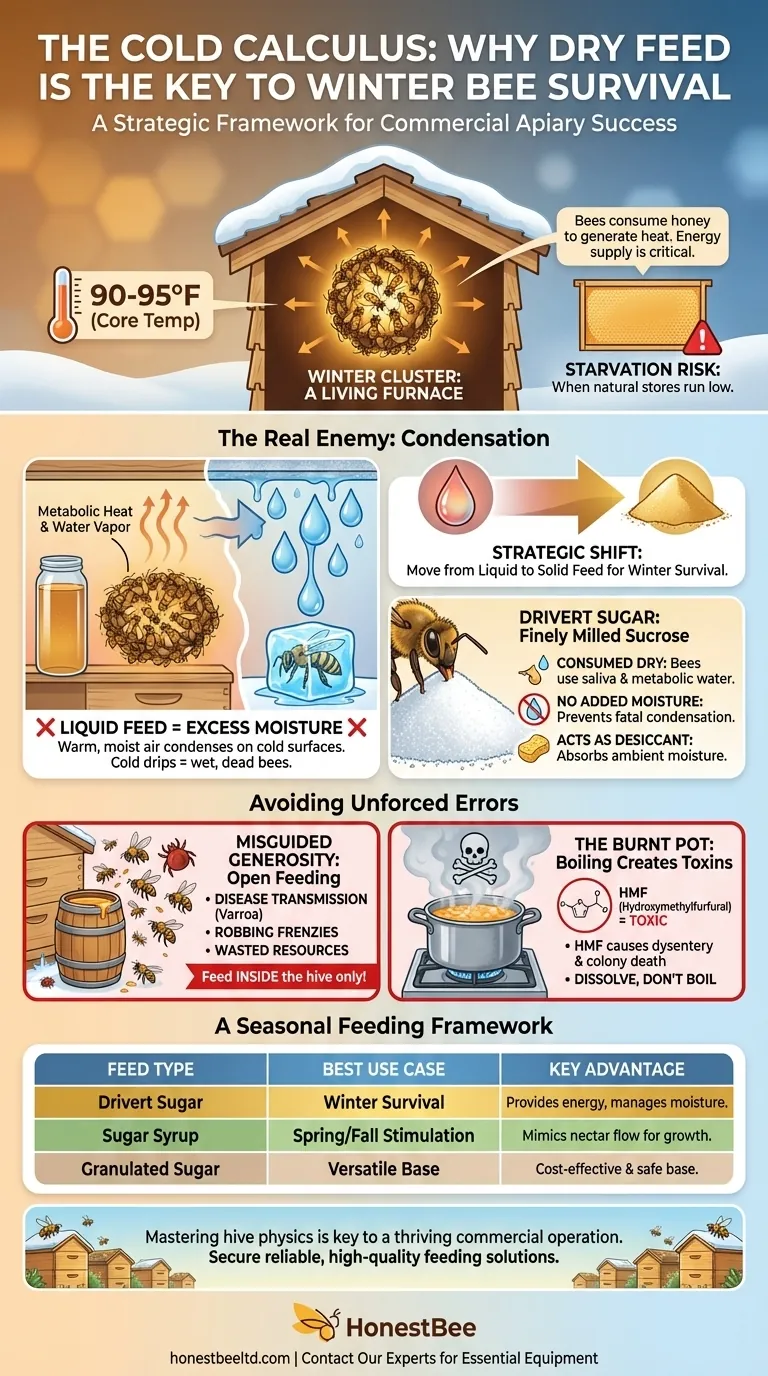
Honey bees don't hibernate. They survive the cold by forming a tight cluster, a living furnace that vibrates, shivers, and consumes honey to generate heat. The core of this cluster, where the queen resides, is kept at a stable 90-95°F (32-35°C), even when snow blankets the hive.
This incredible metabolic effort requires a constant supply of energy. When their natural honey stores run low, the colony faces starvation. The beekeeper's job is to provide an emergency fuel source.
The Real Enemy: Condensation
The act of metabolizing sugar produces two things: heat and water vapor. The bees' warm, moist breath rises inside the cold hive.
When this humid air hits the cold inner cover or hive walls, it condenses, forming droplets of water. This cold water then drips back down onto the cluster. A wet bee is a cold bee, and a cold bee quickly dies. Introducing liquid feed, like sugar syrup, dramatically worsens this problem, turning the hive into a fatal rain chamber.
A Strategic Shift: From Liquid to Solid Feed
The solution isn't just about what to feed, but how. The single most important strategic shift for winter feeding is moving from liquid to solid forms of sugar.
This is not merely a matter of convenience; it is a fundamental change in how we manage the hive's internal environment.
Drivert Sugar: An Engineered Solution
Drivert sugar is a specialized, finely milled sucrose formulated specifically for dry feeding. Its primary advantage is not nutritional superiority—sucrose is sucrose—but its physical form.
Because it is a dry, powdery solid, bees can consume it directly. They use their own saliva and the small amount of metabolic water already present in the hive to process it. This provides the necessary calories without introducing the catastrophic amounts of moisture associated with sugar syrup.
Furthermore, a layer of dry sugar can even act as a desiccant, absorbing some of the ambient moisture produced by the bees and mitigating the risk of condensation.
Avoiding Unforced Errors in Bee Nutrition
A successful feeding strategy requires avoiding common, well-intentioned mistakes that can undermine an entire apiary's health. It’s a matter of understanding the system, not just the single hive.
The Misguided Generosity of Open Feeding
Leaving sugar or syrup out in the open feels like an easy way to help the bees. Psychologically, it seems generous. In reality, it is one of the most dangerous practices in beekeeping.
Open feeding attracts bees from every colony for miles around, including feral ones. This leads to:
- Disease Transmission: It is the fastest way to spread Varroa mites and pathogens throughout your entire operation.
- Robbing: It incites "robbing frenzies," where strong colonies attack and destroy weaker ones to steal their resources.
- Wasted Resources: You end up feeding your competitors' bees and local pests.
Feeding should always be done inside the hive, for the specific colony that needs it.
The Simple Chemistry of a Burnt Pot
When preparing sugar syrup for spring or fall, the rule is simple: dissolve, don't boil.
Boiling a sugar solution can cause the sucrose to break down, forming a compound called Hydroxymethylfurfural (HMF). While harmless to humans, HMF is toxic to bees and can cause dysentery and colony death. Precision is paramount.
A Feeding Framework for the Full Season
The right choice depends entirely on the season and your goal.
| Feed Type | Best Use Case | Key Advantage |
|---|---|---|
| Drivert Sugar | Winter Survival | Provides energy without adding deadly moisture. |
| Sugar Syrup | Spring/Fall Stimulation | Mimics nectar flow to encourage brood rearing. |
| Granulated Sugar | Versatile Base | Cost-effective and safe for syrup or dry feed. |
Your strategy should be clear:
- In Winter, the goal is survival. Use a dry feed like Drivert sugar or a sugar cake to provide calories while managing moisture.
- In Spring and Fall, the goal is growth. Use a carefully prepared sugar syrup inside the hive to simulate a nectar flow and build up the colony's population and stores.
Mastering the physics of the winter hive is the difference between a thriving apiary and a dead-out. It requires knowledge, precision, and access to the right supplies. For commercial operations, securing a reliable source for high-quality feeding solutions like Drivert sugar is a critical component of risk management.
At HONESTBEE, we supply commercial apiaries and distributors with the essential equipment needed to implement these vital strategies effectively. Ensure your colonies have the support they need to flourish through every season. Contact Our Experts
Visual Guide
Related Products
- Economy Small Scale Honey Dryer Dehumidifier Thickening Machine
- 0.5T Capacity Honey Dehumidifier Dryer with Vacuum Heating and Thickening Filtering Machine
Related Articles
- How Controlled Disc Speed in Honey Dryers Preserves Quality and Prevents Spoilage
- Is Your Honey Dryer Secretly "Cooking" Your Profits?
- The Unseen Battle in Every Honey Bucket: Heat, Time, and Quality
- How Floral Composition Shapes Honey Texture: Managing Crystallization for Perfect Consistency
- How to Control Honey Crystallization: Science-Backed Methods for Beekeepers

