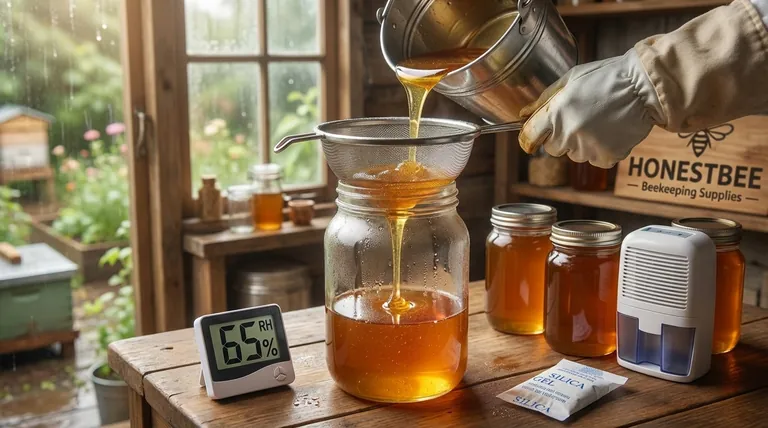
Honey’s delicate flavor profile can degrade when exposed to high humidity, turning what should be a sweet, aromatic delight into a bland or even fermented product. This article explores the science behind humidity-induced changes in honey and provides actionable strategies to maintain its quality—whether you’re a commercial beekeeper, distributor, or enthusiast.
How Humidity Affects Honey’s Chemical Composition
The Role of Hygroscopicity in Honey
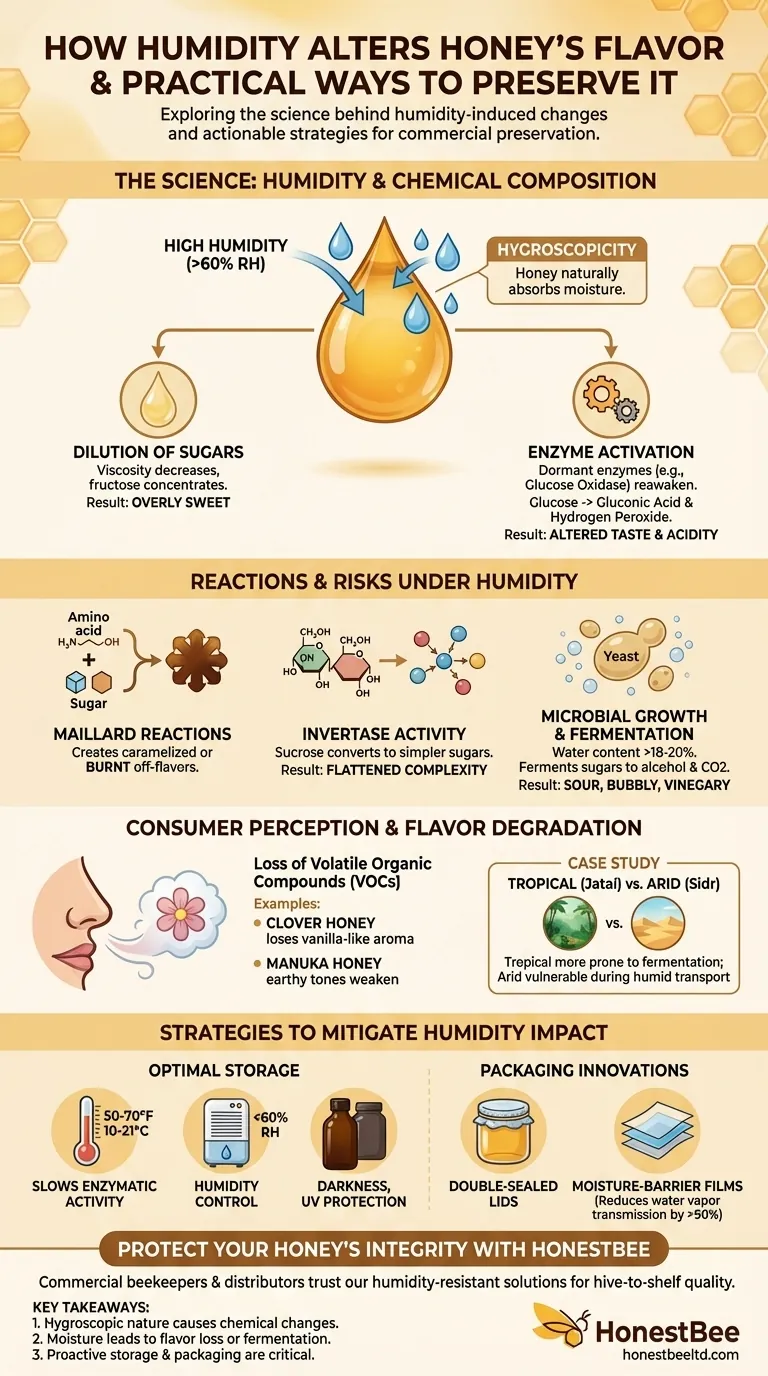
Honey is hygroscopic, meaning it naturally absorbs moisture from its environment. While this property helps preserve honey under ideal conditions, excessive humidity (typically above 60% relative humidity) disrupts its chemical balance.
Key consequences:
- Dilution of sugars: Absorbed water reduces honey’s viscosity and concentrates fructose, making it overly sweet.
- Enzyme activation: Moisture reawakens dormant enzymes like glucose oxidase, breaking down glucose into gluconic acid and hydrogen peroxide—altering taste and acidity.
Enzymatic Reactions Under High Humidity
Humidity accelerates two critical reactions:
- Maillard reactions: Amino acids and sugars combine, creating off-flavors reminiscent of caramelized or burnt notes.
- Invertase activity: Converts sucrose into simpler sugars, flattening honey’s complexity.
Microbial Growth and Fermentation Risks
Above 18–20% water content, honey becomes a breeding ground for yeasts (e.g., Zygosaccharomyces). These microbes ferment sugars, producing alcohol and carbon dioxide—resulting in sour, bubbly, or vinegary honey.
Consumer Perception and Flavor Degradation
Sensory Changes in Aroma and Taste
High humidity diminishes honey’s volatile organic compounds (VOCs), which give distinct floral or herbal notes. For example:
- Clover honey may lose its vanilla-like aroma.
- Manuka honey’s signature earthy tones can weaken.
Case Studies: Regional Honey Varieties vs. Humidity Exposure
Tropical honey (e.g., Brazilian Jataí) often has higher natural moisture content, making it prone to fermentation if stored improperly. In contrast, arid-region honeys (e.g., Yemeni Sidr) are more stable but still vulnerable during transport or storage in humid climates.
Strategies to Mitigate Humidity Impact
Optimal Storage Conditions for Honey
- Temperature: Store at 50–70°F (10–21°C) to slow enzymatic activity.
- Humidity control: Use dehumidifiers or silica gel packs in storage areas to maintain <60% RH.
- Darkness: UV light accelerates degradation; amber glass or opaque containers are ideal.
Packaging Innovations to Control Moisture
- Double-sealed lids: Prevent moisture ingress (e.g., food-grade gaskets).
- Moisture-barrier films: Multi-layer laminates in bulk packaging reduce water vapor transmission by over 90%.
For commercial apiaries, investing in climate-controlled storage units or vacuum-sealed buckets can significantly extend shelf life.
Protect Your Honey’s Integrity with HONESTBEE
Commercial beekeepers and distributors trust HONESTBEE’s humidity-resistant packaging and storage solutions to safeguard honey quality from hive to shelf. Explore our wholesale-focused beekeeping supplies designed to combat environmental challenges—because every drop of honey deserves to shine.
Key Takeaways
- Honey’s hygroscopic nature makes it vulnerable to humidity-driven chemical changes.
- Enzymatic and microbial reactions under moisture lead to flavor loss or fermentation.
- Proactive storage and packaging choices are critical for preservation.
By understanding these mechanisms, you can take targeted steps to ensure honey retains its natural brilliance—no matter the climate.
Visual Guide
Related Products
- High Quality Honey Dehumidifier Dryer Thickening Machine for Beekeeping
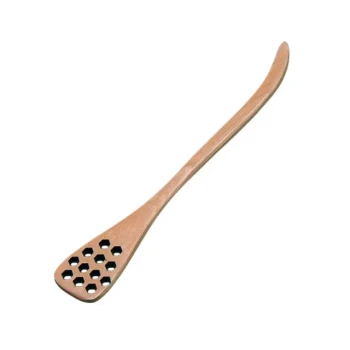
- Modern Honeycomb Pattern Wooden Honey Dipper for Stirring and Drizzling
- Economy Small Scale Honey Dryer Dehumidifier Thickening Machine
- Classic Honey Bear Jars with Flip Top Dispensing Cap for Liquid Sweeteners
- Inverted Squeezable Honey Jar with No Drip Flip Top Cap for Easy Pouring
Related Articles
- Is Your Honey Dryer Secretly "Cooking" Your Profits?
- How Controlled Disc Speed in Honey Dryers Preserves Quality and Prevents Spoilage
- Heat, Honey, and the Commercial Compromise: Why Processing is a Balancing Act
- How to Control Honey Crystallization: Science-Backed Methods for Beekeepers
- The Unseen Battle in Every Honey Bucket: Heat, Time, and Quality