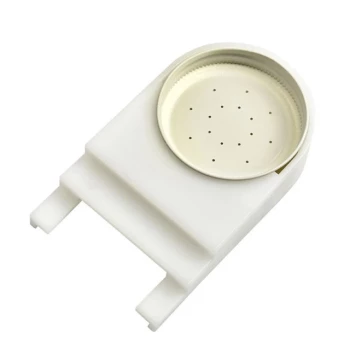
To use a round hive top feeder for open pollen feeding, you must modify its configuration by removing the top cover or insert to expose the dry pollen directly. Instead of installing the feeder on an active colony, place the open container inside an empty hive body located within your bee yard to allow free access for all colonies.
Core Takeaway Open feeding converts a specific tool into a communal resource for your entire apiary. By placing an uncovered round feeder inside a neutral, empty hive shell, you create a protected foraging station that benefits the whole yard rather than a single colony.
Configuring the Feeder
To repurpose a round hive top feeder—typically designed for syrup—for dry pollen, you must alter how you assemble it.
Remove Restrictions
The standard setup for syrup involves an insert to prevent bees from drowning. For dry pollen or pollen substitute, this is unnecessary and obstructive. Leave the top off and remove the syrup insert to create a wide, open bowl.
Filling the Unit
Fill the circular trough with your dry pollen or pollen substitute. Because the restrictions are removed, the bees can walk directly onto the powder to collect it.
Strategic Placement
The method of "open feeding" differs significantly from feeding a specific hive. You are feeding the yard, not a specific colony.
The "Empty Hive" Technique
Do not place the feeder on top of an active colony. If you do, that colony will defend the resource, preventing other bees from accessing it.
Instead, place the filled round feeder inside an empty hive box.
Location Within the Yard
Position this empty hive centrally in your bee yard. This allows foragers from every colony in the vicinity to locate and utilize the pollen source. The empty hive body also serves as a shelter, protecting the light pollen powder from being blown away by wind or ruined by rain.
Understanding the Trade-offs
While using the round feeder for open feeding is efficient for the apiary, it is not the only way to deliver pollen.
Open Feeding vs. Targeted Feeding
Open feeding with the round feeder is a "broadcast" method. Stronger colonies with more foragers will likely gather more pollen than weaker colonies that might need it most.
The Targeted Alternative
If your goal is to support a specific, struggling colony, open feeding is not the best choice. As noted in the supplementary guidelines, a more direct method involves placing pollen substitute directly on the brood frames.
This is done by placing a "slab" of pollen (often in a bag with slits cut into it) under the crownboard. This ensures the specific bees in that hive have immediate access without competing with the rest of the yard.
Making the Right Choice for Your Goal
Select the method that aligns with your management strategy for the season.
- If your primary focus is efficiency for the whole yard: Use the round feeder (without the top) placed inside an empty hive shell to provide a communal food source.
- If your primary focus is nurturing a specific weak colony: Skip the open feeder and place pollen slabs directly on the top bars of the brood frames within that specific hive.
By choosing the correct configuration and placement, you ensure your bees get the nutrition they need, exactly when they need it.
Summary Table:
| Feature | Open Feeding (Round Feeder) | Targeted Feeding (Brood Frame) |
|---|---|---|
| Best For | Entire apiary efficiency | Supporting specific weak colonies |
| Configuration | Open bowl, no insert or cover | Pollen slab/patty directly on frames |
| Placement | Inside an empty hive body | Inside the active brood chamber |
| Competition | High (communal access) | Low (restricted to one colony) |
| Protection | Sheltered from wind/rain by hive body | Fully protected inside the hive |
Scale Your Apiary Operations with HONESTBEE
Are you looking to streamline your feeding management or expand your distribution? HONESTBEE provides commercial apiaries and distributors with high-quality, durable beekeeping equipment designed for efficiency.
From versatile round hive top feeders to industrial honey-filling machines and specialized hardware, our comprehensive wholesale catalog covers every aspect of modern beekeeping. Whether you need essential consumables or large-scale machinery, our team is ready to supply the tools your business needs to thrive.
Ready to elevate your beekeeping business? Contact us today to discuss our bulk pricing and specialized equipment solutions.
Related Products
- HONESTBEE Round Hive Top Bee Feeder for Syrup
- Rapid Bee Feeder White Plastic 2L Round Top Feeder for 8 or 10-Frame Bee Hives
- HONESTBEE Square Top Hive Bee Feeder Top Bee Feeder
- HONESTBEE Professional Hive Top Bee Feeder Feeding Solution
- Professional Hive Top Bee Feeder for Beekeeping
People Also Ask
- What can the round hive top feeder be used for? A Guide to Efficient, Safe Bee Feeding
- What is the capacity of the round hive top feeder for syrup and pollen? A Guide to Targeted Apiary Support
- What types of hive boxes is the round hive top feeder compatible with? Universal Fit for 8 & 10-Frame Langstroth Hives
- What types of feed can be used with the round hive top feeder? Versatile Feeding for Optimal Apiary Health
- How do you use a top feeder for bees? Expert Guide to Installation and High-Volume Hive Feeding