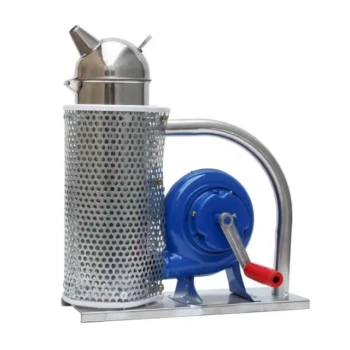
Bee smokers function as a critical bio-chemical safety barrier by generating cool smoke that fundamentally alters the behavior of a honeybee colony. This tool primarily works by masking the alarm pheromones bees use to coordinate defensive attacks, while simultaneously triggering a survival instinct that distracts them from the beekeeper's presence.
The bee smoker ensures safety through a dual mechanism: it interrupts the pheromone signals bees use to coordinate attacks and triggers a feeding response that distracts the colony. This creates a stable environment for safe hive maintenance and harvesting.
The Mechanics of Hive Pacification
Disrupting Chemical Communication
Honeybees rely heavily on chemical signals to protect their hive. When a colony perceives a threat, guard bees release alarm pheromones to signal the rest of the hive to attack.
The cool smoke generated by the smoker physically interferes with the air surrounding the bees. This masks the alarm pheromones, effectively "jamming" the communication network. Without the ability to transmit the attack signal, the colony’s defensive behavior is suppressed, preventing a localized threat from escalating into a mass stinging event.
Triggering the Survival Instinct
Beyond masking signals, the smoke taps into an evolutionary survival reflex. The presence of smoke suggests a nearby forest fire, prompting bees to prepare for potential evacuation.
In response, bees instinctively begin consuming honey. This "gorging" behavior diverts their attention away from the beekeeper and towards the hive's food stores. Once the bees have consumed honey, they become physically more lethargic and significantly more docile, making them less prone to aggression.
Neutralizing Target Markers
If a beekeeper is stung, the sting site releases a potent pheromone marker that guides other bees to the exact same location. This can quickly lead to multiple stings in the same area.
A bee smoker functions as a neutralizer in this scenario. By puffing smoke directly onto the sting site or the beekeeper's clothing, the scent of the alarm pheromone is masked. This prevents other bees from honing in on the target, halting the progression of defensive behavior.
Understanding Operational Constraints
While effective, the bee smoker is not foolproof and requires precise handling to remain safe for both the operator and the colony.
The smoke produced must be cool smoke. Hot smoke can singe the bees' wings, cause physical harm, and induce panic rather than calm. Additionally, over-use of the smoker can cause excessive agitation or potentially affect the quality of the honey. The goal is a subtle disruption of senses, not an overwhelming suffocation of the hive.
Optimizing Safety During Inspections
To use a bee smoker effectively, you must apply it strategically based on the stage of your interaction with the hive.
- If your primary focus is Initial Entry: Apply light puffs of cool smoke at the hive entrance to mask the initial alarm pheromones released by guard bees.
- If your primary focus is Colony Management: Use the smoker to induce honey consumption, creating a docile state that allows for frame extraction and splitting without aggression.
- If your primary focus is Incident Control: Immediately apply smoke to any area where a sting has occurred to mask the scent and prevent further attacks.
Mastering the bee smoker allows you to control the biological environment of the hive, ensuring that inspections remain routine maintenance rather than dangerous confrontations.
Summary Table:
| Mechanism | Primary Action | Safety Benefit |
|---|---|---|
| Pheromone Masking | Disrupts alarm chemical signals | Prevents coordinated defensive attacks |
| Survival Instinct | Triggers honey consumption | Makes bees docile and physically lethargic |
| Target Neutralization | Covers pheromones on sting sites | Prevents multiple bees from targeting the same spot |
| Thermal Control | Delivery of cool smoke | Ensures colony safety without damaging bee wings |
Elevate Your Commercial Apiary Safety with HONESTBEE
At HONESTBEE, we specialize in empowering commercial apiaries and global distributors with professional-grade beekeeping solutions. From high-output hive-making and honey-filling machinery to a comprehensive range of premium beekeeping tools and industry consumables, we provide the hardware you need to scale your operations safely and efficiently.
Ready to upgrade your equipment inventory? Partner with HONESTBEE for reliable wholesale supply and expert support. Contact us today to discuss your bulk requirements and discover how our specialized tools can streamline your honey production.
References
- Simone Athayde, Wemerson Chimello Ballester. Engaging indigenous and academic knowledge on bees in the Amazon: implications for environmental management and transdisciplinary research. DOI: 10.1186/s13002-016-0093-z
This article is also based on technical information from HonestBee Knowledge Base .
Related Products
- Stainless Steel Honey Bee Smoker Hive and Honeycomb Smoker for Beekeeping
- Professional Bee Smoker with Elongated Spout and Durable Bellows for Beekeeping
- Premium Traditional Copper Bee Smoker with Bellows
- Heavy Duty Manual Bee Smoker Blower for Beekeeping
- European Stainless Steel Bee Smoker for Honey Bee Hive
People Also Ask
- What are bee smokers made out of? Choose the Right Material for Your Apiary
- Why is a stainless steel bee smoker considered indispensable? Master Hive Management with Cool Smoke Technology
- What type of bee smoker is recommended for a beginner? Top Picks for Easy Hive Management
- When should you add more fuel to the bee smoker? Watch for This Critical Smoke Signal
- How do bee smokers and colored light sources work together to assist in night-time honey harvesting? Expert Strategies