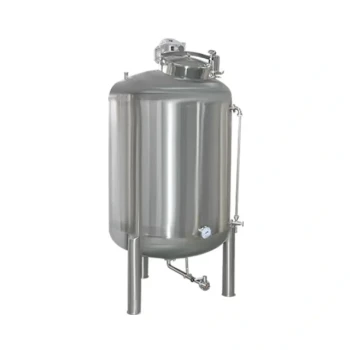
Professional water storage systems serve as the primary defense mechanism for apiaries operating in arid or drought-prone environments. By deploying dedicated water tanks directly within the apiary site, beekeepers ensure a continuous and stable supply of clean water when natural sources—such as streams or ponds—are depleted. This immediate access allows the colony to function normally without diverting critical resources toward survival-based water foraging.
Water availability determines the metabolic limits of a hive. By securing a proximal water source, you shift the colony's energy expenditure from survival foraging to productive maintenance, ensuring the hive can regulate its internal climate regardless of external drought conditions.
The Critical Role of Water in Hive Biology
Conserving Colony Energy
When natural rainfall is deficient, bees are forced to expand their foraging radius to find moisture. This requires excessive energy consumption, depleting the hive's honey stores just to stay hydrated.
Professional storage systems mitigate this by locating water within the apiary's immediate footprint. This proximity eliminates the need for exhausting, long-distance flights. Consequently, the calories that would have been burned searching for water are preserved for the colony's vitality.
Thermoregulation Through Evaporation
Honeybees do not view water solely as a drink; it is their primary tool for air conditioning. During high-temperature periods, bees deposit water droplets throughout the hive and fan their wings to create evaporative cooling.
A professional system ensures the high volume of water required for this process is always available. Without this constant supply, the colony cannot regulate internal temperatures, putting the brood and the queen at risk of heat stress.
Sustaining Reproduction and Processing
Hive humidity is a critical factor in successful brood rearing. A consistent water source allows the colony to maintain the specific humidity levels required for normal reproduction cycles.
Furthermore, water is essential for food chemistry. Bees utilize water to dilute stored honey for consumption and to process fresh nectar. A storage system ensures these metabolic activities continue uninterrupted, even when the external environment is bone dry.
Understanding the Operational Trade-offs
Maintenance and Sanitation
While storage systems solve supply issues, they introduce a maintenance requirement. Standing water in tanks must be kept clean to prevent it from becoming a vector for disease.
Dependency Management
Relying on artificial sources requires vigilance. If a tank runs dry during a critical heatwave, the colony—having adapted to the nearby source—may not have the time or energy reserves to pivot back to distant natural sources quickly enough.
Ensuring Apiary Resilience
To effectively manage an apiary during drought, your water strategy must align with your colony's specific stressors.
- If your primary focus is Colony Survival: Prioritize large-capacity tanks to ensure evaporative cooling never stops during peak heat events.
- If your primary focus is Honey Production: Place water sources as close to the hives as possible to minimize flight time and maximize nectar foraging energy.
Professional water management is not merely an accessory; it is a fundamental control system that stabilizes the biological volatility of the hive.
Summary Table:
| Feature | Impact on Apiary Management | Primary Benefit |
|---|---|---|
| Proximal Access | Reduces foraging flight distance | Conserves energy for honey production |
| Evaporative Cooling | Enables internal temperature control | Protects brood and queen from heat stress |
| Humidity Regulation | Maintains precise moisture levels | Supports healthy reproduction cycles |
| Resource Stability | Provides a buffer against dry spells | Ensures consistent metabolic processing |
Scale Your Apiary Operations with HONESTBEE
As a professional beekeeper or distributor, you know that environmental resilience is the key to profitability. HONESTBEE is your strategic partner, offering a comprehensive wholesale range of beekeeping tools, specialized hive-making machinery, and honey-filling equipment designed for commercial success.
From essential consumables to large-scale apiary infrastructure, we provide the hardware you need to mitigate climate risks and maximize yield. Contact us today to discuss how our bulk solutions and industry expertise can strengthen your supply chain and support your growth in the global beekeeping market.
References
- Salimata Ouattara, Kossi Adjonou. Assessing Impacts of Climatic Parameters on Beekeeping Productivity in the North of Côte d’Ivoire. DOI: 10.4236/ajcc.2025.141005
This article is also based on technical information from HonestBee Knowledge Base .
Related Products
- Professional Honey Storage Tank with Agitation System
- Professional Water Cooled Induction Sealing Machine for Bottles and Containers
People Also Ask
- What economic role do honey storage tanks play? Boost Your Revenue Through Strategic Inventory Management
- What roles do industrial honey storage tanks and filtration meshes play in processing? Ensure Purity & Consistency
- What is the purpose of a honey storage tank? Streamline Your Honey Processing for Quality & Efficiency
- What are honey storage tanks used for? Essential Features for Quality Preservation and Profit
- How do large honey storage tanks and gravity fall filling systems improve honey packaging efficiency and safety?