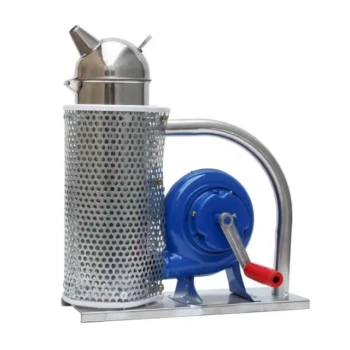
A bee smoker functions as both a chemical disruptor and a behavioral distraction. It utilizes a vertical chamber and a bellow to generate and direct cool smoke into the hive, effectively neutralizing the colony's defensive instincts through two specific biological mechanisms.
Core Takeaway The smoker manages defensiveness by masking the alarm pheromones bees use to signal danger and simultaneously triggering a compulsive feeding response. This dual action preoccupies the colony, allowing for safe inspection and maintenance within a limited window of time.
The Biological Mechanisms of Control
To understand how a simple tool controls complex insect behavior, one must look at how it alters the bees' sensory perception and priorities.
Masking Chemical Communication
Honey bees rely heavily on scent to coordinate defense. When a threat is perceived, guard bees release alarm pheromones to alert the rest of the colony.
Smoke acts as a masking agent. It suppresses the transmission of these pheromones, effectively "jamming" the signal that tells the colony to attack. Without this chemical trigger, the collective defensive response is significantly reduced.
Triggering the Feeding Response
Beyond blocking signals, smoke actively changes bee behavior. The presence of smoke prompts the bees to feed on honey.
This biological imperative preoccupies the colony. Instead of focusing on the intruder (the beekeeper), the bees focus on consuming resources. This distraction is critical for reducing defensive behavior during hive management.
Enabling Safe Daylight Operations
For highly defensive species, such as Apis mellifera scutellata, smoke is not just a convenience; it is a safety requirement.
Without the interference provided by the smoker, these species exhibit intense aggressive behavior. The smoker allows beekeepers to perform precise maintenance and harvesting during daylight hours, avoiding the risks associated with unprotected night harvesting.
Understanding the Trade-offs
While the bee smoker is the standard tool for safety, its use is not appropriate for every scenario. Understanding its limitations is vital for objective beekeeping.
The Temporary Nature of Calm
The effect of the smoke is not permanent. It allows the beekeeper to operate safely for a limited period. Once the smoke dissipates and the feeding response subsides, the colony's defensive capabilities return to normal.
Compromising Behavioral Assessments
Smoke alters the bees' natural state. Therefore, it acts as a contaminant if you are attempting to measure the colony's true temperament.
Excessive smoke suppresses the very behavior researchers often need to observe, such as flying, running, or stinging. If the goal is to evaluate natural defensive reactions, the use of smoke must be minimized or eliminated to ensure data objectivity.
Making the Right Choice for Your Goal
The decision to use smoke depends entirely on whether your priority is operational safety or data accuracy.
- If your primary focus is Routine Management: Use a smoker to mask pheromones and ensure safety, especially when working with aggressive species during the day.
- If your primary focus is Behavioral Research: Minimize or eliminate the use of smoke to ensure observed reactions represent the colony's true, unsuppressed defensive traits.
Mastering the use of a smoker is about balancing the need for protection with the need to understand the colony's natural state.
Summary Table:
| Mechanism | Action Type | Primary Effect on Bees |
|---|---|---|
| Pheromone Masking | Chemical | Blocks alarm signals to prevent collective attack |
| Feeding Impulse | Behavioral | Distracts bees by prompting honey consumption |
| Cool Smoke Delivery | Physical | Provides a safe, non-harmful environment for the keeper |
| Operational Window | Temporal | Creates a temporary calm period for hive maintenance |
Elevate Your Apiary Operations with HONESTBEE
At HONESTBEE, we specialize in supporting commercial apiaries and distributors with high-performance beekeeping solutions. Whether you need reliable bee smokers, automated hive-making machinery, or professional-grade honey-filling equipment, our comprehensive wholesale portfolio is designed to enhance your efficiency and safety. From essential consumables to specialized hardware and honey-themed cultural merchandise, we provide the tools you need to scale your business. Contact us today to discover how our premium equipment and industry expertise can streamline your honey production and supply chain.
Related Products
- Stainless Steel Honey Bee Smoker Hive and Honeycomb Smoker for Beekeeping
- Professional Bee Smoker with Elongated Spout and Durable Bellows for Beekeeping
- Premium Traditional Copper Bee Smoker with Bellows
- Heavy Duty Manual Bee Smoker Blower for Beekeeping
- European Stainless Steel Bee Smoker for Honey Bee Hive
People Also Ask
- What are bee smokers made out of? Choose the Right Material for Your Apiary
- What type of bee smoker is recommended for a beginner? Top Picks for Easy Hive Management
- Why is a stainless steel bee smoker considered indispensable? Master Hive Management with Cool Smoke Technology
- What is the best material for a bee smoker? Choose the Right Fuel for a Calm Hive
- How should a beekeeper use a smoker when approaching a hive? A Guide to Calm, Safe Inspections