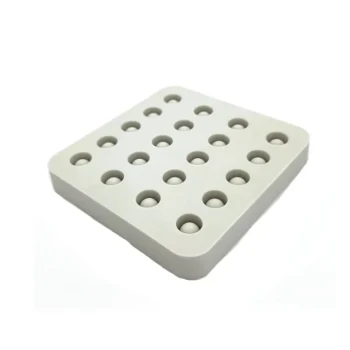
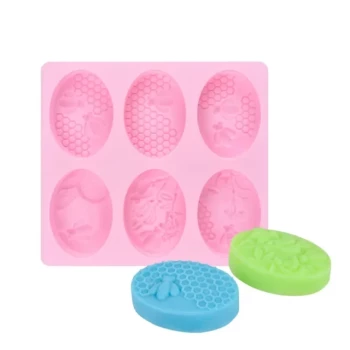
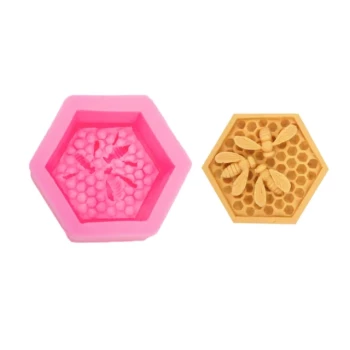
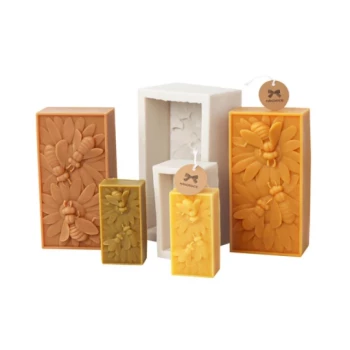
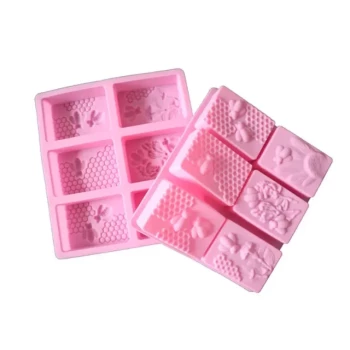
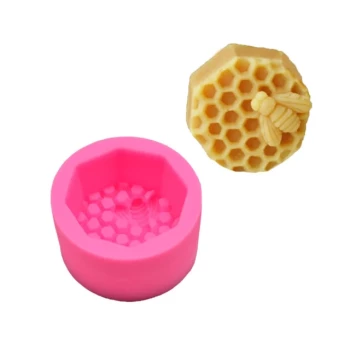
A Beeswax Foundation Casting Mold improves efficiency by enabling the creation of standardized foundation sheets that reduce the biological workload of the colony. By providing a pre-stamped hexagonal base, the mold significantly lowers the amount of wax bees must secrete to build combs. This energy conservation allows the colony to prioritize nectar collection and accelerate the establishment of storage space.
The casting mold transforms raw wax into a productivity tool. By minimizing the metabolic cost of construction, it frees up the colony's workforce to focus on high-volume foraging and rapid honey production.
Optimizing Colony Energy Expenditure
The primary contribution of a foundation mold is the redirection of colony resources from construction to production.
Reducing Biological Costs
Bees consume significant amounts of energy and resources to secrete beeswax.
The foundation mold utilizes pure beeswax to create a physical guide, effectively providing the "floor" of the honeycomb.
This reduces the total volume of wax bees must produce biologically, conserving their metabolic energy.
Redirecting Focus to Foraging
When worker bees spend less time and energy secreting wax, they can engage in other vital tasks.
The colony can direct more resources toward nectar collection and processing.
This shift is particularly critical during a nectar flow, allowing the hive to capitalize on available food sources immediately.
Accelerating Storage Setup
A colony needs physical storage space to process honey efficiently.
Foundation sheets help the colony quickly establish efficient honey storage structures.
This speed ensures the hive is ready to store the maximum amount of honey when production conditions are peak.
Standardization and Structural Integrity
Beyond energy savings, the mold imposes a necessary order on the hive's architecture.
Guiding Orderly Construction
Left to their own devices, bees may build erratic or cross-connected combs.
The mold presses standardized hexagonal cell bases into the sheet, forcing bees to build nests along a pre-set structure.
This ensures the hive remains organized and accessible for the beekeeper.
Supporting Mechanized Operations
Modern apiculture often relies on machinery for extraction and management.
Cell size consistency is a direct benefit of using a precision casting mold.
Uniform combs fit standard frames perfectly, making mechanized operations smoother and less damaging to the colony.
Understanding the Trade-offs
While foundation molds offer significant efficiency gains, it is important to understand the limitations of this approach.
Rigidity of Cell Size
The mold determines the specific size of the hexagonal cells.
This removes the bees' natural ability to vary cell sizes based on their immediate needs (such as raising drones vs. workers).
You must ensure the mold specifications match the specific biological requirements of your bee species.
Requirement for Pure Wax
The quality of the foundation depends on the input material.
These molds require a supply of pure beeswax to function correctly.
Using contaminated or low-quality wax in the mold can introduce toxins to the hive or result in structural failure.
Making the Right Choice for Your Goal
The use of a Beeswax Foundation Casting Mold is a strategic decision to trade construction effort for production speed.
- If your primary focus is maximizing honey yield: Use the mold to minimize wax secretion, allowing bees to dedicate maximum energy to nectar foraging.
- If your primary focus is operational efficiency: Use the mold to ensure consistent cell sizes, which facilitates easier inspection and mechanized extraction.
By standardizing the foundation, you empower the colony to work smarter, not harder.
Summary Table:
| Feature | Impact on Colony Production | Benefit to Beekeeper |
|---|---|---|
| Pre-stamped Hexagonal Base | Reduces metabolic energy spent on wax secretion. | Faster hive establishment and higher nectar flow yield. |
| Standardized Cell Size | Forces orderly comb construction and uniform brood patterns. | Facilitates easier hive inspections and mechanized extraction. |
| Structural Reinforcement | Provides a stable 'floor' for rapid comb building. | Minimizes cross-comb and simplifies frame management. |
| Resource Redirection | Frees up workers for high-volume foraging. | Maximizes honey storage during peak production windows. |
Maximize Your Apiary's Productivity with HONESTBEE
At HONESTBEE, we specialize in empowering commercial apiaries and distributors with the high-performance tools needed to scale operations. Our precision Beeswax Foundation Casting Molds are designed to help your colonies work smarter, allowing them to focus on honey production rather than energy-intensive wax secretion.
From automated hive-making and honey-filling machinery to a full spectrum of durable beekeeping hardware and essential consumables, HONESTBEE provides a comprehensive wholesale solution tailored to your growth.
Ready to upgrade your production efficiency?
Contact our expert team today to explore our wholesale catalog and bulk pricing!
References
- Wongelu Endale Gobena. Improved Beekeeping Technologies as Intervention for Unemployed Youth Group. DOI: 10.7176/jbah/12-6-02
This article is also based on technical information from HonestBee Knowledge Base .
Related Products
- Notebook Style Beeswax Foundation Mould Wax Foundation Mold
- Colorful Silicone Beeswax Foundation Mold Mould for Beekeeping
- Beeswax Machine Press Embosser Wax Foundation Mold Printer Bee Hive Equipment Making Sheet
- Fully Automatic Beeswax Embossing Machine Foundation Mill
- Electric Flatting and Embossing Machine with Tray for Beekeeping
People Also Ask
- How do beeswax foundation molds facilitate the construction of standardized honeycombs? Optimize Your Apiary Efficiency
- Why are specific wax foundation molds used to downsize brood cells? Master Mechanical Pest Inhibition
- How do you use the Foundation Mold to create beeswax foundation? Master DIY Beekeeping with Precision
- How can beeswax value-addition processes be utilized to increase beekeeping revenue? Boost Your Apiary Profitability
- Why is high-purity natural beeswax essential for foundations? Prevent Larval Mortality & Boost Colony Health