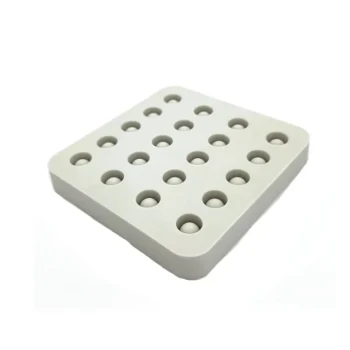
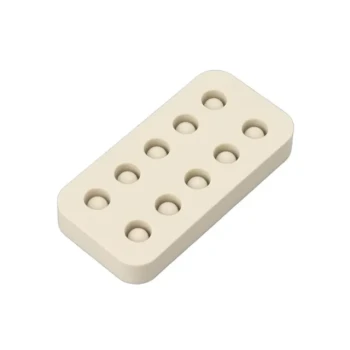
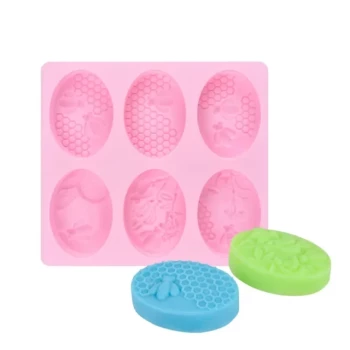
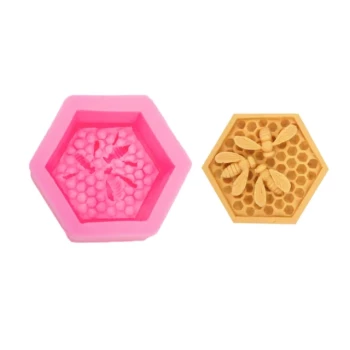
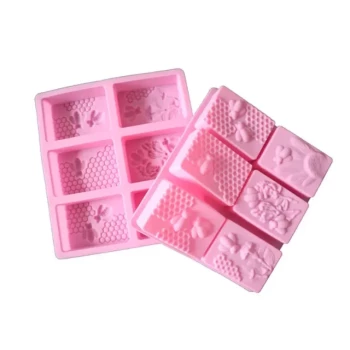
Beeswax foundation molds serve as the architectural blueprint for the hive, mechanically embossing a precise hexagonal grid onto sheets of high-purity beeswax. This pre-formed template acts as a strict guide, compelling honeybees to construct uniform, standardized cells rather than irregular, free-form structures. By dictating the base geometry of the comb, these molds align the colony’s natural building instincts with the requirements of modern hive management and equipment.
By providing a standardized initial structure, foundation molds significantly lower the metabolic cost of wax secretion for the bees while ensuring the comb possesses the mechanical strength necessary for centrifugal honey extraction.
The Mechanics of Guidance
Embossing the Pattern
The fundamental function of the mold is to impress a specific texture onto pure beeswax sheets.
This process creates a highly visible, tactile guide for the bees.
Establishing Uniformity
Bees utilize this embossed sheet as a mandatory starting point.
Instead of building randomly, they follow the "ridges" of the mold, resulting in neat, parallel rows of cells.
Standardization of Cell Size
The mold dictates the exact diameter of individual cells.
This ensures that the resulting honeycomb is consistent throughout the hive, rather than varying in size based on the bees' immediate whims.
Efficiency and Resource Management
Reducing Energy Expenditure
Creating wax is a metabolically expensive process for honeybees.
Because the foundation provides a significant portion of the base material, bees do not need to secrete as much of their own wax to begin construction.
Redirecting Colony Effort
The energy saved on wax production is not lost; it is redirected toward vital colony tasks.
With the foundation in place, the colony can focus more resources on foraging for nectar and rearing new worker bees.
Structural Integrity and Compatibility
Withstanding Physical Stress
Natural comb is fragile and can easily break under pressure.
Molded foundations provide a reinforced internal structure, giving the honeycomb the necessary durability to survive the high speeds of centrifugal honey extractors without collapsing.
Facilitating Equipment Use
Standardized combs align perfectly with other beekeeping tools.
Uniform cells ensure compatibility with queen excluders and maximize the efficiency of mechanical processing equipment.
Regulating Colony Composition
Controlling Drone Populations
Left to their own devices, bees will build larger cells to rear drones (male bees), which do not gather nectar.
Standardized molds are typically sized for worker bees, thereby physically restricting the number of drone cells the colony can build.
Focusing on Production
By limiting drone production, the mold indirectly influences the colony's demographics.
This ensures a higher ratio of worker bees, further optimizing the hive for honey collection and storage.
Understanding the Trade-offs
Dependence on Material Quality
The effectiveness of the mold relies heavily on the quality of the base sheet.
As noted, the foundation must be made of "machine-pressed high-purity wax" to be accepted by the bees and to function correctly as a template.
Rigidity of Structure
The strength provided by the foundation is essential for extraction, but it creates a rigid system.
While this allows for mechanical processing, it requires the beekeeper to ensure the foundation remains intact and well-positioned, as the bees cannot easily alter the fundamental architecture once established.
Making the Right Choice for Your Goal
To effectively utilize beeswax foundation molds, align their specific benefits with your management objectives:
- If your primary focus is maximizing honey yield: Utilize molds to minimize the energy bees spend on wax secretion, redirecting that effort toward nectar collection.
- If your primary focus is mechanical extraction: Rely on the molded foundation to provide the structural backbone required to withstand centrifugal force.
- If your primary focus is population management: Use standard worker-sized foundations to naturally suppress drone populations and increase the worker workforce.
Strategic use of foundation molds transforms the honeycomb from a fragile biological structure into a durable, standardized unit of production.
Summary Table:
| Feature | Function & Benefit |
|---|---|
| Embossed Grid | Provides a precise hexagonal blueprint for uniform cell construction. |
| Resource Savings | Reduces the amount of wax bees must secrete, saving metabolic energy. |
| Structural Strength | Reinforces combs to withstand high-speed centrifugal honey extraction. |
| Population Control | Standardizes cell size to worker-bee dimensions, limiting drone production. |
| Equipment Compatibility | Ensures combs fit perfectly with standard hive tools and mechanical extractors. |
Elevate Your Commercial Beekeeping with HONESTBEE
Maximize your honey yield and streamline hive management with professional-grade foundation molds and equipment. HONESTBEE specializes in catering to commercial apiaries and distributors with a comprehensive wholesale offering.
Our extensive portfolio includes:
- Advanced Machinery: High-precision hive-making and honey-filling machines.
- Full Spectrum Supplies: From high-purity beeswax tools to specialized beekeeping hardware.
- Industry Consumables: A wide array of essential supplies for large-scale operations.
- Cultural Merchandise: Unique honey-themed retail products.
Ready to scale your production and provide your customers with the best in beekeeping technology? Contact HONESTBEE today to discuss our wholesale solutions and how we can support your business growth!
References
- Dinku Negash. Demonstration and participatory evaluation of apiculture technologies in Sidama National Regional state, Ethiopia. DOI: 10.33545/26180723.2022.v5.i2a.139
This article is also based on technical information from HonestBee Knowledge Base .
Related Products
- Colorful Silicone Beeswax Foundation Mold Mould for Beekeeping
- Notebook Style Beeswax Foundation Mould Wax Foundation Mold
- Beeswax Machine Press Embosser Wax Foundation Mold Printer Bee Hive Equipment Making Sheet
- Beeswax Foundation Sheets Beehive Foundation for Wholesale
- High-Efficiency 20-Cell Silicone Mold for Beeswax Bee Queen Cup Production
People Also Ask
- How do you use the Foundation Mold to create beeswax foundation? Master DIY Beekeeping with Precision
- How can beeswax value-addition processes be utilized to increase beekeeping revenue? Boost Your Apiary Profitability
- What is the first tip for pouring beeswax into a silicone mold? Ensure a Perfect Release
- Why are specific wax foundation molds used to downsize brood cells? Master Mechanical Pest Inhibition
- What is a foundation mold used for? Turn Your Wax Cappings into High-Quality Foundations