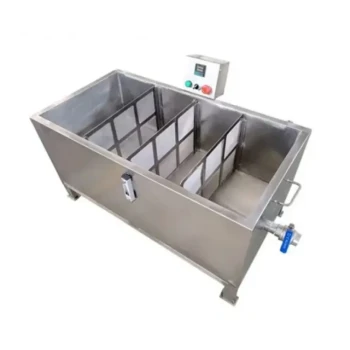
Precision thermal control is the defining factor in high-quality honey-processed herbal slices, ensuring that medicinal honey achieves the perfect viscosity for deep tissue penetration. By maintaining a steady environment, typically at 80°C, a constant temperature water bath facilitates the efficient migration of bioactive compounds like Platycodin D while preventing the physical hardening or uneven coloration that devalues professional-grade inventory.
For distributors and wholesalers, the use of a constant temperature water bath represents a shift from artisanal guesswork to standardized pharmaceutical excellence, ensuring that every batch delivered meets strict physicochemical and sensory specifications.
Thermal Precision and Active Component Extraction
Maintaining Honey Fluidity for Deep Penetration
Honey is naturally viscous, which can act as a barrier to uniform herbal absorption. The water bath provides a stable thermal environment that reduces this viscosity, allowing the medicinal honey to remain fluid enough to saturate the herbal slices completely.
Optimizing the Migration of Bioactive Compounds
Precise temperature control is essential for the "migration" phase, where active ingredients move into the honey mixture. By holding the soaking temperature at a specific set point, such as 80°C, processors maximize the yield of critical components like Platycodin D, ensuring the herbal slices meet therapeutic potency standards.
Ensuring Visual and Textural Uniformity
Temperature fluctuations during the soaking phase are a leading cause of "spotty" coloration or localized hardening. A water bath eliminates these variations, resulting in homogenized slices that possess the consistent amber hue and supple texture expected by premium B2B buyers.
Preserving Physicochemical Integrity
Preventing Local Overheating and HMF Formation
Traditional direct-heat methods often cause "hot spots" that lead to the excessive production of Hydroxymethylfurfural (HMF), a marker of heat damage. The indirect, uniform heating of a water bath inhibits HMF development, preserving the freshness and chemical purity of the honey-processed slices.
Protecting Heat-Sensitive Bioactive Markers
Many herbal compounds and honey enzymes are sensitive to extreme heat. The water bath’s ability to provide a stable and mild heating environment prevents the degradation of these antioxidants and enzymes, maintaining the full-spectrum nutritional profile of the product.
Eliminating Air and Dissolving Crystals
For honey to be effectively used in processing, it must be free of sugar crystals and trapped air. The water bath restores honey to a transparent liquid state, ensuring that the herbal slices are not contaminated by undissolved granules that could compromise the final product's mouthfeel or shelf stability.
Common Pitfalls in Thermal Processing
The Risk of Manual Temperature Regulation
Relying on manual heat adjustments often leads to "thermal shock," where the herbal material is exposed to temperatures that are either too high (causing charring) or too low (preventing absorption). This inconsistency results in batch rejection and financial loss for resellers who require reliable supply chains.
Inadequate Sample Homogenization
Without the uniform heat transfer provided by a water bath, honey can remain crystallized in certain areas. This leads to uneven medicinal distribution, where some slices in a batch may be potent while others fail to meet the required biochemical indicators during testing.
Making the Right Choice for Your Inventory
Selecting herbal slices processed with advanced thermal controls is vital for maintaining a reputation for quality and reliability in the wholesale market.
- If your primary focus is Pharmaceutical Grade Potency: Prioritize suppliers who utilize constant temperature water baths to ensure the guaranteed migration and retention of active markers like Platycodin D.
- If your primary focus is Aesthetic and Sensory Consistency: Look for products processed with indirect water-bath heating to avoid the uneven coloration and crystallization that can occur with open-flame methods.
- If your primary focus is Long-term Shelf Stability: Ensure your sourcing partners monitor HMF levels and enzyme activity, both of which are best preserved through the gentle, uniform heating of a water bath.
Utilizing precision thermal equipment is not merely a technical preference, but a fundamental requirement for delivering the consistent, high-potency herbal products that modern B2B markets demand.
Summary Table:
| Feature | Impact on Herbal Slices | Value for B2B Buyers |
|---|---|---|
| Precision 80°C Control | Maximizes bioactive marker (Platycodin D) extraction | Guaranteed pharmaceutical-grade potency |
| Uniform Indirect Heat | Prevents HMF formation and localized charring | Superior aesthetic and sensory uniformity |
| Viscosity Management | Ensures deep and even honey penetration | Enhanced shelf stability and mouthfeel |
| Stable Environment | Protects heat-sensitive enzymes and antioxidants | Reliable, high-margin inventory quality |
Elevate Your Beekeeping and Processing Standards with HONESTBEE
For commercial apiaries and B2B distributors, maintaining product integrity is the key to market leadership. HONESTBEE is your strategic partner, offering a one-stop sourcing solution for the entire honey value chain. From precision honey-filling and hive-making machinery to a full spectrum of beekeeping tools and consumables, we empower your business with high-performance hardware and unique honey-themed cultural merchandise.
Why partner with us?
- Deep Industry Expertise: Our technical knowledge ensures you receive equipment optimized for professional-grade output.
- Rapid Order Fulfillment: Benefit from our ultra-fast delivery and efficient logistics to keep your supply chain moving.
- Exceptional Support: We provide dedicated customer service and rapid response times tailored to the needs of wholesalers and resellers.
Scale your operations and maximize profit margins with reliable, professional-grade equipment. Contact HONESTBEE today to explore our comprehensive wholesale offerings!
References
- Xiuying Wang, Yang Chen. Research on Platycodon Grandiflorum Eriobotrya Japonica Honey Tablet Technology and Determination of Content of Platycodin D, Ursolic and Oleanolic Acid. DOI: 10.2991/icmmcce-17.2017.26
This article is also based on technical information from HonestBee Knowledge Base .
Related Products
People Also Ask
- Why is filtering honey an important step in honey processing? Ensure Purity, Clarity & Marketability
- Why do people filter honey? For Clarity, Stability, and Consumer Appeal
- Is it necessary to filter honey after extraction? A Guide to Straining vs. Raw Honey
- What is the best way to filter honey? A Guide to Quality, Clarity, and Raw Preservation
- What are the benefits of using honey filters? Achieve Purity, Efficiency, and Market Appeal