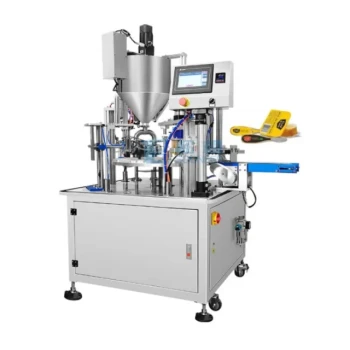
Advanced honey processing and filling equipment helps commercial beekeeping enterprises manage market risk and input cost pressures by converting raw honey into standardized, higher-value products more efficiently. Professional extraction, filtration, moisture control, and automated filling reduce handling losses, improve consistency, support food-safety compliance, and allow businesses to choose when and where to sell. This creates more control over margins than selling unprocessed honey immediately after harvest.
The central advantage is greater control: efficient equipment helps beekeeping enterprises protect product quality, reduce avoidable costs, and turn volatile raw-honey markets into a more flexible finished-product business.
Why Raw Honey Sales Expose Businesses to Risk
Price pressure is highest at harvest
When many producers sell raw honey at the same time, supply can increase faster than immediate demand. Enterprises that lack processing and storage flexibility may have to accept distressed prices to generate cash flow.
Processing equipment provides an alternative. Instead of selling the entire harvest as raw material, a business can package suitable batches for later sale, when demand, seasonal pricing, or customer requirements are more favorable.
Input costs require better value recovery
Labor, energy, packaging, transport, hive management, and other operating costs continue to rise even when honey prices fluctuate. Higher production volume alone does not guarantee stronger profitability if the business loses value through inefficient handling or inconsistent quality.
Processing and filling systems help recover more value from each unit of honey by reducing product loss, improving labor productivity, and supporting finished products with stronger market positioning.
How Equipment Improves Commercial Control
Efficient extraction protects productive assets
Modern extraction equipment uses centrifugal force to remove honey efficiently while limiting damage to the honeycomb. Intact comb can be returned to the bees, reducing the energy and time required for rebuilding.
This does not automatically increase yield per hive, because yield also depends on forage, colony health, weather, and management. However, preserving reusable comb can improve harvesting efficiency and help commercial apiaries make better use of their existing production assets.
Filtration and moisture control stabilize quality
Precision filtration removes unwanted particles, while controlled dehydration helps manage moisture levels. Constant-temperature processing can support more stable sensory and physicochemical characteristics when properly operated.
Consistent treatment reduces the likelihood that batches will vary widely in appearance, texture, or storage performance. That predictability is valuable when supplying wholesalers, retailers, food manufacturers, or export buyers.
Automated filling reduces packaging losses
High-precision filling equipment dispenses consistent quantities into each container. This reduces overfilling, limits product waste, and makes packaging output easier to plan.
Automation also reduces dependence on slow manual filling during peak harvest periods. Faster throughput lowers the risk of delays, secondary loss, or spoilage associated with holding large volumes of honey before packaging.
Standardization expands the customer base
Uniform weights, packaging specifications, and hygiene controls make it easier to meet the requirements of organized retail, distributors, and international customers. Standardized products are also simpler to quote, inventory, transport, and reorder.
For distributors and B2B resellers, this consistency reduces uncertainty in downstream operations. A supplier that can provide repeatable specifications is easier to integrate into a reliable purchasing program.
How Processing Supports Better Market Timing
Value can be added close to the source
Processing honey locally allows beekeeping enterprises to move beyond commodity sales. Filtration, moisture management, and professional filling create shelf-ready products that can be sold under the enterprise's own brand or supplied to commercial buyers.
The resulting value is not based solely on the raw honey price. It can also reflect packaging quality, specification consistency, food-safety controls, and the ability to deliver a finished product.
Sales can be spread across different periods
A processing line gives a business more flexibility to divide production between immediate bulk sales, packaged retail products, and later orders. This can reduce dependence on a single selling window.
The equipment does not eliminate market volatility. It gives the enterprise more options for responding to it, which is the practical foundation of risk management.
Differentiated products become more feasible
Stable processing conditions allow enterprises to maintain clearer distinctions between product batches and market segments. Consistent quality can support separate offers for domestic retail, premium channels, food-service customers, or export-oriented buyers.
Differentiation must be supported by genuine product quality and appropriate compliance documentation. Equipment alone does not create a premium market position.
How Equipment Helps Manage Input Cost Pressures
Labor output increases
Manual extraction, filtering, and filling require substantial handling time and make output dependent on available workers. Automated or semi-automated systems allow fewer employees to process larger volumes with more predictable results.
This improves the output value generated per unit of labor, particularly during short peak-harvest periods when labor availability and overtime costs can become constraints.
Product loss is reduced
Overfilling, spillage, residual honey left in equipment, inconsistent filtration, and slow processing can reduce the amount of saleable product. Precision equipment addresses several of these losses through controlled transfer and filling operations.
Even small percentage improvements matter at commercial volumes. The relevant calculation is the total cost of ownership compared with the value of recovered product, reduced labor, and improved throughput.
Supply reliability improves
Rapid processing and packaging help enterprises respond to large harvests without leaving raw honey exposed to avoidable quality risks. A stable production flow also makes delivery commitments more realistic.
For distributors and wholesalers, reliable fulfillment is a commercial advantage. A one-stop equipment supplier that can provide compatible processing, filtration, filling, and service support may reduce procurement delays and simplify maintenance planning.
Cash flow becomes more predictable
Standardized, high-volume production can support repeat orders instead of relying entirely on occasional bulk transactions. More predictable output and packaging capacity make inventory and sales planning easier.
Cash flow still depends on demand, working capital, and inventory discipline. The equipment improves operational control; it does not replace financial management.
Understanding the Trade-offs
Capital investment must match actual volume
Industrial equipment requires upfront capital, installation space, utilities, maintenance, and operator training. Purchasing a system that is much larger than the enterprise's realistic throughput can increase fixed costs without producing corresponding returns.
Capacity should be selected against harvest volume, expected growth, peak-season requirements, product formats, and available labor.
Automation does not guarantee profitability
A filling machine can improve accuracy and speed, but it cannot compensate for weak demand, poor packaging decisions, unsuitable pricing, or inadequate sales channels. Processing capacity must be connected to a credible route to market.
Businesses should assess equipment using measurable factors such as throughput, filling accuracy, labor requirements, cleaning time, energy use, maintenance access, and expected product loss.
Quality depends on operating discipline
Temperature control, filtration, cleaning, moisture management, and storage conditions must be handled correctly. Poor calibration or inadequate sanitation can undermine the benefits of otherwise capable equipment.
Supplier expertise, technical documentation, spare-parts availability, training, and responsive after-sales service are therefore part of the risk calculation, not secondary purchasing details.
Standardization must preserve product identity
Overprocessing or unsuitable temperature exposure can damage the characteristics that customers value in particular honey varieties. Commercial efficiency should be balanced with the requirements of the product and target market.
The right system provides control without treating every honey batch as interchangeable.
Making the Right Choice for Your Goal
Select equipment based on the business risk you are trying to reduce and the market you intend to serve.
- If your primary focus is reducing price volatility: Use processing and filling capacity to convert part of the harvest into shelf-ready products that can be sold across multiple periods and channels.
- If your primary focus is lowering labor and input costs: Prioritize extraction, transfer, filtration, and filling systems that improve throughput, minimize product loss, and reduce manual handling.
- If your primary focus is supplying distributors or wholesalers: Choose equipment that delivers repeatable weights, hygiene controls, packaging specifications, and dependable production volumes.
- If your primary focus is entering premium or export markets: Invest in precise filtration, moisture management, temperature control, and documentation-supported quality systems.
- If your primary focus is reliable procurement and fast fulfillment: Work with an experienced supplier offering a complete equipment portfolio, technical guidance, spare-parts support, responsive service, and efficient delivery.
With the right capacity and operating controls, advanced honey equipment turns quality, efficiency, and market timing into practical tools for building a more resilient beekeeping enterprise.
Summary Table:
| Benefit | How It Helps |
|---|---|
| Efficient Extraction | Preserves reusable comb, reducing hive rebuilding time and improving harvest efficiency. |
| Quality Stabilization | Filtration and moisture control ensure consistent product quality, meeting buyer specifications. |
| Automated Filling | Reduces waste, increases speed, and ensures consistent packaging, lowering operational costs. |
| Market Flexibility | Process honey into value-added products, enabling sales across different time periods and channels. |
| Cost Management | Cuts labor costs, reduces product loss, and improves supply reliability, enhancing margin control. |
| Customer Expansion | Standardized products appeal to distributors and retailers, opening new revenue streams. |
Ready to enhance your honey processing efficiency and reduce market risks? HONESTBEE offers a comprehensive range of advanced honey processing and filling equipment, tailored for commercial apiaries and distributors. Our one-stop sourcing, rapid response, and ultra-fast delivery ensure you stay ahead. Contact us today to discuss your needs and unlock your business's potential. Contact us now.
Related Products
- Small Honey Filling Machine Sachet Packing Equipment Single Nozzle
- Fully Automatic Honey Filling Packaging Machine for Processing Line
- Automatic Honey Filling and Filtering Machine for Beekeeping Bottle Filling
- Double Nozzle Small Honey Filling Machine Honey Sachet Packing Packaging Equipment
- Manual Honey Filling Machine Bottling Machine for Honey
People Also Ask
- Why is high-performance honey filling and packaging equipment essential? Boost Efficiency & Brand Value
- How does specialized honey filling equipment contribute to honey distribution? Scale Your Wholesale Efficiency Today
- Why is high-precision honey filling equipment necessary? Secure the medicinal value and ROI of stingless bee honey.
- How does high-precision honey filling equipment protect honey's biological activity? Safeguard Purity & Premium Value
- What role does precision filling equipment play in cost control? Maximize Honey Profits & Market Growth