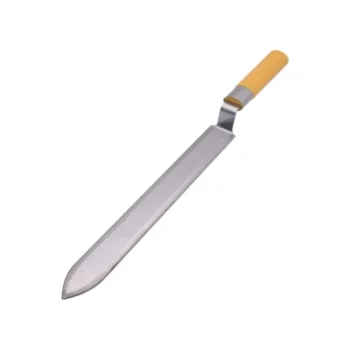
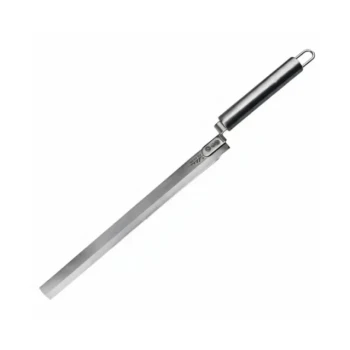
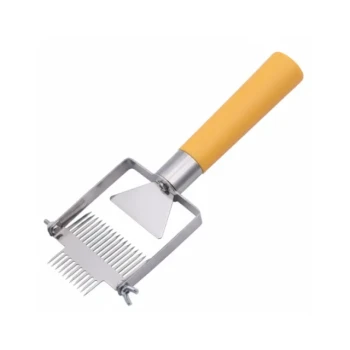
The Thalata honey-cutting tool is engineered specifically to overcome the physical constraints of traditional narrow-entry hives. By utilizing a flat blade attached to an extended iron rod, it enables the beekeeper to reach deep into restricted spaces to precisely sever and extract honeycombs without damaging the hive's outer structure.
The Thalata provides a solution for non-invasive harvesting; its geometry allows for deep internal access through small openings, preserving the hive's structural integrity while ensuring a clean cut.
The Mechanics of Extraction
Extending Reach into Restricted Spaces
Traditional hives often prioritize protection over accessibility, featuring narrow entries that block standard tools.
The Thalata features a long iron rod that acts as a precise extension of the beekeeper's arm. This length is critical for navigating the depth of the hive where the most mature honeycombs are typically stored.
Precision Cutting with the Flat Blade
Attached to the rod is a specialized flat blade designed for slicing rather than prying.
This blade allows the operator to cut the comb away from the hive walls or ceiling with minimal resistance. This clean slicing action reduces the risk of crushing the comb, which preserves the quality of the honey and minimizes waste.
Preserving Hive Integrity
The primary advantage of the Thalata is its ability to facilitate "blind" harvesting through the entry point.
Because the tool can reach the harvest zone without requiring the removal of hive walls or roofs, the structural integrity of the hive remains intact. This is particularly important for traditional hives made of mud, clay, or hollowed logs, which cannot be easily reassembled.
Material Durability and Maintenance
The Robustness of Iron
The tool is constructed from iron, providing the rigidity necessary for heavy use.
Honeycombs and propolis (bee glue) can be dense and difficult to cut. The iron construction ensures the rod does not bend under pressure, maintaining the force transfer from the handle to the blade.
Sanitation and Cleaning
Iron surfaces are straightforward to maintain in a field setting.
The material is easy to clean, allowing beekeepers to remove sticky residue and potential contaminants quickly. This durability ensures the tool remains a core piece of hardware for repeated harvests over many seasons.
Operational Considerations and Trade-offs
Reliance on Operator Skill
While the tool enables access, it does not provide visibility.
Effective use of the Thalata requires significant manual dexterity and experience. The beekeeper must "feel" the cut to avoid slicing into brood combs or damaging the interior walls of the hive.
Weight and Fatigue
The solid iron construction, while durable, adds weight to the tool.
Extended use during a large harvest may lead to operator fatigue faster than lighter, modern alloy tools. This weight, however, often aids in the downward cutting momentum required for thick combs.
Making the Right Choice for Your Apiary
To determine if the Thalata is the right instrument for your specific harvesting needs, consider your hive type and preservation goals.
- If your primary focus is hive preservation: The Thalata is essential for extracting honey from narrow-entry vessels without dismantling or breaking the hive structure.
- If your primary focus is tool longevity: The iron construction offers a durable, reusable solution that withstands the resistance of thick combs and propolis.
Mastering the Thalata allows for a sustainable harvest that respects the architecture of the hive and the quality of the honey.
Summary Table:
| Feature | Benefit |
|---|---|
| Extended Iron Rod | Reaches deep into restricted spaces without dismantling the hive. |
| Specialized Flat Blade | Provides clean, precise cuts to preserve honeycomb quality and minimize waste. |
| Iron Construction | Ensures high durability and the rigidity needed to cut through dense propolis. |
| Non-Invasive Design | Preserves the structural integrity of traditional mud, clay, or log hives. |
Elevate Your Beekeeping Operations with HONESTBEE
At HONESTBEE, we specialize in empowering commercial apiaries and global distributors with the highest-grade equipment in the industry. Whether you are managing traditional apiaries requiring specialized tools like the Thalata or scaling up with modern honey-filling and hive-making machinery, our comprehensive wholesale portfolio has you covered.
From essential consumables to specialized hardware and honey-themed cultural merchandise, we provide the tools you need to maximize yield and efficiency. Partner with us to transform your production capacity today.
Contact HONESTBEE for Wholesale Solutions
References
- Neha Negi, Jagmohan Jagmohan. Traditional beekeeping in the Hilly districts of Himachal Pradesh in North Western Himalayas with Apiscerana. DOI: 10.33545/26180723.2025.v8.i4a.1725
This article is also based on technical information from HonestBee Knowledge Base .
Related Products
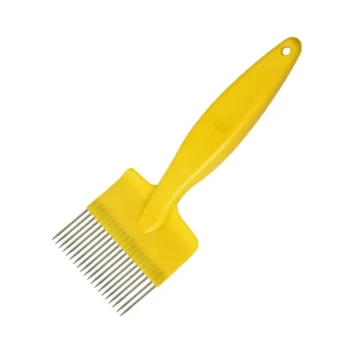
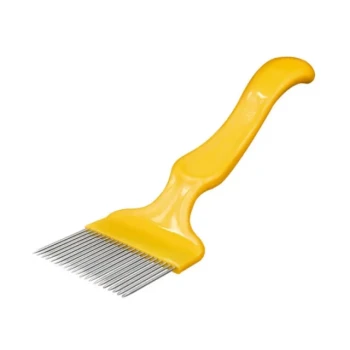
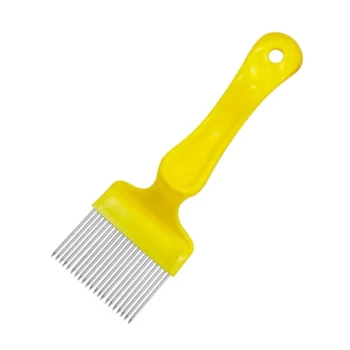
- Professional Durable Plastic Handle Honey Uncapping Fork
- Professional Honey Uncapping Fork Tool with Customizable Tine Options
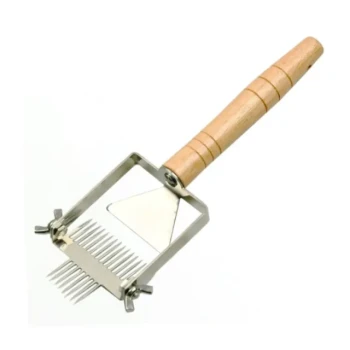
- Wide Adjustable Stainless Steel Honey Uncapping Fork with Scraper
- Professional Customizable Honey Uncapping Fork with Adjustable Tine Options
- Adjustable Stainless Steel Honey Uncapping Fork with Scraper Beekeeping Tool
People Also Ask
- What is the design purpose of honey uncapping forks and honey uncapping tanks? Maximize Your Harvest Efficiency
- How does a honey uncapping fork supplement the use of an uncapping knife? Boost Your Honey Yield and Extraction Efficiency
- What other tools are available for honey uncapping besides knives? Find the Right Tool for Your Apiary's Scale
- What tools are used for honey uncapping? Choose the Right Knife for Your Harvest
- What is the primary function of specialized honey uncapping tools? Maximize Your Extraction Yield and Efficiency