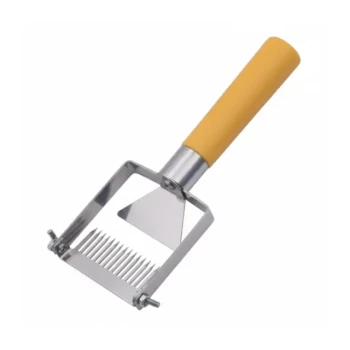
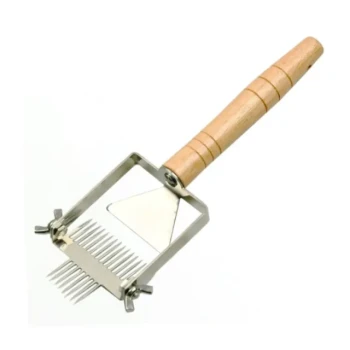
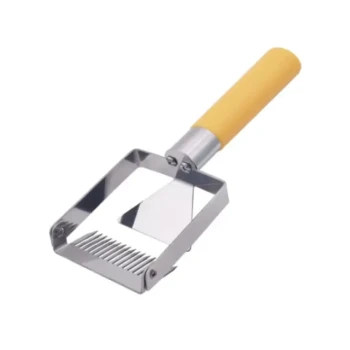
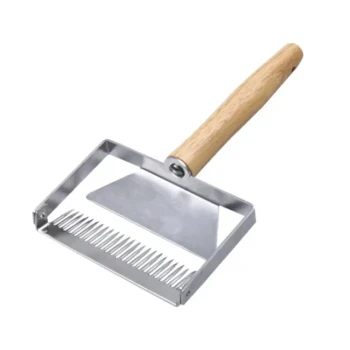
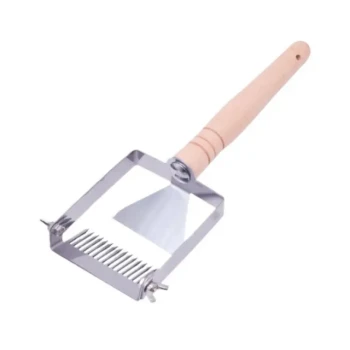
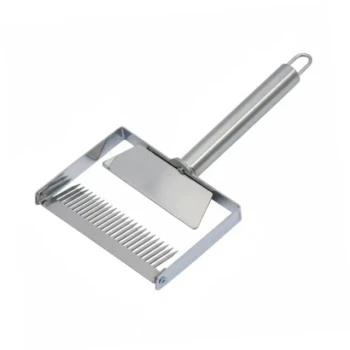
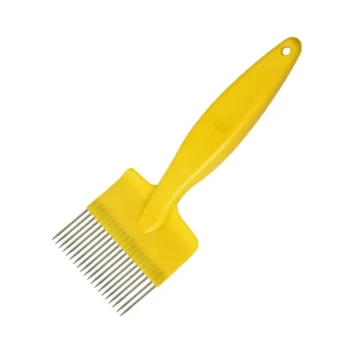
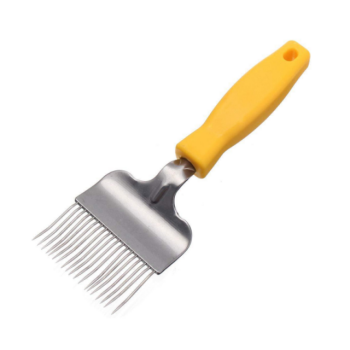
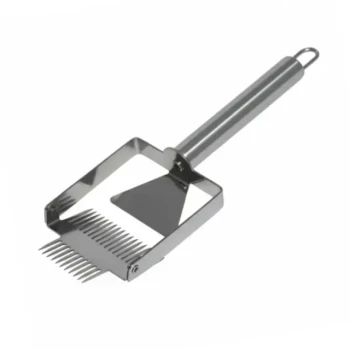
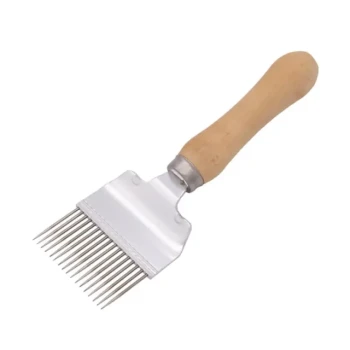
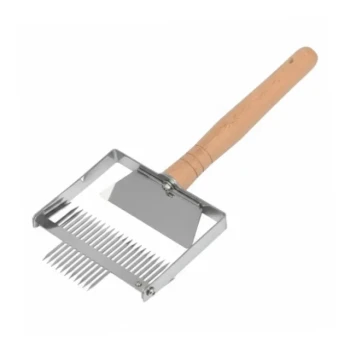
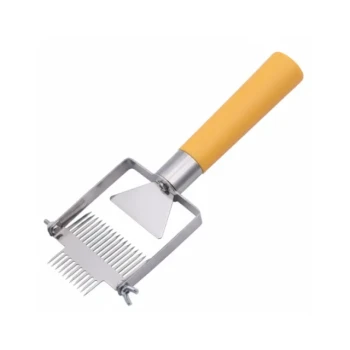
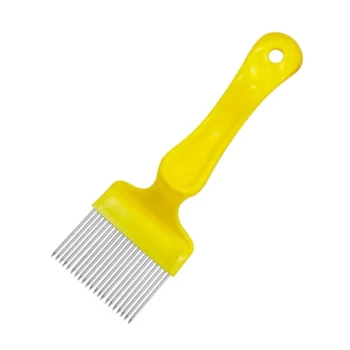
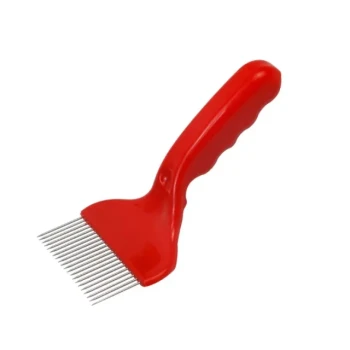
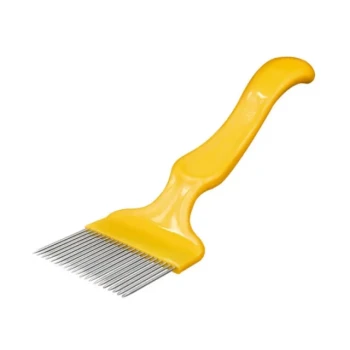
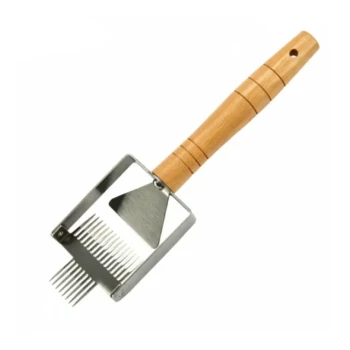
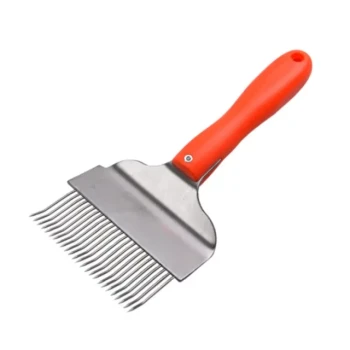
A honey uncapping fork acts as a precision finishing tool designed to target specific areas that an uncapping knife cannot reach. While the knife efficiently slices away the bulk of the wax cappings to prepare the frame for extraction, the fork is manually used to scrape open recessed or uneven cells that the knife’s blade misses.
Core Insight: An uncapping knife provides speed and surface-level efficiency, while the uncapping fork provides depth and precision. Using the fork to supplement the knife ensures that "low spots" or recessed areas are not wasted, guaranteeing maximum honey recovery during the centrifugal extraction process.
The Logic Behind the Two-Tool System
The Knife Handles the Bulk
The uncapping knife is designed for broad, sweeping strokes. It slices through the wax layer quickly, removing the caps from the majority of the honeycomb in a single pass.
This tool is essential for speed, especially when using heated electric models, and it helps maintain the general flatness of the comb for future reuse.
The Fork Handles the Irregularities
Bees rarely build honeycomb perfectly flat. There are often "low spots," corners, or uneven surfaces where the wax capping sits below the level of the frame or the knife blade.
The primary role of the fork is to scratch or pick open these stubborn or recessed cells. Without the fork, the honey inside these lower cells would remain sealed and trapped during extraction.
Increasing Extraction Efficiency
The ultimate goal of uncapping is to expose the honey so it can be flung out by an extractor. Any cell left capped acts as a closed container, reducing your total yield.
By following the knife work with a quick inspection and using the fork on missed spots, you ensure the centrifugal force of the extractor can empty 100% of the cells.
Addressing Difficult Comb Geometry
Accessing Recessed Areas
An uncapping knife generally relies on the wood frame of the honeycomb as a guide rail. If the bees have not drawn the comb out past the wood, the knife cannot cut the cappings without cutting the wood.
The uncapping fork solves this by reaching between the frame edges. Its long, wiry teeth slide under the caps of these shallow cells to lift the wax off without needing a flat plane to rest on.
Navigating Corners and Edges
Comb surfaces near the corners of the frame are often uneven or curved. A long, straight knife blade struggles to navigate these tight geometries without damaging the frame.
The fork allows for granular control. You can pick open individual cells in tight corners, ensuring no honey is left behind in the margins of the frame.
Understanding the Trade-offs
Speed vs. Precision
The knife is significantly faster but less thorough on uneven frames. Relying solely on a knife often results in lower honey yields because low-lying cells are skipped.
The fork is highly precise but inefficient for large areas. Attempting to uncap an entire frame with just a fork is time-consuming and labor-intensive compared to using it strictly as a touch-up tool.
Wax Debris Management
An uncapping knife typically removes wax cappings in large, cohesive sheets. This makes separating the wax from the honey easier later in the process.
The uncapping fork tends to shred the wax caps into smaller crumbs or "shrapnel." While effective for opening cells, extensive use of the fork can introduce more fine wax particles into the honey, requiring more filtration.
Making the Right Choice for Your Goal
To get the most out of your harvest, treat the knife as your "primary" tool and the fork as your "quality control" tool.
- If your primary focus is maximum yield: Inspect every frame after using the knife and use the fork to open every single recessed cell, no matter how small.
- If your primary focus is speed and workflow: Use the knife for the main surface and only use the fork for significant patches of capped honey (larger than 2 inches) to keep the process moving.
By combining the broad efficiency of the knife with the targeted precision of the fork, you achieve the perfect balance of speed and total harvest recovery.
Summary Table:
| Feature | Uncapping Knife | Uncapping Fork |
|---|---|---|
| Primary Function | Bulk removal of wax cappings | Targeting recessed/missed cells |
| Speed | High (ideal for large surfaces) | Low (precision-oriented) |
| Best Used For | Flat, protruding honeycomb | Low spots, corners, and edges |
| Impact on Yield | High speed, but misses low spots | Maximizes yield by opening 100% of cells |
| Wax Management | Produces large, clean sheets | Creates smaller wax particles |
| Precision | Limited by frame geometry | High granular control |
Maximize Your Honey Harvest with HONESTBEE Professional Equipment
Don't let valuable honey go to waste in recessed cells. At HONESTBEE, we specialize in providing commercial apiaries and distributors with the high-performance tools needed for a perfect harvest. From precision uncapping forks and heated knives to industrial-grade honey-filling machines and specialized hive-making hardware, our comprehensive wholesale portfolio is designed to scale your operations.
Whether you are upgrading your extraction line or stocking your distribution warehouse, we offer the full spectrum of beekeeping machinery and essential consumables to ensure peak efficiency. Contact us today to discover how our professional beekeeping solutions can enhance your production yield and streamline your workflow!
Related Products
- Adjustable Stainless Steel Honey Uncapping Fork with Plastic Handle for Beekeeping
- All-Stainless Steel Pivoting Honey Uncapping Fork for Beekeeping
- Adjustable Stainless Steel Honey Uncapping Fork with Scraper Beekeeping Tool
- Stainless Steel Pivoting Honey Uncapping Fork with Plastic Handle
- Extra Wide Stainless Steel Honey Uncapping Fork with Scraper Beekeeping Tool
People Also Ask
- What is the design purpose of honey uncapping forks and honey uncapping tanks? Maximize Your Harvest Efficiency
- What are the essential tools for uncapping honey frames? Choose the Right Tool for Your Apiary
- What other tools are available for honey uncapping besides knives? Find the Right Tool for Your Apiary's Scale
- What tools are used for honey uncapping? Choose the Right Knife for Your Harvest
- What are the tools used for uncapping honeycombs? Expert Guide to Tools & Functions for Maximum Yield