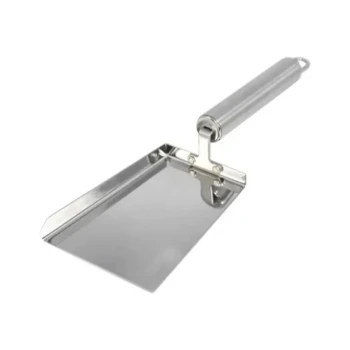
Harvested pollen should be frozen promptly, cleaned, and dried with controlled warm, dry air. Fresh pollen typically contains 7–21% moisture, making it vulnerable to fermentation, mold, spoilage, and quality loss. Freeze the harvested pollen overnight before thermal drying to control wax moths and eggs, then dry it in a specialized pollen dryer at approximately 40–45°C until moisture reaches about 2.5–6% for stable storage.
The essential sequence is: freeze first, remove foreign material, dry gently to a validated moisture target, and package immediately in airtight food-grade containers. Never use chemical fumigants, because residues can contaminate the pollen.
Why Immediate Post-Harvest Handling Matters
Fresh pollen deteriorates quickly
Harvested pollen remains biologically active and contains enough moisture to support fermentation, mold growth, and deterioration. Delays between collection and preservation increase the risk of rejected or downgraded product.
Move pollen into a freezer or drying system as soon as possible after collection. Refrigeration is suitable only for short-term holding and does not provide the same protection as freezing or dehydration.
Moisture control determines shelf stability
Pollen should be dried from its initial 7–21% moisture range to approximately 2.5–6%, depending on the product specification and validated storage requirements. Moisture testing should be performed by lot rather than relying only on drying time.
A target around 10–12% may be used as an intermediate drying level, but it should not automatically be treated as the final specification for long-term shelf-stable pollen. Confirm the final target with product, packaging, and storage requirements.
Step 1: Freeze the Harvest Before Thermal Drying
Freeze overnight to control wax moth contamination
Before thermal drying, place the freshly harvested pollen in a freezer overnight. This pretreatment is intended to eliminate wax moths and their eggs before the pollen enters the drying process.
Use clean, food-contact-safe containers or bags, and avoid leaving the pollen exposed to freezer odors, condensation, or foreign materials.
Do not use chemical fumigants
Chemical fumigants should not be used on food-grade pollen. They can leave residues and create a contamination problem that drying will not reliably solve.
Freezing and hygienic handling are the appropriate controls described for this process. Any commercial operation should also verify its pest-control procedure against applicable food-safety requirements.
Step 2: Remove Foreign Material
Perform an initial visual inspection
Remove obvious debris such as bees, wings, beetles, hive material, and other waste. For small batches, spread the pollen on a clean tray or screen and remove remaining debris manually.
Tweezers can improve precision when the pollen contains larger visible contaminants.
Use mechanical cleaning for larger volumes
Commercial operations can use airflow and controlled agitation, similar to seed-cleaning equipment, to separate light debris from pollen. Equipment must be designed and operated to avoid excessive dust generation, cross-contamination, or loss of product.
Cleaning conditions should be documented by batch, especially when supplying wholesalers, resellers, or food manufacturers.
Complete fine screening after drying
A practical fine-cleaning sequence is to dry the pollen to approximately 6% moisture, then sieve it:
- Use a fine fiberglass mesh to remove dust.
- Pass the pollen through two closely held 3 mm mesh screens to remove larger particles.
- Hand-pick any remaining foreign material.
This staged approach combines visual inspection, mechanical separation, and final quality checking.
Step 3: Dry With Controlled Warm, Dry Air
Use a specialized pollen drying oven or dehydrator
Dry the pollen in equipment that provides controlled temperature, airflow, and humidity. Forced warm, dry air should move through the pollen evenly rather than relying on uncontrolled ambient drying.
A recommended operating range is approximately 40–45°C, with 45°C commonly used as the working temperature. Avoid unnecessarily high temperatures that may reduce product quality.
Control the drying air during humid weather
When ambient humidity is high, heating the air alone may not be sufficient. The air should be dehumidified before or during heating so it can remove moisture effectively from the pollen.
Drying performance depends on more than temperature. Air humidity, airflow, pollen-bed depth, loading density, and drying time should all be controlled and recorded.
Verify the final moisture content
Do not release pollen solely because it has been exposed to the dryer for a specified period. Measure moisture at the end of drying and confirm that the batch meets the intended specification, ideally around 2.5–6% for dry, shelf-stable pollen.
Use representative samples from different areas of the dryer because uneven loading can produce wet pockets that later support mold or fermentation.
Step 4: Package Immediately After Drying
Prevent moisture from returning
Dried pollen can rapidly absorb moisture from the surrounding air. Once the target moisture level is reached, cool and package it promptly in airtight food-grade packaging.
Suitable formats may include sealed polythene bags, glass jars, or metal cans, provided they offer an effective moisture barrier and are appropriate for food contact.
Protect against storage and transport conditions
Store packaged pollen in a cool, dry, dark environment. Packaging should remain sealed during warehousing and distribution, particularly in humid climates or during long transport.
For distributors and wholesalers, packaging integrity, lot identification, moisture results, and storage instructions should travel with the product documentation.
Understanding the Trade-offs
Lower moisture improves stability but can affect handling
Reducing moisture improves resistance to mold, fermentation, and deterioration. However, excessive or poorly controlled drying may affect texture, color, aroma, and other quality attributes.
The correct objective is not simply “dry as much as possible.” It is to achieve the approved moisture target consistently without unnecessary thermal exposure.
Freezing protects freshness but increases logistics demands
Frozen storage keeps pollen closer to its fresh condition, but it requires uninterrupted cold-chain capacity. Freezing is therefore useful for short-term preservation or when dehydration cannot begin immediately, but it may be less convenient for wholesale distribution.
Dried pollen is easier to store and ship, provided the final moisture level and packaging barrier are properly controlled.
Refrigeration is only a short-term option
Raw pollen may be refrigerated at approximately 4°C for only a short period, with the reference indicating up to about three days as a practical short-term limit. Refrigeration is not an ideal long-term solution because residual moisture can still encourage mold growth.
Manual cleaning does not scale indefinitely
Hand-picking is effective for small lots but becomes labor-intensive and inconsistent at commercial volume. Larger operations should consider validated screening and air-separation systems, followed by manual inspection and documented quality checks.
Common Pitfalls to Avoid
Leaving pollen at ambient conditions
Ambient holding allows moisture-related deterioration to begin before processing. Establish a defined maximum time from collection to freezing or drying, and monitor compliance by batch.
Drying with hot but humid air
High temperature alone does not guarantee effective drying. If the air is humid, it may transfer insufficient moisture-removal capacity to the pollen and prolong the process.
Packaging before the pollen is fully dry
Sealing under-dried pollen traps moisture inside the package. This can lead to mold, fermentation, caking, and product failure during storage.
Reabsorbing moisture after drying
Leaving finished pollen exposed while waiting for packaging defeats the drying step. Use a low-humidity packing area and close containers immediately after moisture verification.
Using non-food-grade pest treatments
Fumigants and unapproved chemicals can create residue and compliance risks. Food-grade pollen should be protected through freezing, sanitation, controlled processing, and suitable packaging.
Applying This to Commercial Supply
A distributor or processor should treat pollen preservation as a documented critical handling sequence, not as a single drying step. The process should cover collection, freezing, cleaning, drying, moisture testing, packaging, and storage.
- If your primary focus is product safety: Freeze harvested pollen overnight, prohibit chemical fumigants, and document sanitation and foreign-material controls for every lot.
- If your primary focus is shelf stability: Dry with controlled warm, dry air at approximately 40–45°C and verify a final moisture level of about 2.5–6%.
- If your primary focus is wholesale distribution: Package immediately in airtight moisture-barrier containers and maintain clear lot, moisture, storage, and handling records.
- If your primary focus is rapid order fulfillment: Use standardized drying and packaging procedures so finished inventory can be released consistently without extended refrigeration or rework.
Consistent freezing, controlled drying, verified moisture, and immediate airtight packaging are the foundation of safe, market-ready harvested pollen.
Summary Table:
| Step | Action | Key Details |
|---|---|---|
| 1. Freeze | Freeze harvested pollen overnight | Controls wax moths and eggs; no chemical fumigants |
| 2. Clean | Remove debris manually or mechanically | Use visual inspection, airflow, sieving; fine screen after drying |
| 3. Dry | Dry with warm, dry air at 40-45°C | Dehumidify air if needed; verify moisture to 2.5-6% |
| 4. Package | Package immediately in airtight containers | Use food-grade materials; store in cool, dry, dark place |
Ensure your harvested pollen meets the highest standards of quality and safety. At HONESTBEE, we supply a comprehensive range of beekeeping tools and machinery, including pollen dryers and packaging equipment, tailored for commercial apiaries and distributors. With our one-stop sourcing, rapid response, and dedicated support, we help you streamline your processing and deliver premium products to your customers. Contact us today to discuss your needs and explore our full portfolio!
Related Products
- Heavy-Duty Ergonomic Stainless Steel Pollen Shovel
- Heavy-Duty Ergonomic Grip Galvanized Pollen Shovel
- Stainless Steel Pollen Shovel with Wooden Handle
- Economy Small Scale Honey Dryer Dehumidifier Thickening Machine
- Removable Plastic Pollen Trap With Ventilated Tray for Bees Pollen Collector
People Also Ask
- How is pollen cleaned after it has been dried? Master Efficient Separation for Pure Bee Pollen
- What methods are used to clean harvested bee pollen? Scale Your Beekeeping Operations with the Right Technique
- How can harvested bee pollen be cleaned to remove impurities? Efficient Methods for Commercial and Hobbyist Beekeepers
- How do bee pollen collection tools affect the quality of bee pollen used in functional dairy ice cream production?
- What is the technical significance of using specialized cutting tools for propolis? Master Precision Pollen Harvesting