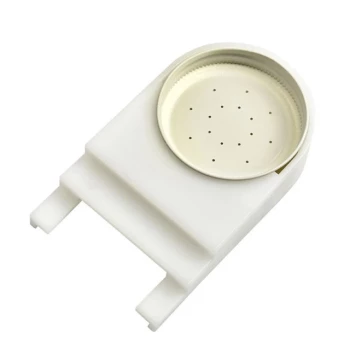
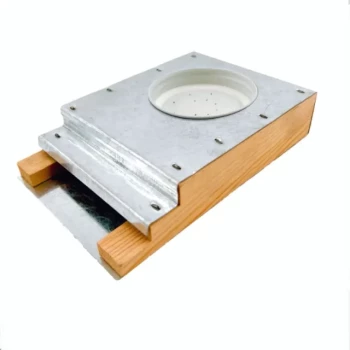
A division board feeder provides a distinct advantage by integrating directly into the hive body. It replaces a standard frame to offer a high-capacity reservoir immediately adjacent to the bee cluster. This design ensures nurse bees have immediate access to resources without the temperature fluctuations or interruptions caused by external feeding methods.
Queen rearing demands a precise balance of nutrition and environmental consistency. By simulating a steady internal nectar flow, division board feeders support the high energy requirements of nurse bees while protecting the developing queen cells from climate stress.
Optimizing the Nutritional Environment
To rear high-quality queens, the colony must perceive a state of abundance. The division board feeder facilitates this more effectively than standard equipment.
Seamless Hive Integration
Unlike top feeders or entrance feeders, a division board feeder replaces a standard hive frame.
This places the food source directly within the brood nest or adjacent to the cell builder frames. It becomes a seamless part of the hive architecture rather than an external attachment.
Sustained Resource Availability
These feeders generally offer a larger liquid capacity than boardman or small internal feeders.
This high volume ensures a stable supply of syrup over longer periods. It reduces the frequency of refilling, ensuring the flow of resources never stops during critical development windows.
Fueling High-Intensity Rearing
The primary beneficiaries of this system are the nurse bees.
Queen rearing is an energy-intensive process that requires nurse bees to produce copious amounts of royal jelly. The division board feeder ensures these bees have the sufficient energy reserves required to feed queen larvae without exhaustion.
Maintaining Colony Stability
Beyond nutrition, the physical environment of the hive dictates the success of queen cell acceptance.
Climate Control
Standard feeding methods, particularly those that require cracking the hive lid frequently, can cause heat loss.
The division board feeder helps maintain stable internal temperature and humidity. By keeping the feed inside the hive body, the thermal mass of the liquid helps buffer temperature changes, creating the ideal microclimate for developing cells.
Reducing Colony Disturbance
Frequent intrusions into the hive can stress the bees, leading to the rejection of queen cells.
Because of its high capacity and internal design, this feeder reduces colony disturbance. You can often refill it without fully exposing the brood nest, keeping the colony calm and focused on rearing.
Understanding the Trade-offs
While advantageous for queen rearing, division board feeders introduce specific operational constraints that must be managed.
Sacrifice of Space
The most immediate trade-off is the loss of combustible real estate.
Because the feeder replaces a frame, you lose the potential for a frame of brood, pollen, or honey storage. In smaller mating nucs or crowded cell builders, this loss of surface area requires careful management of colony population density.
Maintenance and Safety
Internal feeders can become traps for bees if not properly equipped.
Without proper ladders, floats, or roughened interior surfaces, bees—including the queen—can drown in the syrup. Furthermore, because the syrup is kept warm inside the hive, it can ferment more quickly than in external feeders if not consumed rapidly.
Making the Right Choice for Your Goal
The choice of feeder should be dictated by the specific phase of your queen rearing project.
- If your primary focus is Cell Acceptance: Prioritize the division board feeder to maintain the precise temperature and humidity required for sensitive larvae.
- If your primary focus is Resource Continuity: Use this feeder to provide a "heavy flow" simulation, ensuring nurse bees never ration royal jelly due to a lack of perceived income.
By placing resources exactly where the colony needs them, you transform feeding from a simple maintenance task into a strategic tool for genetic success.
Summary Table:
| Feature | Division Board Feeder | Standard Entrance/Top Feeders |
|---|---|---|
| Placement | Replaces internal frame; adjacent to brood | External or above the inner cover |
| Thermal Stability | Maintains hive microclimate; no heat loss | Frequent lid opening causes temperature drops |
| Resource Access | Immediate for nurse bees; mimics natural flow | Distant from cell builder frames |
| Disturbance | Low; high capacity reduces refill frequency | High; requires frequent intervention |
| Capacity | High; ensures consistent syrup availability | Generally lower; prone to drying out |
| Main Risk | Potential drowning (requires ladders/floats) | Higher risk of robbing by other colonies |
Elevate Your Apiary Operations with HONESTBEE
Maximize your queen rearing yields and colony health with professional-grade equipment. HONESTBEE specializes in supporting commercial apiaries and distributors with a robust wholesale catalog. From high-capacity feeding solutions and specialized hive-making machinery to honey-filling systems and premium industry consumables, we provide the tools you need to scale efficiently.
Partner with us for:
- Commercial-Scale Supply: Comprehensive wholesale inventory of beekeeping tools and hardware.
- Precision Engineering: Reliable honey-processing and hive-making machinery.
- Industry Expertise: Solutions tailored to the needs of professional beekeepers and distributors.
Ready to enhance your production? Contact us today to discuss how our bulk solutions can benefit your business!
References
- Reed M. Johnson, Eric G. Percel. Effect of a Fungicide and Spray Adjuvant on Queen-Rearing Success in Honey Bees (Hymenoptera: Apidae). DOI: 10.1603/ec13199
This article is also based on technical information from HonestBee Knowledge Base .
Related Products
- Classic Boardman Entrance Bee Feeder Hive Front Feeding Solution
- Boardman Entrance Bee Feeder Durable Galvanized Steel and Wood Construction for Beekeeping
- In-Hive Dual Compartment Frame Bee Feeder for Targeted Colony Nutrition
- HONESTBEE Entrance Bee Feeder Efficient Hive Front Liquid Feeding Solution for Beekeeping
- Professional Hive Front Entrance Bee Feeder
People Also Ask
- What are the advantages and disadvantages of using an entrance feeder for bees? Balance Convenience and Hive Security.
- What types of bee feeders are available for beginners? Start with the Simple Entrance Feeder
- How do you make an entrance feeder for bees? A Guide to Safe & Effective Hive Feeding
- What is a recommended alternative use for an entrance feeder instead of providing sugar syrup? - Water Feeding Tips
- What are the advantages and disadvantages of an entrance feeder? Optimize Your Apiary's Feeding Strategy