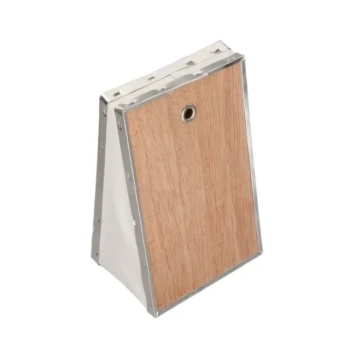
Industrial hot air drying chambers represent a critical technological upgrade over traditional sun drying for professional bee pollen processing. These systems provide a controlled environment that ensures uniform moisture reduction, mitigates microbial risks, and preserves the bioactive integrity of the pollen. This technology allows distributors and wholesalers to guarantee a safer, higher-quality product with a significantly extended shelf life and consistent sensory characteristics.
Core Takeaway: Industrial drying chambers replace environmental uncertainty with technical precision, ensuring B2B clients receive consistent, high-potency bee pollen that meets rigorous international safety and quality standards.
Optimizing Product Quality and Biological Integrity
Superior Preservation of Nutrients
Traditional sun drying exposes bee pollen to ultraviolet radiation, which can destroy sensitive bioactive substances and antioxidants. In contrast, industrial chambers maintain a controlled temperature—typically between 37°C and 40°C—to protect heat-sensitive proteins, vitamins, and phytochemical components.
Maintaining Morphological Characteristics
Industrial drying uses convection heat treatment to rapidly reduce moisture without damaging the physical structure of the pollen grains. This preservation of morphology ensures that the final product retains its natural appearance and appeal for high-end retail and medicinal applications.
Prevention of Lipid Rancidity
By maintaining a stable, low-temperature environment, specialized drying equipment prevents the oxidation of delicate lipids. This precision ensures that volatile aromatic compounds remain intact, preserving the natural scent and flavor profile that professional buyers expect.
Enhancing Safety and Compliance for Global Markets
Mitigation of Microbial Contamination
Fresh bee pollen has a high water content (20-30%), making it a prime substrate for mold and bacteria. Industrial chambers inhibit the proliferation of toxigenic fungi, effectively preventing the formation of harmful metabolites like Aflatoxin B1 that can occur during the slow process of sun drying.
Controlled Hygiene Standards
Unlike open-air sun drying, which exposes the product to dust, pests, and environmental pollutants, industrial chambers offer a closed-loop system. This sterile environment is essential for meeting the strict hygiene requirements of the pharmaceutical and nutraceutical sectors.
Uniformity and Consistency
Sun drying is subject to environmental fluctuations, leading to uneven dehydration and "hot spots" of moisture. Industrial equipment utilizes precise airflow management to achieve uniform dehydration (typically below 8-10% moisture), ensuring every batch meets the same quality specification.
Operational Efficiency and Supply Chain Stability
Rapid Processing and Fulfillment
Time is a critical factor in maintaining freshness; industrial chambers can reduce moisture from 30% to below 8% in approximately two hours. This speed allows for rapid order fulfillment and high-volume processing that sun drying simply cannot match.
Weather Independence for Reliable Sourcing
Relying on the sun creates significant supply chain risks due to seasonal and daily weather variations. Industrial drying provides a predictable production schedule, enabling distributors to offer stable inventory levels and faster response times to their clients.
Energy and Cost Efficiency
Modern drying technologies, such as heat pump drying, utilize closed-loop circulation to minimize energy consumption. While the initial investment is higher than sun drying, the reduction in product loss and the increase in premium market value provide a superior long-term ROI.
Understanding the Trade-offs
The Risk of Improper Calibration
The primary risk with industrial drying is overheating, which can lead to the loss of volatile compounds or the degradation of proteins. This necessitates deep professional industry expertise to ensure equipment is calibrated correctly for each specific type of pollen.
Initial Capital Expenditure
Transitioning from traditional methods requires a significant investment in specialized equipment and technical training. However, for wholesalers and distributors, this cost is offset by the ability to access premium global markets that demand certified safety and quality standards.
Making the Right Choice for Your Goal
How to Apply This to Your Project
- If your primary focus is Premium Health and Nutraceutical Markets: Prioritize low-temperature hot air or heat pump drying to maximize the preservation of Vitamin C and bioactive antioxidants.
- If your primary focus is High-Volume Industrial Supply: Utilize rapid convection drying to ensure biological safety and prevent the growth of toxigenic fungi during peak harvest seasons.
- If your primary focus is Long-Term Shelf Stability: Ensure equipment can consistently reach a moisture content below 8% to prevent spoilage during international distribution.
By leveraging industrial drying technology, you transform a raw agricultural product into a standardized, high-value technical ingredient ready for the global stage.
Summary Table:
| Feature | Traditional Sun Drying | Industrial Hot Air Drying |
|---|---|---|
| Nutrient Preservation | High UV risk; destroys bioactives | Controlled 37-40°C; preserves vitamins |
| Hygiene & Safety | Exposure to dust, pests & mold | Closed-loop sterile system; microbial control |
| Process Control | Weather-dependent; inconsistent | Precise airflow; uniform dehydration |
| Processing Speed | Days (slow & unpredictable) | ~2 hours (rapid & weather-independent) |
| Market Value | Variable quality; local use | Premium grade; meets international standards |
Scale Your Apiary Business with HONESTBEE
Elevate your production standards with HONESTBEE, your premier one-stop wholesale partner for commercial apiaries and B2B resellers. We offer a comprehensive portfolio of professional beekeeping machinery, including high-precision drying chambers and honey-filling systems, alongside essential consumables and cultural merchandise.
Why partner with us?
- One-Stop Sourcing: Access everything from specialized hardware to industry-leading tools.
- Rapid Fulfillment: Benefit from our ultra-fast delivery and efficient order processing.
- Expert Support: Leverage our deep professional expertise to optimize your operations and profit margins.
Ready to enhance your supply chain reliability and product quality? Contact our expert team today!
References
- Paula Mariana Kustiawan, Sayekti Harits Suryawan and Asslia Johar Latipah. Integrated Technology in Marketing Bee Products: A Systematic Review on Its Role in Traditional Medicine. DOI: 10.32802/asmscj.2025.1813
This article is also based on technical information from HonestBee Knowledge Base .
Related Products
- Removable Plastic Pollen Trap With Ventilated Tray for Bees Pollen Collector
- 30 cm Plastic Entrance Hole Bee Pollen Trap and Collector
- Professional Replacement Bee Smoker Bellows for Beekeeping Equipment
People Also Ask
- What are the design principles and advantages of pollen traps in the collection of bee pollen? Boost Your Apiary Yield
- What is the function of professional pollen traps in evaluating honey plants? Quantifying Pollination and Crop Potential
- What functions do pollen traps serve for bee bread production? Optimize Your Raw Material Collection
- What maintenance and pest prevention measures should be taken for pollen traps? Protect Your Hive and Harvest Quality
- How does the use of pollen traps in honeybee hives enhance crop fertilization? Boost Your Yield Through Induced Activity