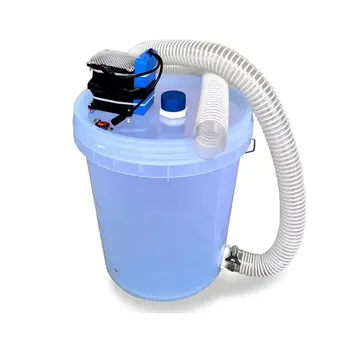
Modified vacuum pumps provide a critical advantage in honey bee health monitoring by enabling the precise, non-destructive collection of specific bee demographics necessary for accurate pathogen analysis. This method significantly enhances the reliability of disease data while simultaneously minimizing physical stress and environmental exposure for the colony.
By mechanizing the collection process, vacuum pumps solve the dual challenge of biological accuracy and colony welfare. They allow researchers to target the specific bees most likely to carry disease—older foragers—without disrupting the hive’s thermal regulation or internal structure.
Improving Pathogen Detection Accuracy
Targeting the High-Risk Demographic
To accurately assess colony health, you must sample the correct bees. Modified vacuum pumps allow for the targeted collection of forager bees directly at the hive entrance.
Correlating Age with Infection Levels
Forager bees represent the older demographic of the colony. Primary research indicates these older individuals are statistically more likely to carry higher levels of Nosema spores and other pathogens.
Predictive Validity
Because vacuum pumps isolate these high-risk individuals, the resulting samples provide a more accurate prediction of the colony’s overall pathological status. Relying on random samples from inside the hive often dilutes these signals, leading to false negatives.
Operational Efficiency and Standardization
Rapid Collection
Compared to manual capture methods, portable vacuum devices significantly speed up the workflow. This allows for the rapid collection of a specific, pre-determined number of adult bees, which is vital for large-scale operations.
Sample Consistency
Vacuum systems, often used with customized plastic bottles, ensure that samples are uniform. This standardization is critical for laboratory analysis, ensuring that results are representative and comparable across thousands of colonies.
Prioritizing Colony Welfare
Non-Destructive Sampling
The vacuum method allows for the collection of live bees without damaging the hive structure. This "non-destructive" approach preserves the integrity of the colony while still securing the necessary biological data.
Maintaining Thermal Regulation
Manual sampling often requires opening the hive for extended periods, exposing the brood to external elements. Mechanized vacuum sampling minimizes the time the hive is open, reducing interference with the colony's critical thermal regulation.
Operational Requirements and Considerations
Dependence on Standardized Equipment
Unlike simple manual tools like bee brushes, vacuum sampling relies on specific hardware, such as portable pumps and specialized collection bottles. Maintaining sample representativeness requires strict adherence to standardized operational procedures to ensure the equipment does not stress the bees.
Location Specificity
To gain the advantages listed above, the operator must know where to aim the device. Success depends on targeting the correct zones—such as the hive entrance for foragers or the edges of honey supers—rather than indiscriminately vacuuming bees, which would negate the demographic advantages.
Making the Right Choice for Your Goal
When designing your sampling protocol, consider your primary objective:
- If your primary focus is Pathogen Detection Sensitivity: Prioritize vacuum sampling at the hive entrance to target older foragers, as they provide the clearest signal of infection risks like Nosema.
- If your primary focus is Colony Preservation: Utilize vacuum devices to minimize the duration the hive is open, thereby protecting the colony's thermal environment and reducing stress.
Standardizing your collection method with vacuum technology transforms sampling from a disruptive intrusion into a precise diagnostic tool.
Summary Table:
| Advantage Category | Key Benefit | Impact on Beekeeping |
|---|---|---|
| Pathogen Detection | Targets older foragers (high-risk demographic) | Increases sensitivity and accuracy for diseases like Nosema. |
| Operational Speed | Rapid, mechanized collection | Enables large-scale health monitoring with minimal labor. |
| Sample Quality | Uniform collection in standardized bottles | Ensures consistent, comparable data for laboratory analysis. |
| Colony Welfare | Non-destructive and maintains thermal regulation | Reduces colony stress and preserves hive integrity. |
Elevate Your Beekeeping Operations with HONESTBEE
At HONESTBEE, we understand that precision is the backbone of successful commercial beekeeping. Whether you are a large-scale apiary or a specialized distributor, our comprehensive wholesale portfolio offers the high-performance machinery and tools you need to stay ahead. From honey-filling and hive-making machines to professional-grade equipment and essential industry consumables, we provide the hardware that drives efficiency.
Why partner with HONESTBEE?
- Commercial-Grade Quality: Reliable equipment designed for heavy-duty use.
- Complete Solutions: Everything from specialized hardware to honey-themed cultural merchandise.
- Industry Expertise: We cater specifically to the needs of professional bee businesses and distributors.
Ready to modernize your workflow and maximize your yield? Contact us today to explore our wholesale offerings and see how HONESTBEE can support your growth.
References
- Suresh D. Desai, R. William Currie. Effects of Wintering Environment and Parasite–Pathogen Interactions on Honey Bee Colony Loss in North Temperate Regions. DOI: 10.1371/journal.pone.0159615
This article is also based on technical information from HonestBee Knowledge Base .
Related Products
- Portable Electric Bee Vacuum with Lithium Battery and 20L Collection Bucket
- HONESTBEE 3-Frame Manual Acrylic Honey Extractor
- Automatic Honey Filling and Filtering Machine for Beekeeping Bottle Filling
- Stainless Steel Manual 8 Frame Radial Honey Extractor Machine for Beehives
People Also Ask
- What are the advantages of using portable bee vacuums for sampling honey bees? Optimize Nosema Detection Efficiency
- Who is qualified to use a bee vacuum? Essential Safety and Experience Requirements for Effective Bee Relocation
- What potential problems can occur when using a bee vacuum? Prevent Colony Mortality and Ensure Safe Bee Removal
- What are the benefits of using a bee vacuum? Safely Remove & Preserve Honey Bee Colonies
- Why do people use bee vacuums? A Humane Solution for Live Bee Removal