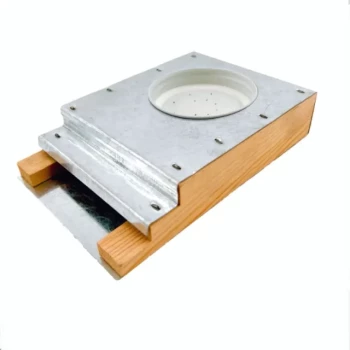
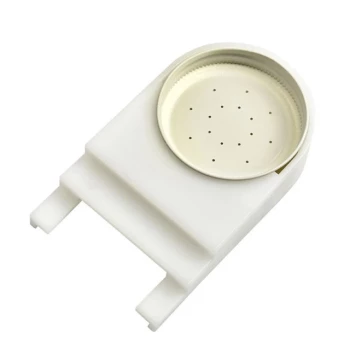
An entrance feeder is an external feeding device composed of a tray inserted into the hive entrance and an inverted container, typically a glass jar or plastic bottle, that rests outside the hive body. Also known as a Boardman feeder, its primary advantage is ease of monitoring and refilling, allowing the beekeeper to manage food supplies without opening the hive or disturbing the colony.
Core Insight: While entrance feeders offer unmatched convenience for the beekeeper, they place the food source at the colony's most vulnerable point—the front door. This makes them excellent for monitoring consumption in fair weather but risky during colder months or when "robbing" pressure from other insects is high.
The Mechanics of the Entrance Feeder
Two-Part Design
The unit consists of two distinct components: a feeding tray and an inverted reservoir. The tray slides into the entrance of the hive, while the reservoir (the syrup container) sits upside down in the tray holder outside the hive box.
External Visibility
Because the container remains outside the hive, the syrup level is always visible. This eliminates the guesswork involved with internal feeders, where the hive must be opened to check if the bees have finished their feed.
Operational Advantages
Zero-Disturbance Maintenance
The most significant benefit is the ability to refill the feeder without opening the hive. You can swap out an empty jar for a full one in seconds, ensuring the colony's internal temperature and organization remain undisturbed.
Simplified Monitoring
Beekeepers can assess food consumption at a glance. This is particularly useful for gauging how quickly a new package of bees is drawing out comb or determining if a colony has stopped taking food due to a nectar flow.
Water Provisioning
Experienced beekeepers often repurpose these feeders as external water sources. This provides the colony with clean water close to home without the risks associated with feeding sugar syrup externally.
Understanding the Trade-offs
The Danger of Robbing
This is the most critical operational risk. Because the syrup is located at the hive entrance, the scent can attract wasps, ants, and robber bees from other colonies. This forces the colony to defend the food right at their front door, which can be difficult for weaker hives.
Incompatibility with Cold Weather
Entrance feeders are ineffective in cool temperatures (typically the low 50s Fahrenheit or below). Because the feed is outside the warmth of the hive, the syrup can freeze, or the bees may simply be unable to break their cluster to travel to the entrance to access it.
Limited Capacity
These feeders generally have a small volume, often holding only a quart or liter. Rapidly building colonies may empty them quickly, requiring daily attention and refilling compared to larger internal bulk feeders.
Making the Right Choice for Your Goal
- If your primary focus is minimal disturbance: Use an entrance feeder during warm weather to keep the hive closed while ensuring bees have constant food access.
- If your primary focus is winter feeding: Avoid entrance feeders entirely; use an internal feeder directly above the cluster to prevent freezing and ensure access.
- If your primary focus is disease prevention: Monitor the feeder closely for robbing activity, as fighting at the entrance can spread pathogens and weaken the colony's defense.
Select the feeder that balances your need for convenience with the colony's ability to defend and access the food.
Summary Table:
| Feature | Description | Key Advantage |
|---|---|---|
| Design | Two-part (Tray & External Reservoir) | Visibility without opening hive |
| Maintenance | External refilling | Zero colony disturbance |
| Monitoring | Visual syrup level checks | Real-time consumption tracking |
| Ideal Use | Warm weather & water provisioning | Simplifies yard management |
| Main Risk | Proximity to entrance | Requires monitoring for robbing |
Scale Your Apiary Operations with HONESTBEE
Maximize your productivity with premium beekeeping solutions from HONESTBEE. We specialize in supporting commercial apiaries and distributors with a comprehensive wholesale range, including everything from Boardman feeders and hive hardware to advanced honey-filling machines.
Our portfolio is designed to help you streamline maintenance and increase efficiency across your entire operation. Contact us today to discuss our volume pricing and discover how our high-quality tools and industrial machinery can grow your beekeeping business.
Related Products
- Boardman Entrance Bee Feeder Durable Galvanized Steel and Wood Construction for Beekeeping
- Classic Boardman Entrance Bee Feeder Hive Front Feeding Solution
- Professional Hive Front Entrance Bee Feeder
- HONESTBEE Entrance Bee Feeder Efficient Hive Front Liquid Feeding Solution for Beekeeping
- HONESTBEE Entrance Bee Feeder Professional Hive Nutrition Solution for Beekeeping
People Also Ask
- What types of bee feeders are available for beginners? Start with the Simple Entrance Feeder
- How does a bee entrance feeder work? A Simple Guide to Convenient Hive Feeding
- What is a bee entrance feeder and what are its drawbacks? Essential Guide to Hive Security and Feeding Efficiency
- What are the advantages and disadvantages of using an entrance feeder for bees? Balance Convenience and Hive Security.
- How to make an entrance feeder for bees? A DIY Guide for Safe & Effective Feeding