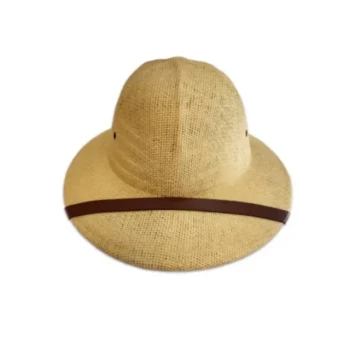
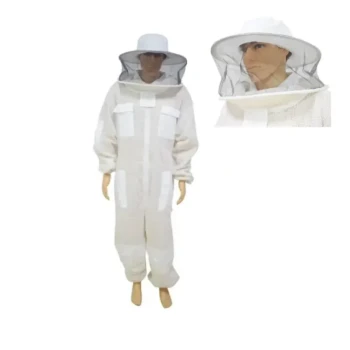
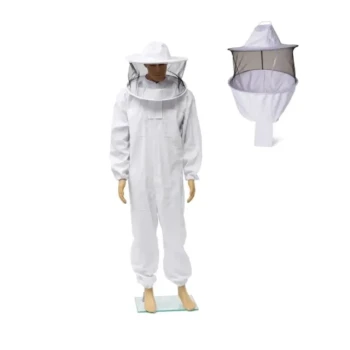
A fencing veil, often referred to as a hooded veil, is a specialized protective headgear designed to zip directly onto a beekeeping jacket or suit. Distinct from separate throw-over veils, it utilizes a stiff, self-supporting structure to hold a mesh screen away from the face while maintaining a solid fabric back.
Core Takeaway: The fencing veil offers a balance of high-security integration and structural stability. While it provides excellent facial clearance and eliminates the need for a separate helmet, users must accept reduced airflow and a narrower field of view compared to other designs.
Structural Design and Integration
Self-Supporting Architecture
The defining characteristic of a fencing veil is its stiff, rigid structure. Modeled after the masks used in the sport of fencing, the design ensures the material stays firmly positioned away from the head. This minimizes contact between the mesh and the skin, significantly reducing the risk of stings to the face.
Seamless Suit Connection
Unlike square veils that sit loosely over a helmet, a fencing veil is designed to zip securely onto the collar of a suit or jacket. This creates a unified protective barrier, eliminating gaps where bees might otherwise enter.
Compact and Portable
Because it lacks a hard helmet, the fencing veil is generally lighter and more flexible for transport. It offers the protection of a rigid veil without the bulk associated with traditional helmet-and-veil combinations.
Visibility and Environment Control
Directed Mesh Visibility
The visual component consists of a mesh viewing area located on the front and extending partially to the sides. This provides clear forward vision necessary for inspecting frames and working inside the hive.
The Solid Back Panel
The back of a fencing veil is constructed from solid fabric rather than mesh. This design choice adds durability and structure to the hood mechanism.
Impact on Airflow
Due to the solid fabric back, a fencing veil typically permits less airflow than full-mesh round veils. While the solid top and back can offer protection from direct sunlight, the reduction in cross-breeze can make this style warmer during hot weather work.
Understanding the Trade-offs
Restricted Peripheral Vision
While forward vision is clear, the specific shape of the fencing veil can create a narrow viewing area. Beekeepers may find their peripheral vision limited, which can be distracting when trying to monitor activity around the apiary.
Movement Limitations
Because the veil is zipped to the shoulders of the suit, it does not always move in perfect sync with the beekeeper's head. Turning your head quickly may result in looking into the side fabric rather than through the mesh, requiring you to turn your entire torso.
Fit and Positioning
A common fit issue is the veil hanging too low on certain body types. If not sized correctly, the top of the veil may slump, obstructing the upper range of the beekeeper’s view at critical angles.
Making the Right Choice for Your Goal
- If your primary focus is security and convenience: The fencing veil is the superior choice because it zips seamlessly to the suit, eliminating gaps and the need for a separate helmet.
- If your primary focus is maximum ventilation: You may want to consider alternative designs, as the fencing veil's solid back panel restricts cross-breeze and airflow compared to 360-degree mesh options.
- If your primary focus is wide-range visibility: Be aware that the fencing veil requires you to turn your body to see clearly, whereas other styles may offer better peripheral vision.
The fencing veil is best suited for beekeepers who prioritize a streamlined, all-in-one protective system over maximum peripheral airflow.
Summary Table:
| Feature | Description | Benefit |
|---|---|---|
| Structure | Rigid, self-supporting frame | Keeps mesh away from face to prevent stings |
| Integration | Zips directly to suit/jacket | Creates a seamless, bee-proof barrier |
| Material | Mesh front with solid fabric back | Provides durability and sun protection |
| Portability | Lightweight; no helmet required | Easy to transport and less bulky to wear |
| Visibility | Directed forward mesh | High-clarity view for detailed hive inspections |
Elevate Your Apiary’s Protection with HONESTBEE
Looking to supply your commercial operation or retail store with premium protective gear? HONESTBEE specializes in serving commercial apiaries and distributors with high-quality beekeeping essentials. From advanced fencing veils and ventilated suits to hive-making machinery and honey-filling equipment, we provide the full spectrum of tools needed for professional success.
Why partner with HONESTBEE?
- Comprehensive Wholesale Catalog: One-stop shop for tools, machinery, and consumables.
- Industry Expertise: High-durability equipment designed for rigorous commercial use.
- Global Distribution: Reliable supply chains for wholesale partners.
Ready to upgrade your inventory or equipment? Contact us today at HONESTBEE to discuss our volume pricing and custom solutions!
Related Products
- Premium Cotton Beekeeper Suit with Reinforced Fencing Veil
- Three-Layer Ventilated Beekeeper Suit with Structured Fencing Veil
- Professional Square Folding Wire Mesh Beekeeping Veil
- Beekeeper Cowboy Hat and Veil for Beekeeping
- Premium Cowboy Beekeeper Hat with Visibility Veil Outdoor Professional Beekeeping Protective Gear
People Also Ask
- What material and design specifications are recommended for a high-quality beekeeper suit? Top Gear Selection Guide
- How to Pre-treat Propolis Stains on Beekeeping Suits? Master Advanced Fabric Care and Soil Removal
- What features should be considered for sting protection in a beekeeping suit? Ensure Total Safety and Comfort
- What are the differences between full suits and jackets with veils in beekeeping? Choose Your Best Protection
- What features should be looked for in a beekeeping suit for maximum comfort? Prioritize Ventilation and Fit