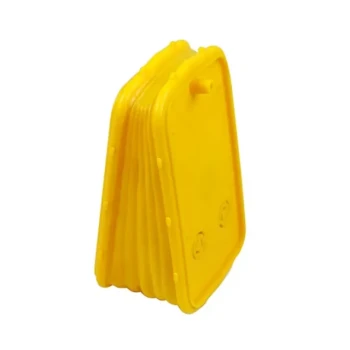
The most significant disadvantage of using plastic foundation is the inherent reluctance of bees to accept it as a nesting surface.
Because plastic is a foreign material to the colony, bees may hesitate to utilize it, often taking nearly twice as long to draw out comb compared to wax or foundationless alternatives.
Core Takeaway While plastic foundation is durable, it disrupts the colony's natural workflow and creates long-term environmental and sanitation challenges. Bees often struggle to accept the material without significant intervention, and handling diseased equipment requires expensive or complex disposal methods rather than simple burning.
Bee Acceptance and Productivity Issues
The primary struggle with plastic foundation is not mechanical, but biological: bees simply prefer natural materials.
Slower Comb Construction
Bees are noticeably slower to accept plastic foundation. Primary observations suggest that colonies may take nearly twice as long to draw out functional comb on plastic compared to pure wax sheets or foundationless frames. This delay can slow down the overall growth of the colony.
The "Insufficient Wax" Problem
Although manufacturers claim their plastic foundation is "wax-coated," the factory application is frequently too thin to entice the bees. To ensure acceptance, the beekeeper must often perform the tedious task of rolling additional melted beeswax onto the frames before installation. Without this extra step, the colony may ignore the frames entirely.
Cell Size Rejection
Plastic foundation forces bees to build comb using a predetermined hexagon cell size. If this manufactured size does not match the bees' specific preferences or needs, they may reject the foundation or build irregular comb.
Disease Management and Sanitation
While plastic is durable, its synthetic nature becomes a liability when a hive suffers from severe health issues.
Difficulty Eliminating American Foulbrood (AFB)
When a hive is infected with American Foulbrood, the standard protocol for wooden frames is to burn them to destroy the spores. You cannot simply burn plastic frames due to the release of toxic fumes and the resulting molten mess. Instead, infected plastic requires expensive gamma radiation treatment or specialized disposal, making disease management costly and difficult.
Cleaning Challenges
While plastic can be reused, preparing it for a new season is labor-intensive. Beekeepers must pressure wash the frames and often soak them in bleach solutions to remove old wax and propolis. Following this deep clean, the frames must be re-coated with wax, adding another step to the workflow.
Environmental and Material Concerns
For beekeepers prioritizing sustainability, plastic foundation presents significant ethical and practical drawbacks.
Non-Biodegradable Waste
Plastic foundation never truly biodegrades. Once a frame creates a disposal challenge, it persists in the environment indefinitely if not recycled properly. This contrasts sharply with beeswax or wooden frames, which can naturally decompose.
Material Transparency
While marketed as food-grade, the specific chemical composition of the plastic used is not always disclosed by manufacturers. This lack of transparency can be concerning for beekeepers attempting to maintain a strictly natural or organic apiary.
Understanding the Trade-offs
Despite these disadvantages, it is important to understand why plastic remains a popular option for commercial operations.
Durability Against Pests
The rigidity of plastic foundation offers a distinct advantage against wax moths. Unlike wax sheets, which wax moth larvae can burrow through and destroy, plastic foundation is impervious to this damage, preventing the pests from spreading easily between frames.
Durability in Extraction
Plastic frames are robust and highly resistant to the forces of a honey extractor. They do not require wiring for support and rarely "blow out" (break apart) during high-speed spinning, which protects the comb for future reuse.
High Contrast for Inspections
Many beekeepers utilize black plastic foundation specifically for the brood nest. The dark background provides high contrast against the small white eggs of the queen, making it significantly easier to assess the queen's laying pattern.
Making the Right Choice for Your Goal
The decision to use plastic foundation depends on balancing your need for durability against your desire for a natural hive environment.
- If your primary focus is Natural Beekeeping: Avoid plastic foundation to eliminate non-biodegradable waste and allow bees to build comb at their preferred natural speed.
- If your primary focus is Durability and Pest Management: Use plastic foundation (preferably black for brood), but be prepared to apply extra wax yourself to ensure the bees accept it.
Ultimately, plastic foundation sacrifices rapid colony buildup and environmental purity in exchange for long-term physical durability.
Summary Table:
| Disadvantage Category | Key Issues & Challenges |
|---|---|
| Bee Acceptance | Slower comb construction; requires manual re-waxing; potential cell size rejection. |
| Disease Control | Cannot be burned for AFB treatment; requires costly gamma radiation or specialized disposal. |
| Maintenance | Labor-intensive cleaning; requires pressure washing and bleach soaking before reuse. |
| Sustainability | Non-biodegradable material; lack of chemical transparency compared to natural wax. |
| Biological Impact | Disrupts natural workflow; unnatural nesting surface for the colony. |
Optimize Your Apiary with Professional Tools from HONESTBEE
Choosing the right foundation is just one step in running a successful commercial operation. At HONESTBEE, we understand the unique challenges faced by commercial apiaries and distributors. We provide a comprehensive wholesale range of high-performance beekeeping tools, machinery, and essential consumables designed to maximize your productivity.
Whether you need specialized hive-making and honey-filling machines to scale your production, or durable hardware and honey-themed merchandise to expand your market reach, we have the expertise to support your growth.
Ready to upgrade your equipment or stock your distribution business?
Contact Us Today to Discuss Wholesale Solutions
Related Products
- Food Grade Plastic bee Foundation for Bee Frames
- Assembled Wooden Bee Frames with Plastic Foundation for Durability and Convenience by HONESTBEE
- Plastic Bee Frame Beekeeping Hive Frames for Wholesale
- HONESTBEE Wired and Assembled Wooden Bee Frames Foundation for a Thriving Hive
- Professional Insulated Plastic Bee Hives
People Also Ask
- What are the advantages of using plastic foundation in a beehive? Boost Efficiency and Durability in Your Apiary
- What are the technical advantages of using bee frames with plastic foundation? Boost Hive Efficiency and Durability
- How is plastic foundation installed in a bee frame? Master the 'Bend and Pop' Technique for Better Efficiency
- How to get bees to accept plastic foundation? Apply a Wax Coating for Fast Comb Building
- What is the recommended method for re-waxing plastic bee frame foundation? Master the Foam Brush Technique