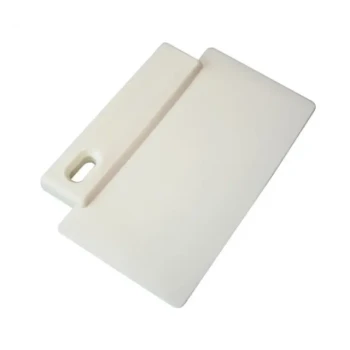
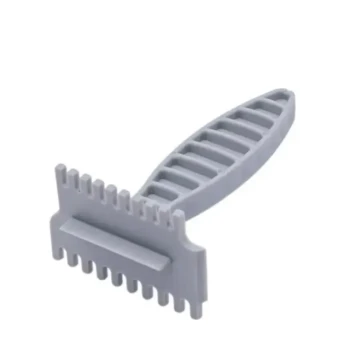
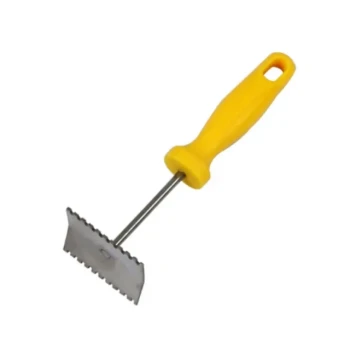
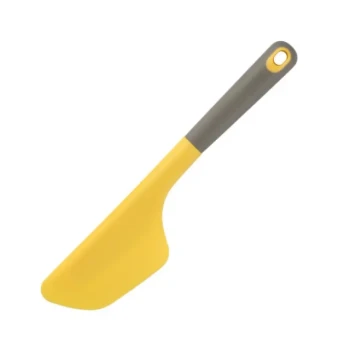
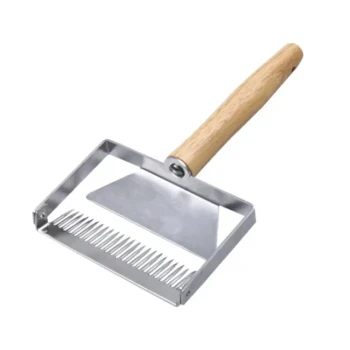
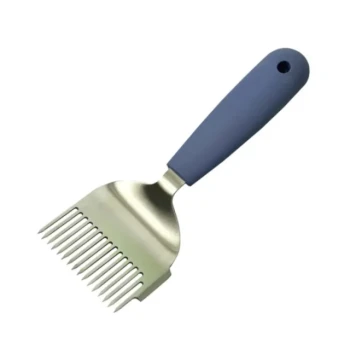
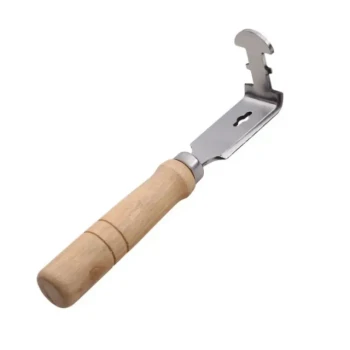
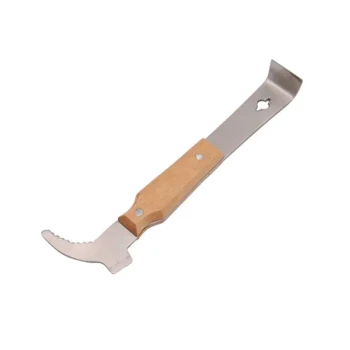
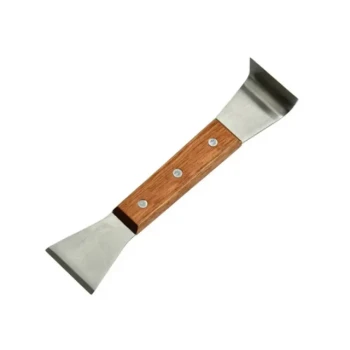
The design of a professional sharp scraper relies on a critical balance between edge geometry and material properties to ensure process efficiency. Specifically, the blade must be sharp enough to fully detach dried venom crystals firmly adhered to collection surfaces, yet the material hardness must be tuned to prevent damaging the glass substrate. This ensures maximum yield without introducing dangerous contaminants.
Core Takeaway The ultimate goal of a sharp scraper is purity preservation alongside yield maximization. A blade that is too dull leaves valuable product behind, while a blade that is improperly hardened risks shaving microscopic glass shards into the venom, rendering the batch unusable.
Optimizing Blade Sharpness for Maximum Yield
Overcoming Crystal Adhesion
Bee venom dries into crystals that bond firmly to glass plates. A professional scraper must feature an edge engineered to slide underneath these adhered particles.
Without this precise sharpness, the tool may skip over crystals or crush them rather than lifting them clean.
Minimizing Product Loss
The primary function of the sharp edge is to ensure the complete removal of the raw material.
Any venom left on the plate represents a direct loss in yield. A professional-grade edge minimizes this waste by scraping the surface down to the substrate in a single efficient pass.
Material Hardness and Contamination Control
The Risk of Glass Shards
The most critical safety consideration in scraper design is the prevention of foreign particulate matter.
If the scraper material is harder than the collection plate, friction can gouge the surface. This creates glass shards that mix with the venom, compromising the purity of the final medical-grade product.
Balancing Material Properties
Engineers must carefully balance the hardness of the scraper blade against the hardness of the glass plates.
The material must be tough enough to maintain a sharp edge during repetitive scraping but soft enough to yield to the glass if excessive pressure is applied. This balance acts as a failsafe to maintain the integrity of the raw bee venom.
Understanding the Design Trade-offs
Sharpness vs. Edge Durability
To achieve the extreme sharpness required for complete crystal removal, the blade edge often becomes thinner and more fragile.
This creates a trade-off where the tool may require more frequent maintenance or replacement to prevent the edge from rolling or dulling, which would subsequently reduce harvest efficiency.
Aggression vs. Protection
A more aggressive cut ensures high yield but brings the blade into closer, more forceful contact with the glass.
Designers must weigh the benefit of harvesting every microgram of venom against the increased risk of scratching the plate. The ideal tool operates in the narrow window between these two extremes.
Making the Right Choice for Your Process
Before selecting a scraping tool, evaluate your current processing priorities:
- If your primary focus is maximizing volume: Prioritize a scraper with high-precision edge geometry to ensure no adhered crystals are left behind on the plate.
- If your primary focus is absolute purity: Prioritize a scraper with a material hardness rating specifically calculated to be softer than your glass collection plates to eliminate the risk of shard contamination.
Success in bee venom processing comes from respecting the delicate interplay between the tool's aggression and the product's fragility.
Summary Table:
| Design Feature | Impact on Processing | Key Consideration |
|---|---|---|
| Edge Geometry | Maximizes yield by lifting adhered crystals | Must be sharp enough to slide under particles |
| Material Hardness | Prevents substrate damage and glass shards | Must be softer than the glass collection plate |
| Blade Durability | Affects maintenance frequency | Thin edges provide precision but require upkeep |
| Scraping Force | Balances efficiency vs. surface protection | Controlled aggression to ensure 100% removal |
Elevate Your Bee Venom Production with HONESTBEE
At HONESTBEE, we understand that in professional beekeeping, the difference between profit and loss lies in the quality of your tools. We cater to commercial apiaries and distributors by providing a comprehensive wholesale range of high-precision equipment designed for the most delicate tasks, including bee venom processing.
Our portfolio includes everything from specialized honey-filling and hive-making machinery to essential industry consumables. Whether you are scaling your operation or supplying the market, our tools ensure you achieve maximum yield without compromising purity.
Ready to upgrade your apiary’s efficiency? Contact us today to explore our wholesale machinery and professional beekeeping solutions!
References
- Institute for Environment and Resources, VNU-HCM, Vietnam, Dalat Pasteur Vaccine Company Limited, Vietnam. Survey on the ability to collect honey bee venom (Apis Mellifera ligustica) and evaluate the economic potential for beekeeping. DOI: 10.32508/stdjsee.v9i2.785
This article is also based on technical information from HonestBee Knowledge Base .
Related Products
- Professional Wide Blade Honey Scraper for Beekeeping and Honey Processing
- Professional Dual Action Queen Excluder Scraper for Beekeeping
- Full Set Beekeeping Electronic Bee Venom Collector Machine Device for Bee Venom Collecting
- Lightweight Durable Plastic Queen Excluder Scraper for Beekeeping
- Stainless Steel Scraper for Metal Queen Bee Excluders
People Also Ask
- What tools and machinery are essential to resolve common operational constraints such as equipment shortages and improper honey harvesting? Discover the complete honey-harvesting equipment lineup for commercial apiaries and distributors.
- How does environmental temperature control influence the efficiency of honey scraping equipment? Optimize Your Flow
- What operational considerations are critical during honey harvesting, and how do specialized honey processing tools add value to the final product? Optimize Quality and Yield
- What are the core functions of a honey processor? Master Moisture Control and Purification for Quality Honey
- What are the technical requirements for beekeeping equipment used in the production of comb honey compared to filtered honey?