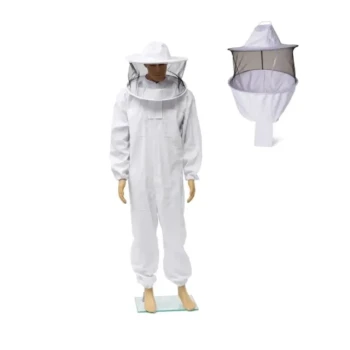
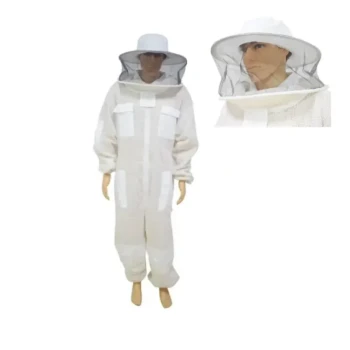
The primary safety advantage of a zippered beekeeping veil is the creation of a seamless, impenetrable mechanical seal between the headgear and the protective suit. Unlike detachable designs that often rely on elastic or drawstrings, a zippered connection completely eliminates gaps at the neck and throat area. This fully enclosed configuration prevents bees from penetrating the suit’s interior, offering the highest tier of protection for the vulnerable head and face region.
The zippered interface transforms the veil and suit into a single, continuous unit, removing the structural vulnerabilities and entry points common in loose-fitting or detachable equipment.
The Mechanics of Protection
Elimination of Entry Points
The most critical function of protective gear is maintaining a secure perimeter. A zippered connection creates a fully enclosed environment.
Detachable veils often leave small openings where the fabric folds or where elastic stretches unevenly. A zipper interlocks the fabric completely, ensuring aggressive bees cannot find a path inside the suit near the neck.
Stability During Movement
Beekeeping requires bending, lifting, and reaching. A zippered veil remains anchored to the suit regardless of your posture.
While detachable veils may shift or ride up during strenuous activity, a zippered veil maintains its protective integrity. This ensures that gaps do not inadvertently open up while you are lifting heavy frames or inspecting lower hive boxes.
The Operational Impact of Security
Enhancing Fine Motor Skills
High-performance protection does more than stop stings; it enables better beekeeping. A secure barrier allows for precise, calm movements.
When you are confident that your veil is impenetrable, you can focus entirely on the task at hand. This psychological security preserves the fine motor skills necessary to lift frames without crushing bees, which is a key factor in keeping the colony calm.
Vision and Situational Awareness
Protective veils are designed to provide clear vision, but this relies on the veil sitting correctly on the head. Zippered attachment points help stabilize the veil structure.
By anchoring the base of the veil to the suit shoulders, the zipper prevents the mesh from resting against the face or shifting out of place. This maintains the necessary "standoff" distance between the mesh and the skin, preventing stings through the screen.
Understanding the Trade-offs
Equipment Maintenance
While safer, zippers introduce a mechanical element that requires care. A broken or jammed zipper renders the suit unusable.
Unlike a drawstring that can be knotted, a failed zipper compromises the entire seal. Regular inspection of the zipper teeth and slider is essential to ensure reliability before entering the apiary.
Emergency Removal
In the rare event that a bee does enter the veil, removal speed is critical. Zippered veils take longer to detach than simple elastic models.
You must be familiar with the mechanism to unzip it quickly under stress. However, the preventative nature of the zipper makes the likelihood of this emergency scenario significantly lower than with detachable designs.
Making the Right Choice for Your Goal
When selecting between veil types, consider your experience level and the temperament of your apiary.
- If your primary focus is maximum safety and confidence: The zippered veil is the superior choice as it provides a fail-safe barrier against inquisitive or aggressive bees.
- If your primary focus is quick ventilation or frequent removal: A detachable veil may offer convenience, but you must accept the increased risk of perimeter breaches at the neck.
The most effective protective gear is the kind that allows you to work the hive with calm, deliberate confidence.
Summary Table:
| Feature | Zippered Beekeeping Veil | Detachable/Elastic Veil |
|---|---|---|
| Seal Integrity | 100% Mechanical seal; no gaps | Prone to gaps at neck and throat |
| Movement Stability | Anchored to suit; does not shift | May ride up or shift during lifting |
| Sting Prevention | Maintains mesh distance from skin | Mesh can collapse against face |
| Security Level | High: Creates single continuous unit | Moderate: Relies on fabric tension |
| Primary Benefit | Total perimeter security | Quick removal and ventilation |
Secure Your Apiary with Professional-Grade Gear
At HONESTBEE, we understand that for commercial apiaries and distributors, equipment reliability is non-negotiable. Our comprehensive wholesale catalog includes premium zippered protective suits and high-durability beekeeping tools designed to withstand the rigors of industrial use.
Whether you need specialized hive-making machinery, honey-filling equipment, or a bulk supply of essential consumables, we provide the hardware and expertise to scale your operations safely.
Enhance your safety standards and operational efficiency—contact HONESTBEE today for a wholesale quote!
References
- Michael K. O’Malley, Philip G. koehler. Removal of Swarms and Colonies for Pest Control Operators. DOI: 10.32473/edis-in778-2008
This article is also based on technical information from HonestBee Knowledge Base .
Related Products
- Professional Square Folding Wire Mesh Beekeeping Veil
- Premium Cotton Beekeeper Suit with Reinforced Fencing Veil
- Professional Beekeeper Suit with Square Folding Cotton Veil
- Beekeeping Jacket with Hood and Veil for Beekeepers
- High-Definition Beekeeper Hat with Round Veil Mesh for Beekeeping
People Also Ask
- Why is beekeeping veil mesh stiffness important? Ensure Maximum Safety with Rigid Protective Barriers
- What are the differences between round, square, and fencing veils? Choose the Right Protection for Your Apiary
- What are the different styles of beekeeping veils? A Guide to Safety & Visibility
- What types of head protection are available for beekeepers? Choose the Right Veil for Safety & Confidence
- What are the primary differences between a round beekeeping veil and a fencing veil? Choose the Right Protection