Larval grafting technology offers organic beekeepers a decisive advantage by enabling the precise selection of genetic traits from superior mother colonies. Unlike reliance on natural swarming or imported commercial stock, this method produces queens with significantly higher environmental adaptability and disease resistance.
By moving from passive propagation to active larval grafting, organic operations can reduce colony loss rates by approximately 50%. The core benefit is the ability to manually select for resilience and stability, which is essential in systems where chemical interventions are restricted.
Enhancing Genetic Resilience
For organic beekeeping, where chemical treatments are limited or prohibited, the genetics of the colony are the primary defense against pests and disease.
Selective Breeding for Disease Resistance
Grafting allows you to breed specifically from colonies that demonstrate superior hygiene and disease resistance. By manually choosing larvae from your healthiest mother colonies, you propagate the specific traits that allow bees to survive without synthetic inputs.
Superior Environmental Adaptability
Queens produced through grafting are often better suited to their specific local climate than commercial queens purchased from different regions. This leads to higher survival rates and improved overwintering capabilities.
Reduction in Colony Loss
The data supports the efficacy of this approach. Research indicates that organic operations utilizing larval grafting experience roughly 50% lower colony loss rates compared to those relying on natural or commercial rearing methods.
Operational Stability and Production
Beyond health, grafting introduces predictability into the apiary, transforming queen rearing from a random event into a managed process.
Improving Colony Stability
Grafting minimizes the unpredictability associated with natural swarming or emergency queen rearing. By controlling the timing and source of the new queen, you ensure consistent colony development and reduced brood breaks.
Managing Swarming Impulse
This technology aids in swarm management. By actively rearing queens, beekeepers can split colonies or replace failing queens on a schedule, preventing the overcrowding that typically triggers natural swarming.
Increasing Honey Production
Stronger, more stable colonies naturally lead to better yields. The careful handling and high success rate of grafting help maintain peak population levels during honey flows, directly improving productivity.
The Mechanics of Precision
The technical process of grafting itself contributes to the quality of the resulting queens.
Minimizing Physical Damage
Modern grafting tools are designed to mimic the shape of bee larvae. This design allows for a gentle transfer that minimizes physical damage to the delicate larvae, a factor that is foundational for high rearing success rates.
Age-Specific Selection
Grafting enables the transfer of larvae at the optimal age, typically one-day-old larvae. Transferring larvae at this precise stage ensures they receive the maximum amount of royal jelly, which is critical for the quality of the subsequent queen development.
Consistent Rearing Environments
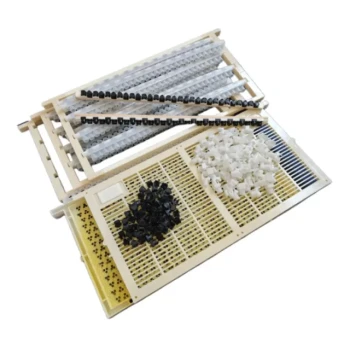
The use of plastic queen cell cups provides a durable and consistent environment for development. These cups are easily identifiable and reusable, simplifying the process of tracking and handling fragile queen cells.
Understanding the Trade-offs
While grafting offers superior results, it introduces complexity that organic beekeepers must manage.
The Skill Requirement
This is not a passive technique. It requires extremely high operational precision and a steady hand. Improper handling can damage larvae, leading to graft failure or poor-quality queens.
Equipment and Time Investment
Unlike natural swarming, grafting requires specific tools (grafting needles, cell cups) and a strict adherence to timing schedules. The beekeeper must be available to move cells and cage queens on specific days, offering less flexibility than natural methods.
Making the Right Choice for Your Goal
To maximize the benefits of larval grafting in your organic operation, align your approach with your specific objectives.
- If your primary focus is Colony Survival: Prioritize grafting larvae exclusively from mother colonies that have survived at least one winter without treatment to lock in local adaptability and disease resistance.
- If your primary focus is Production Stability: Use grafting to synchronize queen replacement schedules, ensuring all colonies are headed by vigorous, young queens prior to the main nectar flow.
Mastering larval grafting allows you to replace chance with choice, building an apiary defined by resilience rather than luck.
Summary Table:
| Feature | Benefit for Organic Beekeeping | Impact on Operation |
|---|---|---|
| Genetic Selection | Breeds for hygiene & disease resistance | Reduces need for chemical treatments |
| Larval Age Control | Precise 1-day-old larvae selection | Ensures high-quality, long-lived queens |
| Environmental Fit | Local climate adaptation | Higher overwintering survival rates |
| Process Control | Managed queen replacement schedules | Decreased swarming & stable production |
| Damage Mitigation | Gentle transfer with precision tools | Higher success rates in queen rearing |
Elevate Your Queen Rearing with HONESTBEE
Transitioning from passive propagation to precision grafting is the key to a resilient, high-yield organic apiary. HONESTBEE empowers commercial apiaries and distributors with the professional-grade tools needed to master this process. From ergonomic grafting needles and durable cell cups to advanced honey-filling machinery and specialized hive-making equipment, we provide the full spectrum of beekeeping hardware and consumables.
Why partner with HONESTBEE?
- Wholesale Excellence: Comprehensive inventory for large-scale operations.
- Industry Expertise: Tools designed for the high precision organic beekeeping requires.
- Global Supply Chain: Reliable access to everything from hardware to cultural merchandise.
Ready to stabilize your colony growth and maximize productivity? Contact our expert team today to explore our wholesale solutions and strengthen your beekeeping operation.
References
- Tunay Kılıçin, Ümit Karataş. A Research on the Breeding Activities of Organic Beekeeping Enterprises. DOI: 10.51458/bstd.2021.12
This article is also based on technical information from HonestBee Knowledge Base .
Related Products
- Plastic Beekeeping Honey Bee Larvae Grafting Tools for Queen Rearing and Chinese Grafting
- Black 2 Pack Beekeeper Queen Grafting Tool for Bee Queen Larva Transferring Needle
- Retractable Chinese Queen Rearing Grafting Tools Equipment
- Stainless Steel Beekeeping Queen Grafting Tool for Honey Bee Rearing
- Plastic Chinese Queen Grafting Tool for Bee Queen Rearing
People Also Ask
- How do larvae grafting tools and royal jelly production kits contribute to a diversified bee product strategy?
- What happens if a larva is grafted too late? Avoid Scrub Queens and Failed Rearing
- What is the primary function of a Professional Bee Larvae Grafting Tool in queen rearing? Enhance Breeding Efficiency
- What is the grafting method of queen rearing? Master Controlled Queen Production for Your Apiary
- What is the primary function and technical requirement of a larvae grafting tool? Master Precision Queen Rearing