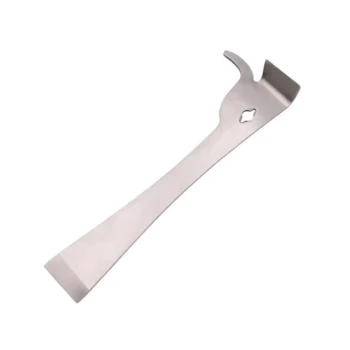
The primary function of a larvae grafting tool is the precise relocation of young larvae, typically one day old, from a worker comb cell into an artificial queen cell cup. To achieve this, the tool must meet strict technical requirements: it requires a tip thin and flexible enough to slide beneath the larva and lift it—along with its bed of royal jelly—without causing any physical trauma.
The success of queen rearing is defined by the grafting tool's ability to act as a seamless extension of the beekeeper's hand. If the tool causes even microscopic damage during transfer, the colony may reject the cell or produce an inferior queen.
The Mechanics of Precision Transfer
The Core Objective
The grafting tool facilitates the manual intervention required to transition a colony from natural reproduction to standardized production.
Its sole purpose is to bridge the gap between a standard worker cell and a queen cup, allowing the apiarist to select specific genetic stock for queen development.
Targeting the Correct Age
According to established protocols, the tool is used to select larvae of a specific age, most often one-day-old larvae.
Transferring larvae at this exact stage is foundational, as older larvae produce lower-quality queens, while younger larvae are incredibly fragile and difficult to move.
Critical Technical Requirements
Tip Geometry and Flexibility
To function correctly, the grafting needle must possess an extremely thin tip.
This design allows the instrument to slide down the side of the honeycomb cell and scoop underneath the larva without crushing it against the cell walls.
Preservation of Royal Jelly
The tool is not designed to lift the larva in isolation; it must also lift a small amount of the surrounding royal jelly.
This native jelly acts as a buffer during transport and ensures the larva does not dry out or starve before the nurse bees in the new colony accept it.
Understanding the Trade-offs
The Risk of Mechanical Damage
The most significant limitation in grafting is the potential for user error or tool failure resulting in physical injury.
If the tool tip is too blunt or rigid, it may bruise the larva's delicate skin. Even invisible damage often leads to the worker bees cleaning out (rejecting) the grafted cup immediately.
Orientation and Drowning
A technical constraint of the grafting process is the necessity of maintaining the larva's original orientation.
If the tool causes the larva to flip over during the transfer, the larva may drown in its own fluid or the royal jelly. A proper grafting tool is designed to slide the larva off gently, ensuring it rests in the new cup exactly as it sat in the old one.
Making the Right Choice for Your Goal
When selecting or using a grafting tool, your technique should adapt to your specific apiary objectives.
- If your primary focus is high acceptance rates: Ensure your tool has a flexible tip that lifts ample royal jelly to facilitate an immediate feeding response from nurse bees.
- If your primary focus is queen quality: Prioritize a high-precision tip that allows you to target the smallest, youngest (one-day-old) larvae without causing trauma.
Ultimately, the grafting tool is the physical foundation of queen rearing; its precision determines whether you produce a thriving new colony or an empty cell.
Summary Table:
| Feature | Technical Requirement | Impact on Queen Rearing |
|---|---|---|
| Tip Design | Ultra-thin and flexible | Prevents physical trauma and allows easy cell entry |
| Larva Age | Optimized for 1-day-old larvae | Ensures high-quality queen development |
| Jelly Preservation | Must lift larva with royal jelly | Prevents dehydration and ensures immediate acceptance |
| Transfer Action | Smooth, orientation-stable release | Prevents drowning and ensures nurse bee adoption |
Elevate Your Queen Rearing with HONESTBEE
At HONESTBEE, we understand that the success of a commercial apiary hinges on the precision of its tools. Whether you are a large-scale distributor or managing a commercial queen-rearing operation, we provide the high-precision grafting tools and specialized machinery needed to ensure superior genetic stock development.
From honey-filling machines to durable beekeeping hardware and essential industry consumables, our comprehensive wholesale portfolio is designed to maximize your efficiency and output.
Ready to scale your production? Contact us today to discover how HONESTBEE’s professional equipment can streamline your beekeeping business.
References
- Ethem Akyol, İbrahim Çakmak. An observation study on the effects of queen age on some characteristics of honey bee colonies. DOI: 10.4081/ijas.2008.19
This article is also based on technical information from HonestBee Knowledge Base .
Related Products
- Plastic Beekeeping Honey Bee Larvae Grafting Tools for Queen Rearing and Chinese Grafting
- Black 2 Pack Beekeeper Queen Grafting Tool for Bee Queen Larva Transferring Needle
- Stainless Steel Queen Grafting Tool for Beekeeping and Bee Queen Grafting
- Retractable Chinese Queen Rearing Grafting Tools Equipment
- Stainless Steel Beekeeping Queen Grafting Tool for Honey Bee Rearing
People Also Ask
- How do larvae grafting tools and royal jelly production kits contribute to a diversified bee product strategy?
- What happens if a larva is grafted too late? Avoid Scrub Queens and Failed Rearing
- What is the primary function of a Professional Bee Larvae Grafting Tool in queen rearing? Enhance Breeding Efficiency
- What is the grafting method of queen rearing? Master Controlled Queen Production for Your Apiary
- What is the process of grafting in honey bee queen rearing? A Master Guide for Commercial Success