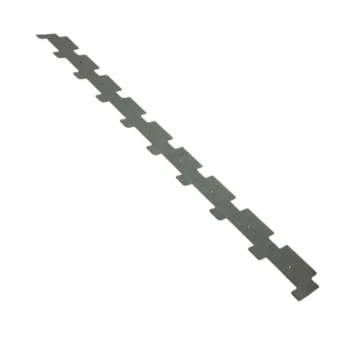
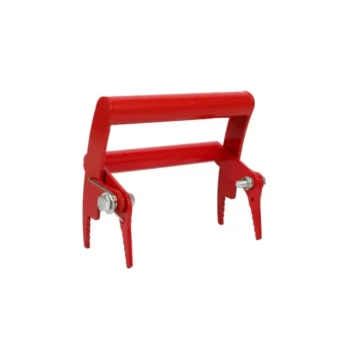
A dedicated grafting frame acts as the central chassis for standardizing and scaling biological production. It serves as a high-density carrier that secures dozens to hundreds of artificial queen cell cups in a fixed, optimized layout. By ensuring every larva is held at a uniform temperature, humidity, and nursing position, the frame maximizes the statistical probability of acceptance and streamlines the bulk harvesting of royal jelly.
The grafting frame transforms queen rearing from a highly variable biological event into a standardized production process, enabling synchronous mass rearing by ensuring every cell receives identical environmental exposure and nursing attention.
The Mechanics of Standardization
High-Density Arrangement
The primary function of the grafting frame is to organize artificial queen cups into a structured, high-density layout. Instead of managing individual cells scattered across a hive, this tool centralizes the operation into a single unit.
This allows beekeepers to arrange and manage dozens of cups—often up to 60 per frame—simultaneously. It converts a manual, piece-meal task into an efficient batch operation.
Environmental Uniformity
Within the hive, micro-climates can vary, affecting larval development. The physical structure of the grafting frame ensures that all cell cups are maintained at uniform levels of temperature and humidity.
By holding every cup in the same specific nursing position, the frame eliminates environmental variables. This consistency is vital for achieving high acceptance rates across the entire batch.
Facilitating the Biological Workflow
Induced Nursing Behavior
Royal jelly production relies on simulating the natural environment where bees rear queens. The grafting frame positions the larvae in a way that triggers the worker bees' instinct to nurse them.
When the frame is introduced to the colony, the mass arrangement of cells induces worker bees to secrete significant amounts of royal jelly to feed the larvae simultaneously.
Optimized Access for Nurse Bees
While density is important, crowding must be avoided to ensure proper feeding. The grafting frame provides standardized spatial intervals between the cups.
This specific spacing ensures that nursing bees have adequate physical space to enter and exit the cells. It facilitates unobstructed feeding and royal jelly secretion tasks once the frame is placed in the colony.
Operational Efficiency
Synchronous Mass Rearing
The frame enables synchronous rearing, meaning all larvae on the frame are at the exact same developmental stage. This synchronization allows for a predictable schedule regarding grafting, checking, and harvesting.
Streamlined Extraction
For royal jelly production, efficiency at the harvest stage is critical. Because the cups are fixed in a standardized layout, the extraction of jelly is significantly simplified.
Technicians can process the entire frame at once using specialized collection devices. This systematic approach increases the biological output per colony and supports commercial-scale operations.
Understanding the Trade-offs
The Density vs. Quality Balance
While the frame allows for high-density rearing, overcrowding a single frame can be detrimental. If the ratio of nurse bees to larvae is too low, the bees may not be able to feed all cups adequately.
This can lead to lower volumes of royal jelly per cup or the rejection of larvae. The frame facilitates scale, but it must be matched by a strong, well-populated colony to be effective.
Acceptance Risks
The frame concentrates your production assets. If the colony is not properly prepared or if the frame is introduced incorrectly, the bees may reject the entire batch of cups simultaneously.
Unlike natural rearing where cells are spread out, a rejection event on a grafting frame results in a total loss for that specific cycle.
Making the Right Choice for Your Goal
- If your primary focus is Royal Jelly Production: Prioritize frames with higher cup density (e.g., 60 cups) to maximize the volume of jelly harvested per hive cycle, ensuring your colony strength can support the demand.
- If your primary focus is Queen Rearing: Use the frame to ensure strict environmental uniformity, but potentially reduce the density of cups to ensure maximum nutrition and size for each individual queen candidate.
The dedicated grafting frame is the critical hardware that bridges the gap between traditional beekeeping and high-output commercial production.
Summary Table:
| Feature | Function in Production | Benefit to Beekeeper |
|---|---|---|
| High-Density Layout | Organizes 60+ cell cups per frame | Enables batch operations and mass scaling |
| Spatial Intervals | Provides precise spacing for nurse bees | Ensures unobstructed feeding and high jelly secretion |
| Climate Uniformity | Maintains consistent temp/humidity | Increases larval acceptance rates and health |
| Synchronous Rearing | Aligns all larvae at the same growth stage | Simplifies scheduling for grafting and harvesting |
| Fixed Frame Design | Standardizes the extraction process | Drastically reduces labor time during jelly collection |
Scale Your Apiary Operations with HONESTBEE
Transition from manual processes to industrial-grade efficiency with HONESTBEE. As a premier provider for commercial apiaries and global distributors, we supply the professional-grade grafting frames, hive-making machinery, and honey-filling equipment you need to maximize biological output. Whether you are scaling queen rearing or optimizing royal jelly harvesting, our comprehensive wholesale portfolio offers the specialized hardware and consumables required for success.
Ready to elevate your production? Contact us today to explore our wholesale solutions!
References
- Khalid Ali Khan, Hamed A. Ghramh. Evaluation of queen cell acceptance and royal jelly production between hygienic and non-hygienic honey bee (Apis mellifera) colonies. DOI: 10.1371/journal.pone.0266145
This article is also based on technical information from HonestBee Knowledge Base .
Related Products
- Wooden Bee Hive Frames for Beekeeping and Wholesale
- Plastic Bee Frame Beekeeping Hive Frames for Wholesale
- Assembled Wooden Bee Frames with Beeswax Foundation Ready to Use by HONESTBEE
- Assembled Wooden Bee Frames with Plastic Foundation for Durability and Convenience by HONESTBEE
- HONESTBEE Bee Frame Grooving Machine | Precision Slotting for Bee Frame Making
People Also Ask
- How do wooden and plastic hive frames compare in terms of durability? Wood vs. Plastic Longevity & Repairability
- How does balancing the number of frames impact hive productivity? Optimize Your Apiary's Biological Output
- What are the main considerations when choosing between wooden and plastic bee hive frames? Optimize Your Apiary's Efficiency
- How should beehive frames be maintained to prolong their lifespan? 5 Pro Tips for Durable Beekeeping Equipment
- What are frames and combs used for in beekeeping? The Foundation of Modern Hive Management