Queen marking pens are essential tools for beekeepers, designed to safely and efficiently mark queen bees for easy identification. Our product category includes a variety of options such as the Plastic Queen Marking Tube Cage with Plunger, which features a clear plastic design and soft foam plunger for humane handling. The Queen Bee Marking Pen POSCA offers compact, vibrant colors for precise marking, while the Queen Bee Marking Pen UNI Medium Point is weatherproof and fadeproof, ensuring long-lasting identification. Additionally, the One Hand Yellow Queen Marking Catcher Tube Cage provides a one-handed design for ease of use. These tools are perfect for hive management and ensuring the safety and efficiency of your beekeeping practices.
Toggle Categories
Get Instant Support
Choose your preferred way to connect with our team
-
Get Free Quote Fill out form for detailed pricing
-
Send Email Detailed inquiry support
-
WhatsApp Quick mobile chat
Response Time
Within 8 hours on working days, 24 hours on holidays
queen marking pens


Queen Bee Marking Pen UNI Medium Point for Queen and Bee Marking
Item Number: MP-2

Plastic Queen Marking Tube Cage with Plunger for Beekeeping
Item Number: MT-1

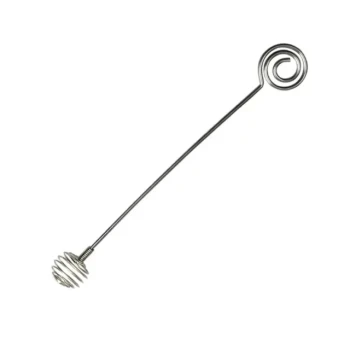
Modern Stainless Steel Honey Dipper Stirrer
Item Number: HB-4
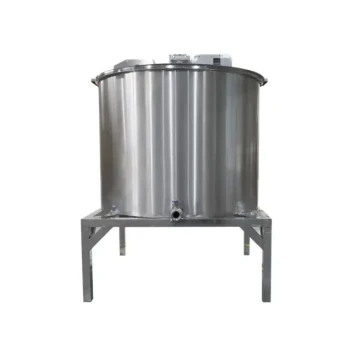
32 Frame Commercial Electric Honey Extractor for Beekeeping and Honey Production
Item Number: HE-32E
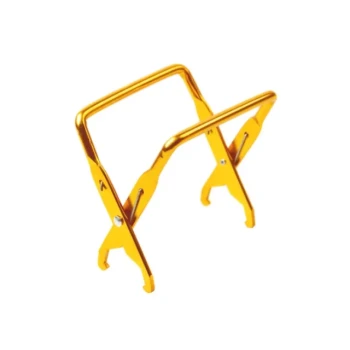
Lightweight Aluminum Frame Grip
Item Number: BFG-3A
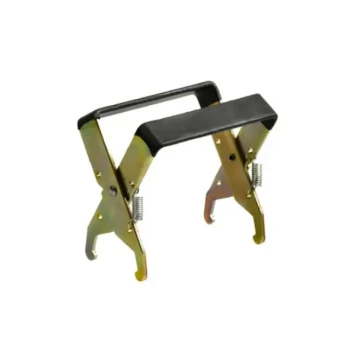
Durable Rubberized Comfort Handle Frame Grip
Item Number: BFG-9
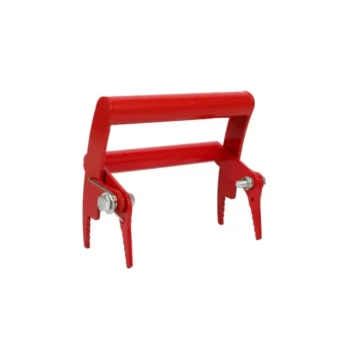
Heavy-Duty Plier Action Frame Grip
Item Number: BFG-10
Why Choose Our Queen Marking Pens?
Our queen marking pens are specifically designed to meet the needs of beekeepers, offering a range of features that ensure safe, efficient, and long-lasting identification of queen bees. Here’s why our products stand out:
Key Features
- Non-Toxic and Safe: All our queen marking pens use water-based, non-toxic paint that is safe for both the queen bee and the beekeeper. This ensures that the marking process does not harm the queen or the hive.
- Durable and Long-Lasting: The paint used in our pens is designed to last the lifetime of the queen, providing a permanent mark that won’t fade or wash away. This is crucial for long-term hive management.
- Easy to Use: Our pens are designed for ease of use, requiring only a simple priming process (shaking and pressing the pen) to get the paint to the tip. This makes the marking process quick and efficient.
- Weatherproof and Fadeproof: Our UNI Medium Point pens are weatherproof and fadeproof, ensuring that the marks remain visible even in harsh weather conditions.
- Compact and Portable: The compact design of our pens makes them easy to carry and store, ideal for beekeepers who need to manage multiple hives.
Applications
Queen marking pens are essential for:
- Hive Management: Easily identify and track the queen bee, which is crucial for monitoring hive health and productivity.
- Breeding Programs: Marking queens helps in tracking breeding lines and managing genetic diversity within the hive.
- Research and Education: These pens are also used in research and educational settings to study bee behavior and hive dynamics.
Advantages
- Efficiency: Quickly and accurately mark queen bees, saving time and effort in hive management.
- Safety: Non-toxic paint ensures the safety of the queen and the beekeeper.
- Durability: Long-lasting marks reduce the need for frequent re-marking.
- Versatility: Suitable for various beekeeping applications, from small-scale hobbyists to large commercial operations.
Customizable Solutions
We understand that every beekeeper has unique needs. That’s why we offer customizable solutions to meet your specific requirements. Whether you need pens in specific colors or with particular features, we can tailor our products to suit your needs.
Professional Support
Our team of experts is always available to provide guidance and support. If you have any questions or need assistance in choosing the right product, feel free to reach out to us. We are committed to helping you achieve the best results in your beekeeping endeavors.
Call to Action
Ready to enhance your beekeeping practices with our high-quality queen marking pens? Contact us today to learn more about our products and how we can help you manage your hives more efficiently. Our team is here to provide you with the best solutions tailored to your needs. Don’t hesitate to leave us a message—we’re here to support your beekeeping journey every step of the way.
FAQ
What Are Queen Marking Pens Used For?
Queen marking pens are used to mark queen bees for easy identification in beekeeping. They feature water-based, non-toxic paint that lasts the queen's lifetime.
How Do You Use A Queen Marking Pen?
To use a queen marking pen, you need to prime it by shaking and pressing the pen to get the paint to the tip before marking the queen bee.
What Are The Advantages Of Using Queen Marking Pens?
The advantages of using queen marking pens include their non-toxic, water-based paint that is safe for the queen bee and lasts her lifetime, making them a durable and reliable tool for beekeepers.
Are Queen Marking Pens Safe For Bees?
Yes, queen marking pens are safe for bees as they use water-based, non-toxic paint that is specifically designed for marking queen bees without harming them.
REQUEST A QUOTE
Our professional team will reply to you within one business day. Please feel free to contact us!
Related Articles
How to Optimize Honey Extraction Without Compromising Quality
Learn field-tested honey extraction methods to maximize yield while preserving quality, from uncapping tools to filtration and bottling.
Read more
How to Manage Honey Crystallization Without Compromising Quality
Learn how to manage honey crystallization naturally while preserving quality. Discover safe decrystallization methods and storage tips for beekeepers.
Read more
How to Mark Queen Bees Safely Using the 5-Year Color Code System
Learn the 5-year color code system for marking queen bees to improve hive health, prevent swarming, and boost honey production.
Read more
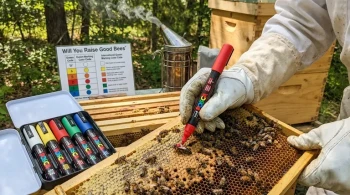
How Queen Bee Age Tracking Boosts Hive Productivity: A Beekeeper’s Guide
Learn how queen bee age tracking boosts hive productivity with color-coded marking and strategic replacement protocols for beekeepers.
Read more
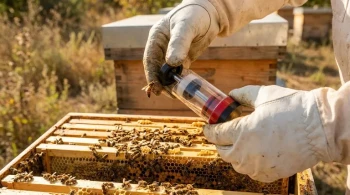
How Queen Clip Catchers Protect Your Hive During Beekeeping Interventions
Learn how queen clip catchers protect your hive during beekeeping interventions, ensuring colony stability and faster recovery.
Read more
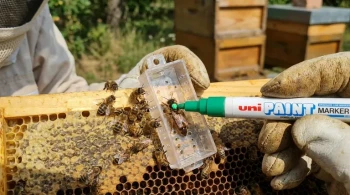
How Queen Bee Marking Transforms Hive Management: A Beekeeper's Guide
Learn how queen bee marking improves hive management with color-coding, swarm prevention, and efficient colony tracking for beekeepers.
Read more
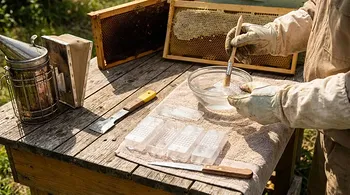
Maximizing Queen Cage Value: A Beekeeper's Guide to Safe Reuse & Long-Term Savings
Learn how beekeepers can safely reuse queen cages to cut costs by 60-70% while maintaining colony health through proper sterilization and durable materials.
Read more
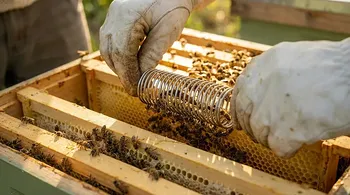
How to Introduce a Queen Bee Successfully Using Queen Cages: A Beekeeper’s Guide
Learn how to introduce a queen bee successfully using queen cages. Discover cage types, step-by-step methods, and expert tips for hive health.
Read more
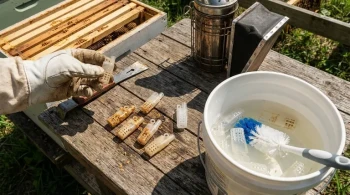
The Queen Cage's Ledger: A Systems Approach to Apiary Biosecurity
Reusing queen cages saves costs but carries hidden risks. A strict sanitation protocol is non-negotiable for preventing disease and ensuring colony health.
Read more
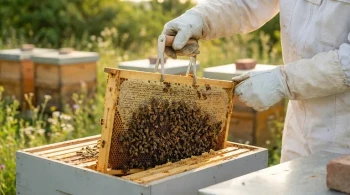
Beyond Lifting: The Frame Gripper and the Psychology of Control in Beekeeping
A frame gripper isn't just for lifting; it's a tool for control, minimizing hive stress and boosting beekeeper confidence for safer apiary management.
Read more
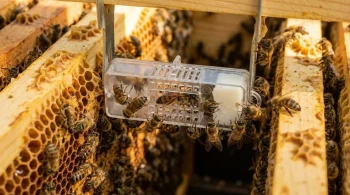
A Timed Release of Power: The Social Engineering of the Queen Cage
A queen cage is not just a box; it's a time-release tool designed to manipulate bee social dynamics for successful colony integration.
Read more
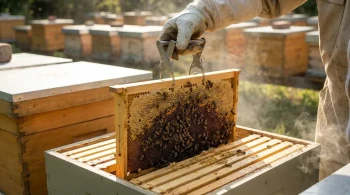
The One-Handed Lift: Why a Simple Frame Grip is Your Apiary's Most Underrated Productivity Tool
Learn how manual frame inspections drain time and resources. Discover how a frame grip boosts operational efficiency, reduces bee stress, and protects your bottom line.
Read more
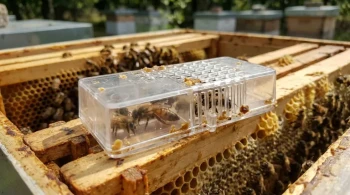
The Diplomatic Interface: Why Queen Cage Maintenance is a Study in Risk Management
Learn how meticulous queen cage maintenance acts as a critical risk management protocol, ensuring hive acceptance through airflow, integrity, and safety.
Read more
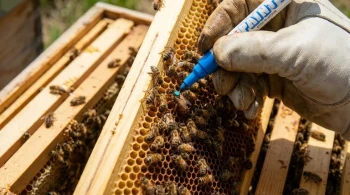
The Hidden Risk in Your Marking Pen: How to Protect Your Queens and Your Profits
Discover why common queen bee marking methods fail and risk your apiary's profits. Learn the science behind a safe, durable mark to protect your most valuable asset.
Read more
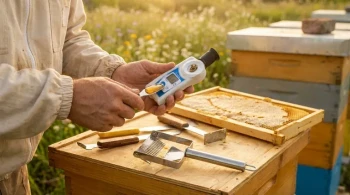
The Margin of Error: Why Honey Refractometers Are a Measure of Professional Trust
Mastering the honey refractometer is not a task, but a discipline for ensuring quality, preventing spoilage, and protecting your reputation.
Read more
The Operator, Not the Optics: Why Honey Refractometer Accuracy Is a Matter of Discipline
Honey refractometer accuracy depends less on the tool and more on a disciplined three-part process: calibration, sample prep, and immediate cleaning.
Read more
Transfer vs. Bottle: The Critical Honey Pump Mistake Costing Your Apiary
Stop damaging your honey and wasting time. Learn the difference between transfer pumps and bottling machines to boost efficiency and protect your product quality.
Read more
Order from Chaos: The Deliberate Design of the Beekeeping Frame Perch
A beekeeper's frame perch is designed for three frames not by chance, but to enforce a workflow that protects bees and improves inspection efficiency.
Read more
The Physics of Trust: Why Your Honey Refractometer Lies Without Temperature Discipline
Temperature changes honey's density, creating false refractometer readings. Learn why thermal equilibrium is key to avoiding fermentation and ensuring quality.
Read more
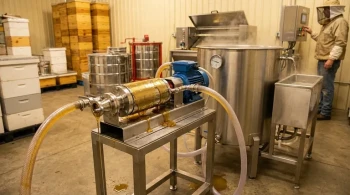
Why Your Honey Pump Is Clogging—And How to Fix It for Good
Struggling with clogged honey pumps and slow processing? Discover the root cause and how the right stainless steel screw pump can transform your efficiency.
Read more