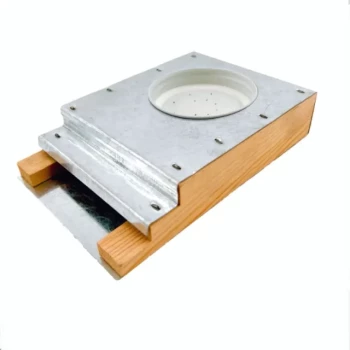
A feeder installed under the hive cover functions as a protected delivery terminal designed to dispense nutritional solutions and therapeutic agents directly to the colony. By locating the food source internally, it simulates the natural intake of nectar and allows bees to feed continuously without exposure to the outside elements.
The primary value of an under-cover feeder is the isolation it provides. It ensures precise delivery of medication and sugar syrup while eliminating the risks associated with external weather and resource competition from other colonies.
The Strategic Function of Internal Feeding
Simulating Natural Consumption
The design of a top-mounted feeder is intended to mimic the biological process of nectar gathering. By placing the nutrient source directly above the colony, bees can access the syrup in a manner that aligns with their natural upward movement toward warmth and food stores.
Precise Delivery of Medications
When managing colony health, accuracy is paramount. An internal feeder acts as a controlled terminal for administering therapeutic agents mixed into sugar syrup.
Because the feeder is enclosed, it ensures the specific colony consumes the full dosage. This is critical for experimental treatments or standard medication regimens where dosage consistency affects survival rates.
Protection from External Weather
Foraging activity typically ceases during rain, high wind, or cold snaps. However, a colony’s nutritional needs do not stop.
A feeder installed under the cover allows the colony to continue consuming resources regardless of external conditions. The hive cover acts as a shield, preventing the syrup from being diluted by rain or cooled excessively by wind.
Prevention of Robbing
Open feeding or external feeders can trigger "robbing," where foreign bees or wasps attack a hive to steal sugar syrup.
Placing the feeder inside the hive, under the cover, drastically reduces the scent of syrup available to the outside world. This secures the resources for the target colony and maintains hive security.
Understanding the Trade-offs and Limitations
The Impact of Extreme Cold on Liquids
While under-cover feeders are excellent for weather protection, liquid syrup has limitations in freezing temperatures. In extreme cold, liquid feed may become inaccessible or too cold for bees to metabolize.
The Role of Physical Spacing (Shims)
Installing feeders or solid food supplements often requires modifying the hive's internal dimensions. For solid food (like candy blocks), a hive shim is often required to create vertical space between the frames and the cover.
This configuration often utilizes a wire mesh to support the solid food. This prevents blockage of the "bee space" and stops debris from falling into the colony, ensuring the bees can climb upward to feed safely.
Making the Right Choice for Your Goal
To maximize the effectiveness of your feeding strategy, align your equipment with your immediate objective:
- If your primary focus is medication delivery: Use a liquid feeder under the cover to ensure the colony consumes the exact dosage of therapeutic agents without outside interference.
- If your primary focus is famine prevention during active seasons: Utilize the under-cover feeder to simulate nectar flow, keeping the colony strong during weather events that stop foraging.
- If your primary focus is winter survival: Acknowledge that liquid feeders may fail in freezing temps; consider using a shim and solid candy supplements to provide accessible energy when the cluster cannot break to feed on syrup.
The most effective feeding strategy uses the hive's own structure to turn nutrition into a controlled, secure resource rather than a variable dependent on nature.
Summary Table:
| Function | Key Benefit | Target Outcome |
|---|---|---|
| Natural Simulation | Mimics upward nectar gathering | Increased intake consistency |
| Medication Delivery | Controlled internal terminal | Accurate dosage & zero waste |
| Weather Shielding | Feed accessibility during rain/cold | Continuous colony development |
| Robbing Prevention | Contained syrup scent | Improved hive security & defense |
| Supplemental Space | Use of shims for solid feed | Enhanced winter survival rates |
Elevate Your Apiary’s Productivity with HONESTBEE
At HONESTBEE, we specialize in empowering commercial apiaries and distributors with the high-performance tools required for modern beekeeping. From precision-engineered hive-making and honey-filling machinery to essential consumables and specialized beekeeping hardware, we provide the full spectrum of equipment to optimize your operations.
Whether you are scaling your honey production or looking for a reliable wholesale partner for quality hive components and feeders, our team is ready to deliver customized solutions. Contact us today to explore our comprehensive wholesale offering and see how we can strengthen your beekeeping business.
References
- Ivana Tlak Gajger, Predrag Sikirić. Stable gastric pentadecapeptide<scp>BPC</scp>157 in honeybee (<i>Apis mellifera</i>) therapy, to control<i>Nosema ceranae</i>invasions in apiary conditions. DOI: 10.1111/jvp.12509
This article is also based on technical information from HonestBee Knowledge Base .
Related Products
- 3.5L Plastic Beehive Frame Feeder Deep Frame Water Feeder for In Hive Use
- Professional In-Hive Bee Feeder HONESTBEE Frame for Beekeeping
- Boardman Entrance Bee Feeder Durable Galvanized Steel and Wood Construction for Beekeeping
- Classic Boardman Entrance Bee Feeder Hive Front Feeding Solution
- HONESTBEE Square Top Hive Bee Feeder Top Bee Feeder
People Also Ask
- What are the technical advantages of using frame feeders for beehives? Maximize Efficiency and Colony Survival
- Can plastic frames be used in any type of beehive? Maximize Your Apiary Efficiency with Durable Solutions
- What are the technical functions and design requirements of plastic feeders? High-Performance Sourcing for Distributors
- What are the advantages of feeding bees inside the hive? Top Benefits for Colony Security and Health
- Are plastic bee hive frames good? A Guide to Modern Durability vs. Natural Appeal