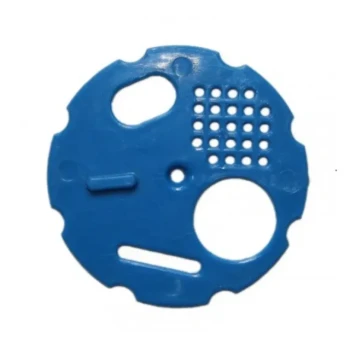
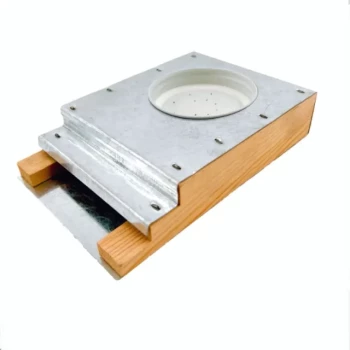
A standardized hive entrance serves as a uniform observation window designed to quantify honeybee traffic with precision. Its primary function is to facilitate the accurate recording of entry and exit frequencies, providing the baseline data necessary to evaluate a colony's external activity levels.
By standardizing the physical threshold where bees enter and exit, researchers can isolate behavioral data from environmental variables. This allows for the precise measurement of foraging vigor and nutritional intake, which is essential for determining how external factors, such as herbicide exposure, impact colony social behavior.
The Mechanics of Standardized Monitoring
Creating a Uniform Observation Window
To accurately compare activity across different colonies, the physical point of entry must be consistent. A standardized entrance eliminates structural variability that could otherwise influence how bees enter or exit the hive.
This uniformity ensures that the data collected—specifically the frequency of crossings—reflects the bees' actual behavior rather than the geometry of the hive. It creates a controlled frame of reference for technicians recording movement per unit of time.
Measuring Foraging Vigor
The entrance is the focal point for assessing the colony’s "foraging vigor." This metric is determined by counting the sheer volume of bees returning to the hive over a set period.
High traffic volume at a standardized entrance typically correlates with active resource gathering. Conversely, a drop in frequency at this specific checkpoint can indicate a decline in colony health or a reaction to environmental conditions.
Quantifying Nutritional and Environmental Stress
Evaluating Pollen Intake
Beyond simple traffic counts, the standardized entrance allows technicians to visually identify and count bees returning with pollen loads. This is a critical metric for estimating the colony's nutritional intake.
Because pollen is the primary protein source for the brood, tracking the number of pollen-bearing bees passing through the entrance provides a direct proxy for the colony's potential for growth and sustainability.
Assessing Chemical Impact
One of the most vital applications of this monitoring method is quantifying environmental stress, particularly from herbicides. Researchers utilize the standardized entrance to record data before and after chemical application.
By comparing these datasets, technicians can identify shifts in social behavior or foraging efficiency. If traffic or pollen collection drops significantly post-application, the standardized entrance data provides the evidence needed to link the chemical stressor to the behavioral change.
Understanding the Trade-offs
The Scope of Observation
While a standardized entrance is excellent for monitoring external flow and foraging success, it is limited to external behavior. It does not provide data on internal colony dynamics, such as brood rearing or queen health.
As noted in broader hive management contexts, internal issues like pest infestations (e.g., Wax Moths) or brood diseases often require physical frame inspection to detect. Relying solely on entrance activity may result in missing early signs of internal collapse that have not yet affected foraging rates.
The Role of Broader Standardization
It is important to recognize that the entrance is just one part of a controlled system. For the data gathered at the entrance to be truly valid, the rest of the hive environment—such as thermal insulation and frame capacity—must also be standardized to eliminate confounding variables like temperature fluctuations or space constraints.
Making the Right Choice for Your Goal
When establishing a protocol for hive monitoring, align your observation methods with your specific objectives:
- If your primary focus is Environmental Impact Assessment: Prioritize pollen load counts at the entrance before and after exposure events to quantify specific stress responses.
- If your primary focus is General Colony Health: Combine entrance monitoring with regular internal inspections to ensure that foraging vigor is not masking underlying pest or brood issues.
A standardized entrance transforms a simple hive opening into a scientific instrument, turning chaotic bee traffic into actionable data regarding colony fitness.
Summary Table:
| Monitoring Metric | Primary Function | Value for Researchers/Beekeepers |
|---|---|---|
| Traffic Frequency | Measures entry/exit volume | Baseline data for colony foraging vigor and social health. |
| Pollen Load Counts | Quantifies protein intake | Estimates colony growth potential and nutritional status. |
| Entrance Uniformity | Eliminates structural variables | Ensures data reflects bee behavior rather than hive geometry. |
| Chemical Impact Tracking | Records pre/post-exposure data | Identifies behavioral shifts due to herbicides or environmental stress. |
Maximize Your Apiary Productivity with HONESTBEE
At HONESTBEE, we understand that commercial success in beekeeping relies on precision and reliability. Whether you are managing a large-scale commercial apiary or operating as a distributor, we provide the industrial-grade tools you need to succeed.
Our comprehensive wholesale range includes:
- Advanced Machinery: Hive-making and honey-filling machines for seamless production.
- High-Quality Hardware: Durable beekeeping tools and standardized equipment for consistent monitoring.
- Essential Consumables: A wide array of industry-specific supplies to maintain colony health.
- Cultural Merchandise: Unique honey-themed products to expand your brand's reach.
Ready to scale your operations with the industry's most reliable equipment? Contact us today to explore our wholesale solutions and see how HONESTBEE can streamline your beekeeping business.
References
- Ivana Macri, Walter M. Farina. Evaluating the Impact of Post-Emergence Weed Control in Honeybee Colonies Located in Different Agricultural Surroundings. DOI: 10.3390/insects12020163
This article is also based on technical information from HonestBee Knowledge Base .
Related Products
- Professional Reversible Beehive Hive Entrance
- Multi-Functional Sliding Hive Entrance for Beekeeping
- Multi-Functional Rotary Hive Entrance Disc for Beekeeping
- Beehive Entrance Discs Plastic Bee Entrance Disc for Bee Hives
- Boardman Entrance Bee Feeder Durable Galvanized Steel and Wood Construction for Beekeeping
People Also Ask
- Where is the hive entrance typically located? Optimize Your Hive's Health and Honey Production
- What role does the size of the entrance play in hive ventilation? Master Beehive Climate Control
- What roles does the hive entrance (piquera) play in beehive management and colony health? Essential Guide for Pro Apiaries
- What are the primary advantages of providing a smaller entrance for a beehive? Boost Defense and Winter Survival
- Why adjust beehive entrance size for humidity? Boost Honey Ripening and Varroa Control in Commercial Apiaries