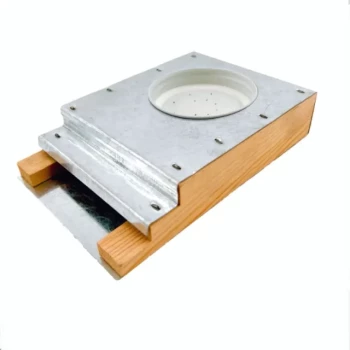
High-capacity feeders serve as a vital emergency life-support system for honeybee colonies when environmental conditions render natural foraging impossible or unproductive. These internal devices are designed to deliver large volumes of warmed sugar syrup or honey water directly to the colony during periods of nectar scarcity, such as late spring frosts or droughts. By providing an immediate, accessible energy source within the hive, they prevent starvation and mitigate the risk of colony collapse.
The core function of a high-capacity feeder is to decouple the colony's survival from external weather conditions, ensuring continuous caloric intake even when nectar-producing plants shut down due to frost, drought, or rain.
The Strategic Purpose of High-Capacity Feeders
Bridging the Nectar Gap
During late spring frosts or prolonged droughts, plants often cease nectar production entirely.
High-capacity feeders bypass this environmental failure by providing a substitute specifically formulated for easy consumption, such as honey water or sugar syrup.
This ensures the colony has the fuel required to function without relying on external blooms that have temporarily failed.
Eliminating Foraging Risks
In adverse weather, particularly cold snaps or frosts, the act of leaving the hive can be fatal for bees.
By locating the food source internally, these feeders remove the need for bees to forage outdoors.
This prevents massive losses of the workforce due to freezing temperatures or exhaustion while searching for non-existent resources.
Critical Outcomes for Colony Health
Preventing Colony Collapse and Starvation
The primary danger during extended periods of poor weather is the rapid depletion of stored food, leading to starvation.
High-capacity feeders provide a bulk "buffer" of energy that stabilizes the colony's nutrition levels.
This intervention directly counters the "empty-nest phenomenon," where a colony abandons the hive or dies off due to a sudden lack of resources.
Fueling Thermoregulation
Honeybees require significant energy to vibrate their wing muscles and generate heat to maintain the hive's core temperature.
The caloric input from these feeders provides the fuel necessary for this thermoregulation.
This creates a stable internal environment, allowing the colony to continue vital activities like brood rearing even when the outside temperature drops.
Operational Considerations and Trade-offs
The Importance of Temperature
It is not enough to simply provide food; the primary reference notes specifically that the syrup or honey water should be warmed.
Cold feed can lower the core temperature of the hive, potentially doing more harm than good during a frost.
The feeder acts as a thermal aid only if the feed itself is introduced at an appropriate temperature to assist the bees' metabolism.
Maintenance and Monitoring
While high-capacity feeders hold a large volume, they are not a "set and forget" solution.
They require monitoring to ensure the feed does not ferment or run out during a prolonged weather event.
Relying on them too heavily during good weather can also discourage natural foraging, so they should be used strategically during scarcity.
Making the Right Choice for Your Colony
High-capacity feeders are tools of intervention, designed to smooth out the volatility of nature.
- If your primary focus is preventing starvation during frost: Ensure the feeder is filled with warmed syrup and placed internally to minimize the bees' movement away from the heat cluster.
- If your primary focus is maintaining brood during drought: Use the feeder to simulate a nectar flow, providing the consistent nutrition required to keep the queen laying and the nurse bees active.
By proactively managing energy reserves with high-capacity feeders, you convert potential colony-ending weather events into manageable periods of confinement.
Summary Table:
| Feature | Function in Adverse Weather | Benefit to Colony |
|---|---|---|
| Bulk Energy Supply | Provides large volumes of sugar syrup or honey water | Prevents starvation and colony collapse |
| Internal Placement | Eliminates the need for bees to leave the hive | Reduces forager mortality from cold/exhaustion |
| Thermoregulation Fuel | Supplies calories for wing muscle vibration | Maintains hive core temperature for brood rearing |
| Emergency Buffer | Bridges the gap when natural nectar flow ceases | Decouples colony survival from external conditions |
Secure Your Apiary’s Resilience with HONESTBEE
Don't let unpredictable weather threaten your commercial operations. HONESTBEE specializes in supporting commercial apiaries and distributors with a comprehensive range of high-performance beekeeping tools and machinery. From specialized hive-making and honey-filling machines to essential consumables and high-capacity feeding solutions, we provide the hardware you need to scale and protect your colonies.
Ready to elevate your wholesale beekeeping supply? Contact our expert team today to discover how our professional-grade equipment can optimize your productivity and ensure your colonies thrive in any climate.
References
- Boyko Neov, Peter Hristov. Biotic and Abiotic Factors Associated with Colonies Mortalities of Managed Honey Bee (Apis mellifera). DOI: 10.3390/d11120237
This article is also based on technical information from HonestBee Knowledge Base .
Related Products
- HONESTBEE Professional Hive Top Bee Feeder Feeding Solution
- Professional Hive Top Bee Feeder for Beekeeping
- HONESTBEE Professional Entrance Bee Feeder Hive Nutrition Solution
- HONESTBEE Entrance Bee Feeder Efficient Hive Front Liquid Feeding Solution for Beekeeping
- 3.5L Plastic Beehive Frame Feeder Deep Frame Water Feeder for In Hive Use
People Also Ask
- How does a bee hive top feeder work? A Guide to Efficient, Protected Feeding
- What is a hive top feeder? A Guide to Efficient, Low-Stress Beekeeping
- Do I need an inner cover with a hive top feeder? Optimize Your Hive Setup for Healthy Bees
- What is a hive top feeder, and how does it work? A Complete Guide to Efficient In-Hive Feeding
- What are the characteristics, advantages, and disadvantages of hive top feeders? Optimize Your High-Volume Feeding