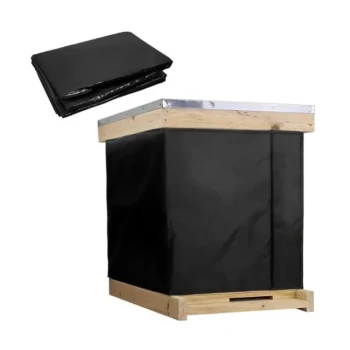
Specialized light-shielding covers protect honeybees by simulating a nighttime environment to halt foraging activities and providing a physical barrier against chemical drift. These covers exploit the natural biological response of bees to cease flight in low-light conditions, effectively confining the colony to the hive during high-risk pesticide application windows. By combining behavioral induction with physical shielding, these tools prevent both direct contact with sprays and the contamination of the hive’s internal environment.
These devices serve as a critical intervention tool that forces "behavioral isolation," ensuring bees remain in a safe zone while toxic pesticides are applied nearby. For distributors, they represent a cost-effective and high-demand component of any professional pollinator protection portfolio.
The Biological Leverage of Light Shielding
Simulating Nighttime Environments
Honeybees are biologically programmed to return to and remain in the hive when light levels drop. Light-shielding covers physically block solar radiation, tricking the colony into a state of dormancy or "nighttime mode."
Forcible Behavioral Isolation
By inducing this low-light response, the covers forcibly prevent foraging bees from exiting the hive during peak spraying times. This ensures that the most active members of the colony are not present in the fields when pesticide concentrations are at their highest.
Absolute Behavioral Control
Unlike chemical repellents, which can be inconsistent, light shielding provides absolute behavioral isolation. It guarantees that the bees stay within the protected structure, removing the variable of bee decision-making from the safety equation.
The Role of Physical Barrier Protection
Blocking Toxic Sprays and Dust
Beyond the biological impact, these covers act as heavy-duty physical hardware that intercepts pesticide drift. They prevent toxic droplets and dust particles from entering the hive entrance or settling on the hive body.
Maintaining Internal Safety Zones
By sealing or covering the hive, these tools create a temporary internal safety zone. This prevents the lethal accumulation of chemicals inside the hive, which is often the cause of long-term colony collapse following a spraying event.
High-Efficiency Poisoning Prevention
These covers are recognized as highly efficient tools for preventing acute poisoning. Their ability to offer immediate protection makes them an essential SKU for agricultural regions where chemical pest control and beekeeping overlap.
Understanding the Trade-offs
Managing Heat and Ventilation
The primary risk when using dark covers is heat stress and lack of airflow within the hive. Users must ensure that while light is blocked, the material allows for sufficient gas exchange to prevent the colony from overheating.
Timing and Operational Precision
The effectiveness of these covers depends entirely on precise timing. They must be applied before foraging begins and removed as soon as the chemical danger has dissipated to avoid disrupting the colony's natural cycle longer than necessary.
Material Durability and Weight
Distributors must balance material density with portability. Covers need to be heavy enough to block light completely but light enough for rapid deployment across large-scale commercial apiaries.
Strategic Sourcing for Professional Distribution
Expert Selection and Product Range
A successful distribution strategy relies on a comprehensive full-spectrum portfolio. Offering various sizes and material grades ensures that you can meet the specific needs of both hobbyist beekeepers and large-scale industrial farmers.
Rapid Response and Delivery
In the agricultural sector, the need for protective gear often arises suddenly due to changing pest pressures. Working with a partner capable of ultra-fast delivery and efficient order fulfillment is vital for maintaining your reputation with end-users.
Technical Expertise in Pollinator Safety
Distributors should leverage deep professional industry expertise when advising clients. Providing clear guidance on how these covers integrate into a broader Integrated Pest Management (IPM) plan adds significant value beyond the physical product.
How to Apply This to Your Portfolio
Making the Right Choice for Your Goal
- If your primary focus is maximizing pollinator safety: Prioritize high-density, light-blocking materials that offer the most reliable behavioral induction for the bees.
- If your primary focus is supply chain efficiency: Partner with a one-stop sourcing provider that offers rapid fulfillment and dedicated customer service to handle seasonal demand spikes.
- If your primary focus is client education: Emphasize the dual-action nature of these covers—both as a biological trigger and a physical shield—to demonstrate technical authority.
By integrating these specialized covers into your inventory, you provide a high-value, scientifically-backed solution that addresses the urgent need for pollinator protection in modern agriculture.
Summary Table:
| Feature | Primary Mechanism | Key Benefit for Beekeepers |
|---|---|---|
| Biological Lever | Simulates nighttime conditions | Forces behavioral isolation and halts foraging |
| Physical Shield | Blocks spray droplets & dust | Prevents acute poisoning and hive contamination |
| Absolute Control | Eliminates bee decision-making | Guarantees safety during high-risk spray windows |
| Strategic Hardware | Heavy-duty, light-blocking material | Provides a durable, repeatable protection solution |
Scale Your Portfolio with HONESTBEE’s Professional Solutions
Are you a distributor or B2B reseller looking to dominate the pollinator protection market? HONESTBEE is your premier one-stop sourcing partner, providing a comprehensive full-spectrum portfolio of beekeeping tools, specialized machinery, and essential consumables.
Why partner with us?
- Comprehensive Wholesale Offering: From light-shielding covers to honey-filling machines and cultural merchandise.
- Unmatched Reliability: Benefit from ultra-fast delivery, high profit margins, and robust OEM/ODM support.
- Deep Industry Expertise: Leverage our technical knowledge and rapid response times to satisfy your most demanding commercial clients.
Contact HONESTBEE Today to secure your supply chain and enhance your market competitiveness with our premium trading services!
References
- Hossam F. Abou‐Shaara. STRATEGIES TO TEMPORARILY REPEL HONEY BEES FROM PESTICIDE-TREATED AREAS. DOI: 10.31467/uluaricilik.1609659
This article is also based on technical information from HonestBee Knowledge Base .
Related Products
- Inner Beehive Cover for Beekeeping Bee Hive Inner Cover
- Acrylic Lid Beekeeping Honey Extractor for Beekeepers
- Professional Insulated Winter Hive Wrap for Beekeeping
- Beekeeping Jacket with Hood and Veil for Beekeepers
- White Cotton Beekeeping Jacket and Veil for Bee Keepers
People Also Ask
- What is the purpose of the inner cover in a beehive? A Key to Hive Health & Easy Management
- What is the function and placement of an inner cover in a beehive? Essential Hive Management Guide
- What is the purpose of the inner and outer covers in a beehive? Essential for Hive Health & Management
- What is a beehive's inner cover and how is it used? Essential Guide for Hive Insulation and Ventilation
- What are the functions of the inner and outer covers on a beehive? Essential Guide for Hive Protection and Management