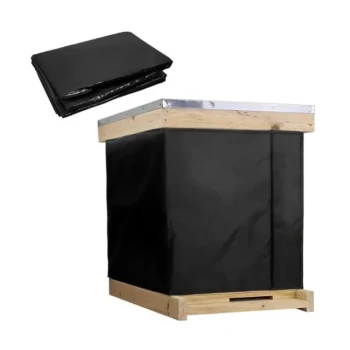
Specialized wintering houses serve as controlled indoor environments designed to protect bee colonies from the extreme volatility of unstable climates. By moving colonies inside a dedicated facility, beekeepers can shield bees from rapid temperature swings, specifically mitigating the dangers posed by frequent cold snaps and sudden snowmelts.
The Core Function These facilities function as a macro-level buffer against environmental unpredictability, prioritizing colony consistency over exposure. The primary value lies in stabilizing the critical winter-to-spring transition, preventing the massive colony losses often caused by erratic weather patterns rather than cold temperatures alone.
Stabilizing the Environment
Mitigating Temperature Fluctuations
In regions with unstable climates, the greatest threat to bees is often not the cold itself, but the fluctuation of temperature. Specialized wintering houses provide a stable thermal baseline, smoothing out the peaks and valleys of external weather. This stability prevents the colony from breaking clustering behavior prematurely during brief warm spells.
Managing the Winter-to-Spring Transition
The transition from winter to spring is a period of high vulnerability due to oscillating freeze-thaw cycles. Apiary houses protect colonies from "false springs" caused by snowmelts followed by rapid freezes. This controlled environment ensures that brood rearing does not accelerate before resources are available or the weather is truly safe.
Reducing Colony Mortality
Preventing Weather-Related Losses
Drastic weather shifts can decimate an exposed apiary regardless of the individual hive's quality. Wintering houses reduce colony losses by removing the variables of wind chill, precipitation, and sudden freezes. This significantly lowers the mortality rate compared to outdoor wintering in volatile regions.
Ensuring Long-Term Safety
For operations in harsh climates, survival is a marathon, not a sprint. These facilities ensure the safety of the bees throughout the entire duration of a long winter. By maintaining a consistent environment, the metabolic stress on the bees is reduced, preserving their energy stores for the eventual spring emergence.
Understanding the Trade-offs: Houses vs. Specialized Hives
The Role of Infrastructure vs. Hardware
While wintering houses provide a controlled macro-environment, specialized hive designs provide a controlled micro-environment. Outdoor specialized hives rely on compact structural arrangements and thermal insulation to resist weather. Wintering houses, conversely, rely on the building itself to provide this protection.
Adaptability and Mobility
Specialized hives are often engineered for migratory management and complex terrain, such as mountain regions. Wintering houses are stationary solutions that offer superior protection but lack the flexibility of migratory hive hardware.
Weather Resistance Requirements
If relying solely on outdoor hives (as noted in supplementary contexts like Mad Honey production), the equipment must have superior sealing and high weather resistance to handle rain and cold. When using a wintering house, the burden of weatherproofing is shifted from the individual box to the facility structure.
Operational Considerations for Unstable Climates
When deciding how to manage wintering in volatile regions, consider your primary operational constraints:
- If your primary focus is Maximum Survival Rates: Utilize specialized wintering houses to eliminate the risks associated with cold snaps and snowmelts during the winter-to-spring transition.
- If your primary focus is Mobility and Migration: Rely on specialized hive designs with superior thermal insulation and compact structures that allow for movement while still offering weather resistance.
- If your primary focus is Production Stability: Combine robust hive hardware with controlled environments to ensure colonies remain strong enough to exploit complex nectar sources immediately upon release.
Ultimately, the specialized wintering house functions as an insurance policy against climate instability, converting a variable environment into a predictable one.
Summary Table:
| Feature | Specialized Wintering House (Macro-Control) | Specialized Insulated Hives (Micro-Control) |
|---|---|---|
| Primary Function | Buffer against rapid external temperature swings | Maintain internal hive heat and thermal insulation |
| Best Used For | Stationary operations in volatile climates | Migratory beekeeping and remote mountain terrain |
| Key Advantage | Eliminates wind chill and snowmelt risks | High mobility and individual box weather resistance |
| Climate Focus | Managing the winter-to-spring transition | Resisting extreme cold and heavy precipitation |
| Operational Goal | Maximum survival through environmental stability | Flexibility across diverse nectar source locations |
Secure Your Apiary’s Success with HONESTBEE
Protecting your colonies from unpredictable climate shifts requires more than just basic tools—it requires professional-grade infrastructure. At HONESTBEE, we specialize in supporting commercial apiaries and distributors with a comprehensive range of beekeeping solutions.
Whether you need specialized hardware like hive-making and honey-filling machines to scale your operations, or high-quality wintering consumables and beekeeping tools to ensure colony survival, we have you covered. Our portfolio extends from industrial machinery to honey-themed cultural merchandise, providing everything you need to thrive in a competitive market.
Ready to elevate your beekeeping business and minimize winter losses?
Contact HONESTBEE Today to explore our wholesale offerings and discover how our expertise can strengthen your supply chain.
References
- Griazkin AV, Feklistov PA. Potential of forest melliferous resources of northwest Russia. DOI: 10.15406/hij.2018.02.00082
This article is also based on technical information from HonestBee Knowledge Base .
Related Products
People Also Ask
- What are the steps to properly wrap a beehive for winter? Ensure Your Colony Survives the Cold
- When is the best time to wrap a beehive for winter? A Guide to Perfect Winterization Timing
- How do professional insulation wraps provide protection for bee colonies? Optimize Winter Survival & Energy Efficiency
- What are the technical benefits of using winter wraps for beehive insulation? Boost Colony Survival & Hive Health
- What are the benefits of using insulated covers for hives? Ensure Colony Survival and Health