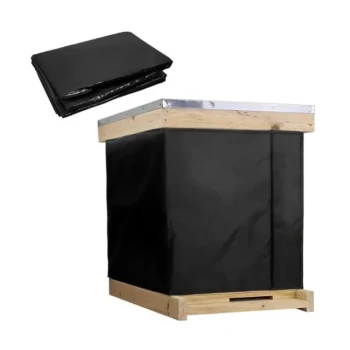
The primary technical benefit of winter wraps is their ability to function as a windproof and waterproof barrier, physically shielding the hive from harsh environmental elements. By preventing cold wind infiltration and keeping freezing precipitation off the hive body, these wraps significantly reduce thermal stress on the colony, particularly for those that are less robust or located in severe climate zones.
Core Insight Winter wraps are a tool for energy conservation, stabilizing the hive environment by blocking wind and water to reduce the colony's metabolic load. However, this protection introduces a critical variable: you must actively monitor the hive to ensure the insulation does not trap excessive moisture, which can be more lethal than the cold itself.
The Mechanics of Thermal Regulation
Stabilizing the Brood Nest
The biological goal of a winter colony is to maintain the brood nest at a stable temperature range of roughly 90-95°F (32-35°C). Winter wraps assist in this by dampening the impact of abrupt external temperature swings. This stability is crucial for colony survival, preventing the "shock" of sudden cold snaps.
Conservation of Metabolic Energy
When a hive is properly insulated against the wind, the colony requires less energy to generate the necessary heat. This directly correlates to food storage; bees consume less honey to stay warm, significantly reducing the risk of starvation before spring sources become available.
Facilitating Early Spring Growth
A well-wrapped hive retains heat more efficiently during the critical transition period of late winter to early spring. This thermal advantage allows the colony to expand the brood nest earlier in the season, as they are less susceptible to late-season freezes that could otherwise kill developing bees.
Environmental Defense and Moisture Control
The Wind and Water Barrier
As noted in the primary documentation, the fundamental role of a wrap is to act as a shield. Wet wooden hive bodies lose their insulating properties and freeze, turning the hive into an icebox. A waterproof wrap prevents this saturation, while the windproof layer eliminates the "wind chill" factor that strips heat away from the cluster.
Preventing Condensation Drip
Warm air rising from the bee cluster naturally holds moisture; when this air hits cold hive walls or the inner cover, it condenses into water. If this water drips back onto the bees, it can be fatal. Insulation keeps the interior surfaces warmer, reducing the temperature differential that causes this dangerous condensation.
Critical Trade-offs and Risks
The Risk of Moisture Entrapment
While wraps keep external water out, they can inadvertently trap internal moisture in. The primary reference emphasizes that wraps must be monitored frequently. If a wrap is too tight or lacks ventilation, the humidity generated by the bees' respiration cannot escape, leading to mold and a damp environment that compromises the colony's health.
Material Durability and Maintenance
Not all insulation materials function equally in all conditions. For example, materials like straw are excellent insulators but lose effectiveness immediately if they get wet. Conversely, synthetic options like polystyrene are moisture-resistant but can degrade over time or be damaged by pests, requiring regular replacement.
Making the Right Choice for Your Goal
Deciding to wrap your hives depends largely on your local climate and the specific state of your colonies.
- If your primary focus is colony survival in a harsh climate: Prioritize heavy windproofing and waterproofing to help weaker colonies conserve their limited honey stores.
- If your primary focus is early spring production: Use insulation to maintain higher internal temperatures, encouraging the queen to lay eggs earlier in the season.
- If your primary focus is minimizing maintenance: Ensure your wrapping setup includes adequate upper ventilation to avoid the need for constant moisture checks.
Success lies in balancing the need for warmth with the absolute necessity of keeping the colony dry.
Summary Table:
| Technical Benefit | Impact on Bee Colony | Primary Mechanism |
|---|---|---|
| Windproofing | Reduces thermal stress and wind chill | Creates a physical barrier against cold drafts |
| Energy Conservation | Lowers honey consumption | Minimizes metabolic heat loss from the cluster |
| Thermal Stability | Protects brood from temperature spikes | Dampens the impact of sudden external cold snaps |
| Moisture Control | Prevents condensation drips | Keeps interior hive walls warmer to reduce dew point |
| Spring Growth | Accelerates early-season expansion | Maintains necessary heat for early brood rearing |
Maximize Your Colony Survival Rate with HONESTBEE
Protecting your commercial apiary from harsh winters requires more than just insulation—it requires high-quality, professional-grade equipment. At HONESTBEE, we specialize in supporting commercial apiaries and distributors with a comprehensive wholesale portfolio.
From durable hive-making machinery to essential wintering consumables and specialized beekeeping tools, we provide the industrial-strength solutions you need to scale your operations. Ensure your colonies thrive and your business grows with our global distribution expertise.
Related Products
- Professional Insulated Winter Hive Wrap for Beekeeping
- Inner Beehive Cover for Beekeeping Bee Hive Inner Cover
- Telescopic Beehive Outer Cover Lid Roof with Galvanised Sheeting for Langstroth Hive and Beehive Outer Cover
- Professional Insulated Plastic Bee Hives
- Premium Three Layer Ventilated Bee Suit with Round Veil
People Also Ask
- What are the steps to properly wrap a beehive for winter? Ensure Your Colony Survives the Cold
- When is the best time to wrap a beehive for winter? A Guide to Perfect Winterization Timing
- How do professional insulation wraps provide protection for bee colonies? Optimize Winter Survival & Energy Efficiency
- What are the benefits of using insulated covers for hives? Ensure Colony Survival and Health
- What materials and methods are used to insulate bee hives against extreme cold? Essential Guide for Colony Survival