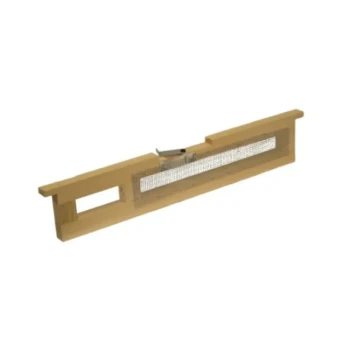
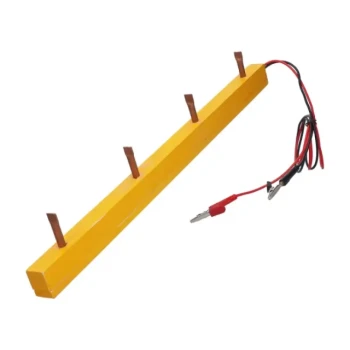
Wooden bars serve as the primary structural interface within a grafting frame, acting as the critical bridge between artificial queen cups and the frame itself. Their main function is to securely hold rows of queen cups in place, preventing them from shifting, falling, or becoming misaligned during the grafting process, hive inspections, or daily colony activity. Additionally, they dictate the physical layout of the cells, ensuring precise spacing so worker bees can effectively access and nurse the larvae.
The wooden bar is not just a passive holder; it is a modular tool that positions developing queens in the optimal "core zone" of the hive. By converting a standard frame into a multi-tiered nursery, these bars balance the need for high-density production with the biological requirements of the bees.
The Mechanics of Structural Support
Securing the Queen Cups
The most immediate function of the wooden bar is physical retention. It provides a rigid, stable surface where blocks or distinct cell cups are affixed.
Without this rigidity, the delicate wax or plastic cups could dislodge during the physical movement of the frame. This stability is vital when transferring larvae from the grafting table to the hive.
Stability During Inspection
Wooden bars allow apiarists to manipulate specific rows of cells without disturbing the entire frame.
Because the bars are removable and rigid, a technician can lift a single bar to check for acceptance or development. This minimizes vibration and disruption to the rest of the colony, which is crucial for sensitive developing larvae.
Optimizing the Biological Environment
Standardized Spacing for Cell Construction
The wooden bar enforces standardized spacing between individual queen cells.
This spacing is not arbitrary; it ensures that nurse bees have sufficient physical room to navigate between cells. Adequate space allows workers to build out the wax walls of the queen cells and reinforce them without overcrowding.
Facilitating Royal Jelly Secretion
Proper spacing provided by the bar layout facilitates the optimal delivery of royal jelly.
When cups are aligned uniformly, nurse bees can efficiently visit each cell to secrete the royal jelly necessary for queen development. This prevents the neglect of specific larvae due to inaccessibility or congestion.
Positioning in the Core Zone
The wooden bars enable the suspension of larvae directly in the central nursing area of the colony.
By suspending the cups in the middle of the frame, the bars keep the larvae in the zone where temperature and humidity are most stable. This mimics the natural environment required for the successful incubation of queen cells.
Operational Efficiency and Scalability
Enabling Batch Management
Wooden bars transform queen rearing from a single-cell process into a batch production system.
A single frame can hold multiple bars, each supporting dozens of cups. This modular design allows large-scale operations to manage distinct batches of queens within a single production cycle.
Streamlining Workflow
The design facilitates efficient grafting operations for technicians.
Bars can be removed from the frame, placed on a stand for grafting, and returned to the hive rapidly. This speed is essential to prevent larval desiccation (drying out) during the transfer process.
Common Pitfalls to Avoid
The Risk of Incorrect Spacing
While bars provide spacing, utilizing bars with improper cup density can lead to burr comb.
If cups are placed too closely together on the bar, bees may bridge the gaps with excess wax. This complicates harvest and can damage the queen cells when they are eventually separated.
Structural Degradation
Wooden bars must remain straight and rigid to function correctly.
Over time, moisture in the hive can cause wood to warp. A warped bar alters the orientation of the queen cells, potentially leading to lower acceptance rates or malformed cells as bees attempt to correct the angle.
Making the Right Choice for Your Goal
To maximize the effectiveness of your queen rearing setup, consider how you utilize the wooden bars based on your specific objectives.
- If your primary focus is High Acceptance Rates: Prioritize bars that position cups in the absolute center of the frame (the core zone) and ensure generous spacing to encourage maximum royal jelly feeding.
- If your primary focus is Large-Scale Production: Utilize frames that support multiple removable bars to maximize the number of larvae per frame, allowing for efficient batch rotation and streamlined inspections.
The wooden bar is the essential component that aligns the beekeeper’s need for efficiency with the colony’s biological need for order and stability.
Summary Table:
| Key Function | Benefit for Queen Rearing |
|---|---|
| Structural Support | Securely holds queen cups to prevent misalignment or falling. |
| Standardized Spacing | Ensures nurse bees have enough room to build cells and deliver royal jelly. |
| Thermal Regulation | Positions larvae in the hive's "core zone" for stable temp/humidity. |
| Batch Management | Enables modular, large-scale production by organizing cells in rows. |
| Workflow Efficiency | Allows rapid removal for grafting to prevent larval desiccation. |
Elevate Your Queen Rearing Efficiency with HONESTBEE
Are you looking to scale your commercial apiary or expand your distribution of professional beekeeping supplies? HONESTBEE provides the industry's most comprehensive range of beekeeping tools, machinery, and consumables. From high-precision grafting frames and wooden bars to advanced hive-making and honey-filling machines, we empower beekeepers to achieve superior results.
Our value to you:
- Premium Wholesale Supply: Full spectrum of specialized hardware and consumables.
- Precision Engineering: Tools designed for optimal biological acceptance and operational speed.
- Scalable Solutions: Equipment tailored for large-scale commercial operations.
Ready to enhance your production? Contact us today to discuss our wholesale offerings and discover how we can support your business growth!
References
- Abdallah Saad Soliman M. Kamel. Evaluation of Colony Parameters for Queen Rearing under Arid Ecosystem Conditions. DOI: 10.21608/japp.2021.234779
This article is also based on technical information from HonestBee Knowledge Base .
Related Products
- Professional Wooden Requeening Frame for Beekeeping
- HONESTBEE Wooden Bar Copper Prong Wire Embedder for Battery Operation
- Wooden Bee Hive Frames for Beekeeping and Wholesale
- Assembled Wooden Bee Frames with Plastic Foundation for Durability and Convenience by HONESTBEE
- Assembled Wooden Bee Frames with Beeswax Foundation Ready to Use by HONESTBEE
People Also Ask
- What are the primary functions of beekeeping frames? Boost Efficiency with Professional Hive Management
- What are the best practices for assembling beekeeping frames? Pro Tips for Maximum Durability & Efficiency
- How are deep, medium, and shallow frames typically used in beekeeping? Optimize Your Hive Setup
- What are the characteristics of wooden frames in beekeeping? Unlock Natural Flexibility & Cost-Effectiveness
- What are the common specifications for wooden beekeeping frames used in colony expansion? Your Complete Guide