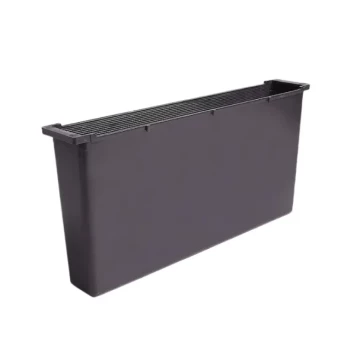
The primary risk associated with exposed surface top feeders is high bee mortality caused by drowning. When bees attempt to access the syrup in these feeders, they frequently become trapped in the liquid and die. This issue is significantly exacerbated by the design of the equipment, particularly the depth of the syrup reservoir.
The depth of the syrup reservoir in exposed top feeders creates a lethal trap for foraging bees. This design characteristic turns a nutritional resource into a significant drowning hazard, resulting in the unintentional loss of the colony's workforce.
Analyzing the Drowning Hazard
The Danger of Exposed Surfaces
The fundamental problem lies in the "exposed surface" nature of these feeders. By presenting an open pool of liquid, the feeder requires bees to interact directly with the syrup surface. Without adequate footing, bees easily slip into the feed.
The Role of Reservoir Depth
The risk of drowning is not uniform across all setups; it is directly linked to volume geometry. The primary reference explicitly notes that drowning is especially prevalent if the reservoir is deep. Deep pools make it nearly impossible for a submerged bee to recover or find a purchase to climb out.
Unintentional Colony Loss
The ultimate consequence of this hazard is the unintentional loss of bees. While the beekeeper's intent is to support the hive with supplemental nutrition, the equipment effectively works against this goal by reducing the population through accidental death.
Understanding the Trade-offs
Accessibility vs. Safety
The design of an exposed surface feeder prioritizes direct access to large amounts of feed. However, this accessibility comes at the cost of safety. The lack of barriers between the bees and the deep liquid creates a high-risk environment for the foragers.
Maintenance vs. Mortality
Using a simple reservoir design might seem easier for filling and maintenance. However, the trade-off is a higher mortality rate within the hive. You must weigh the simplicity of the open reservoir against the potential reduction in your colony's numbers.
Making the Right Choice for Your Goal
To effectively manage your apiary, you must evaluate your equipment based on its impact on bee survival.
- If your primary focus is colony preservation: Prioritize avoiding deep, exposed reservoirs to eliminate the risk of trapping and drowning your bees.
- If your primary focus is equipment evaluation: Inspect the depth of any top feeder you intend to use, acknowledging that deeper exposed liquid correlates directly with higher bee loss.
Select your feeding equipment carefully to ensure you are nourishing your bees rather than endangering them.
Summary Table:
| Hazard Factor | Impact on Bees | Risk Level |
|---|---|---|
| Exposed Syrup Surface | Lack of footing leads to bees slipping into liquid | High |
| Deep Reservoir Depth | Creates lethal traps; impossible for bees to climb out | Critical |
| Equipment Design | Prioritizes feed volume over forager safety | Significant |
| Population Effect | Unintentional loss of the colony's workforce | Severe |
Protect Your Colony with Professional-Grade Solutions
Don't let subpar equipment undermine your apiary's productivity. At HONESTBEE, we understand that every bee counts. We provide commercial apiaries and distributors with high-quality, safety-conscious beekeeping tools and machinery designed to optimize hive health.
Whether you need precision honey-filling machines, durable hive-making equipment, or a complete range of wholesale consumables, our portfolio is built to support your growth. Let us help you scale your operations with reliable hardware and expert industry knowledge.
Maximize your yield and minimize loss—contact HONESTBEE today for your wholesale equipment needs!
Related Products
- HONESTBEE Square Top Hive Bee Feeder Top Bee Feeder
- HONESTBEE Round Hive Top Bee Feeder for Syrup
- Rapid Bee Feeder White Plastic 2L Round Top Feeder for 8 or 10-Frame Bee Hives
- HONESTBEE Professional Hive Top Bee Feeder Feeding Solution
- Professional Hive Top Bee Feeder for Beekeeping
People Also Ask
- How does a bee hive top feeder work? A Guide to Efficient, Protected Feeding
- How to use a top feeder in a beehive? A Guide to Effective Beehive Feeding
- What is the structural design and placement of a beehive top feeder? Optimize Your Apiary's Feeding Efficiency
- What is a top feeder and how is it designed? Maximize Hive Feeding Efficiency
- How do you use a top feeder for bees? Expert Guide to Installation and High-Volume Hive Feeding