On Day 14, immediately before the queens are due to emerge, the transfer process moves from the cell builder to the mating nuclei. You must carefully extract the cell bar, shield the best cells in protectors, embed them between frames in the mating boxes, and open the flight entrances.
Success at this stage relies on identifying the most vigorous cells and mechanically protecting them during introduction. The objective is to secure the cell within the mating box without physically shocking the developing pupa.
Selecting and Protecting the Cells
Extracting the Frame
Begin by going to the cell-building unit. You must extract the cell bar frame to access the developing queens.
Identifying the Best Candidates
Carefully remove the pin cell cups from the bar. When choosing which cells to transfer, prioritize the largest and most stippled cells, as these visual cues often indicate superior development.
Applying Protection
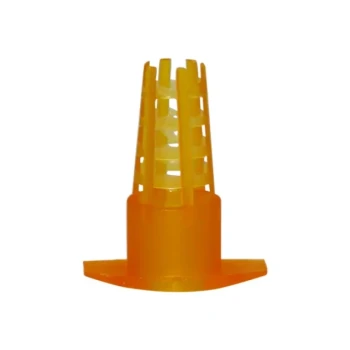
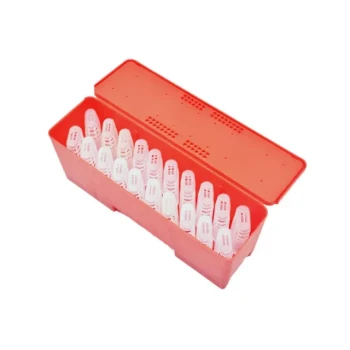
Once separated, place each individual cell cup into a queen cell protector. This piece of hardware is critical for shielding the cell walls from damage during the transfer and introduction.
Installation and Activation
Transport and Placement
Gently transport the protected cells to the mating boxes, ensuring minimal vibration. Press the cell protectors firmly into the wax between two frames in each compartment.
Releasing the Entrance
After the cell is successfully installed, finalize the procedure by modifying the box entrance. Remove the grass from the openings of the mating box to allow the bees to fly freely.
Common Pitfalls to Avoid
The Risk of Rough Handling
The most significant trade-off in this procedure is speed versus safety. The developing queen is extremely fragile at this stage; dropping a cell or jarring the frame can result in wing deformity or death.
Consequences of Poor Selection
It may be tempting to use every cell produced, but this is a mistake. Transferring small or smooth cells usually results in inferior queens. Rigorous culling based on size and stippling is necessary to maintain stock quality.
Making the Right Choice for Your Goal
To maximize your success rate on Day 14, consider these focus areas:
- If your primary focus is Stock Quality: Discard any cell that is not large and heavily stippled, even if it means leaving mating boxes empty.
- If your primary focus is Survival Rate: Prioritize the use of queen cell protectors and ensure the transport to mating boxes is as gentle as possible to prevent shock.
Treat every cell as if it were made of glass to ensure a healthy emergence.
Summary Table:
| Step | Action | Key Focus |
|---|---|---|
| 1. Extraction | Remove cell bar frame from builder | Minimize vibration and temperature shock |
| 2. Selection | Culling based on size & stippling | Prioritize large, textured cells for quality |
| 3. Protection | Install queen cell protectors | Shield cell walls from mechanical damage |
| 4. Installation | Embed between frames in mating boxes | Ensure secure placement in the wax |
| 5. Activation | Open flight entrances | Clear obstructions (e.g., grass) for bee flight |
Elevate Your Queen Rearing Success with HONESTBEE
At HONESTBEE, we understand that Day 14 is critical for commercial apiaries. As a leading supplier to professional beekeepers and distributors, we provide the industrial-grade machinery and precision beekeeping tools you need to ensure every queen emerges healthy and vigorous.
From queen cell protectors and mating nuclei to high-capacity honey-filling machines and specialized hardware, our comprehensive wholesale portfolio is designed to scale your operations.
Ready to upgrade your apiary’s efficiency? Contact us today to explore our full spectrum of beekeeping equipment and essential consumables tailored for industry leaders.
Related Products
- JZBZ Style Shipping Cell Protector for Queen Rearing Kit
- Portable Bee Mating Hive Boxes Mini Mating Nucs 8 Frames for Queen Rearing
- Automatic Heat Preservation 6 Frame Pro Nuc Box for Honey Bee Queen Mating
- Twin Queen Styrofoam Honey Bee Nucs Mating and Breeding Box
- Black 2 Pack Beekeeper Queen Grafting Tool for Bee Queen Larva Transferring Needle
People Also Ask
- What is the purpose of queen cell protectors? Safeguard Your Queen Rearing Success
- How can aluminum foil be used to protect a queen cell? Low-Cost Shielding for Queen Introduction
- What are some methods and types of queen cell protectors? Safeguard Your Queen Introduction Process
- What is the primary reason for using queen cell protectors? Secure Your Yield with Proven Protection
- What is the role of queen cell protectors and emergence cages? Secure Your Genetic Stock and Hive Stability