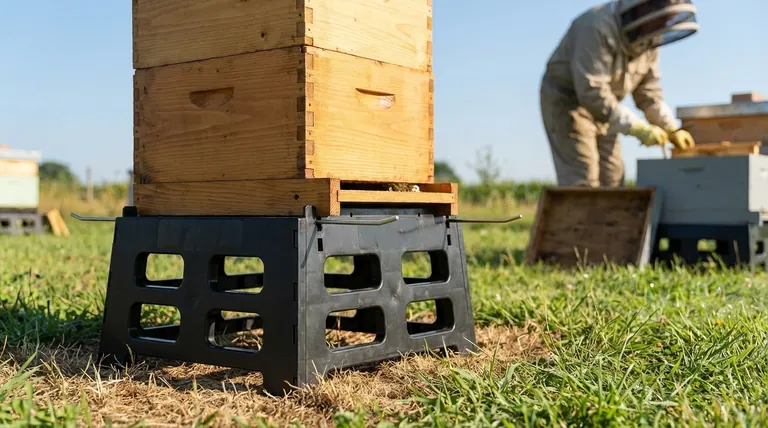
At its core, a hive stand's purpose is to elevate the beehive off the ground. This simple act provides a cascade of critical benefits, from protecting the colony against pests and moisture to making the entire practice of beekeeping more manageable and ergonomic for the beekeeper.
Elevating a hive is a foundational step in responsible beekeeping. It addresses the colony's deep needs for a dry, defensible, and stable home while simultaneously solving the beekeeper's need for comfortable and safe access.
Core Benefits for Hive Health and Security
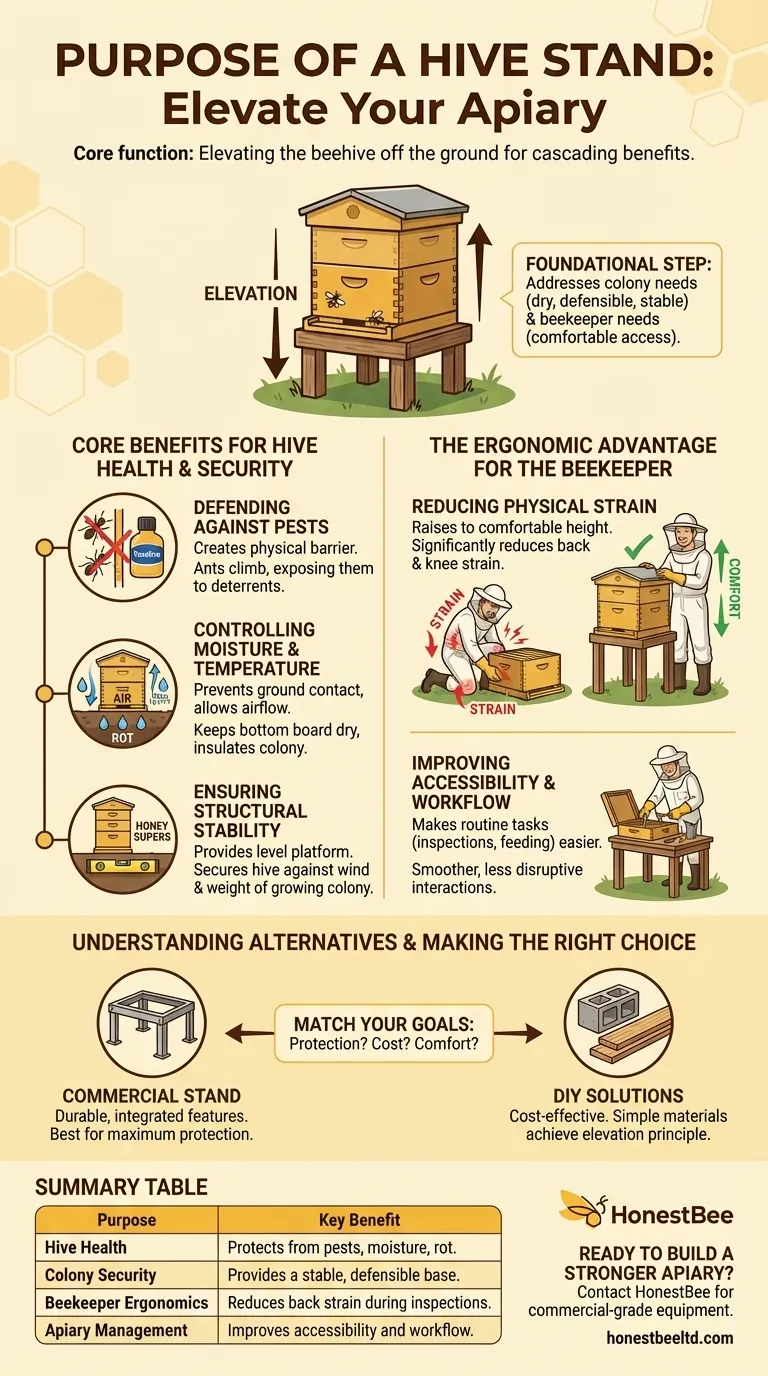
Lifting a hive off the ground directly impacts the well-being and security of the honey bee colony within it. A few inches of clearance can make a significant difference.
Defending Against Pests
Raising the hive creates a physical barrier that makes it much more difficult for crawling pests, particularly ants, to gain access.
Ants often build nests under the warm, protected structure of a hive's bottom board. Elevation prevents this and forces them to climb, exposing them to deterrents.
For added protection, a slippery substance like Vaseline can be applied to the legs of the stand, creating a barrier that ants cannot cross.
Controlling Moisture and Temperature
Direct contact with the ground exposes the hive's wooden bottom board to constant moisture, leading to rot and decay.
Elevating the hive allows for air to circulate underneath, keeping the bottom board dry. This helps insulate the colony and prevent excess moisture buildup inside the hive, which is crucial for overwintering success.
Ensuring Structural Stability
A quality hive stand provides a level and solid platform for the hive. This is essential for keeping the structure secure, especially during unfavorable weather conditions.
As the colony grows and adds heavy honey supers, the total weight can become substantial. A stable base ensures the hive can accommodate this weight without tipping or shifting.
The Ergonomic Advantage for the Beekeeper
A hive stand doesn't just benefit the bees; it is a critical piece of equipment for the sustainability of the beekeeper.
Reducing Physical Strain
Placing a hive directly on the ground forces the beekeeper to constantly bend over or kneel during inspections.
Raising the hive to a comfortable working height significantly reduces strain on the back and knees, making management tasks more enjoyable and physically sustainable long-term.
Improving Accessibility and Workflow
A well-positioned stand makes the hive more accessible for routine tasks like inspections, feeding, and treatment applications. This improved workflow is beneficial for both the beekeeper and the bees, leading to smoother and less disruptive interactions.
Understanding the Alternatives
While the benefits are clear, a commercially purchased hive stand is not the only way to achieve them. The principle of elevation is what truly matters.
Is a Commercial Stand Necessary?
No. While many excellent hive stands are available for purchase, the core function can be achieved with simple materials.
Common DIY Solutions
Many beekeepers opt to create their own stands. Simple, effective solutions can be built from a few cinder blocks with sturdy wood planks laid across the top. The key is that the solution is stable and strong.
Making the Right Choice for Your Apiary
Selecting a hive stand—whether bought or built—is about matching the solution to your specific goals and environment.
- If your primary focus is maximum hive protection: A durable, purpose-built stand often provides the best stability and integrated pest-deterrence features.
- If your primary focus is cost-effectiveness: A DIY solution using materials like cinder blocks provides all the essential benefits of elevation without the added expense.
- If your primary focus is beekeeper comfort: Choose or build a stand that raises the hive's bottom entrance to a height that minimizes your need to bend over.
Ultimately, the best hive stand is any stable solution that lifts your colony off the ground, setting the stage for a healthier hive and a more sustainable beekeeping practice.
Summary Table:
| Purpose | Key Benefit |
|---|---|
| Hive Health | Protects from pests, moisture, and rot. |
| Colony Security | Provides a stable, defensible base. |
| Beekeeper Ergonomics | Reduces back strain during inspections. |
| Apiary Management | Improves accessibility and workflow. |
Ready to build a stronger, more comfortable apiary?
A quality hive stand is a foundational investment for the health of your bees and the longevity of your beekeeping practice. At HONESTBEE, we supply durable, commercial-grade beekeeping equipment to serious apiaries and distributors.
Let us help you equip your operation for success. Contact our wholesale team today to discuss your hive stand and equipment needs.
Visual Guide
Related Products
- Metal Hive Feet Bee Hive Stand for Ant Protection
- Plastic Bee Hive Stand for Beekeeping
- Metal Bee Hive Stand Bee Box Stand for Beekeeping
- Professional Ant-Proof Beehive Stand with Integrated Moat for Beekeeping
- Plastic Bee Frame Beekeeping Hive Frames for Wholesale
People Also Ask
- What are the benefits of elevating a bee hive with a stand or base? Protect Your Colony and Your Back
- How does a beehive stand protect against predators and pests? Essential Strategies for Colony Security
- How should the height of a beehive stand be determined? Find Your Ergonomic Sweet Spot
- What to stand a beehive on? The Best Foundation for a Healthy, Manageable Apiary
- How tall should a beehive stand be? Achieve Optimal Hive Health & Beekeeper Comfort