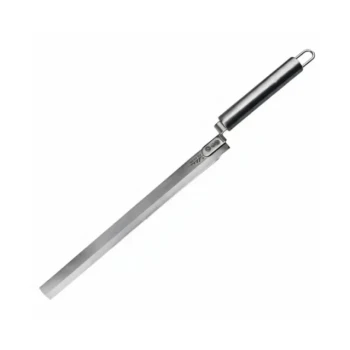
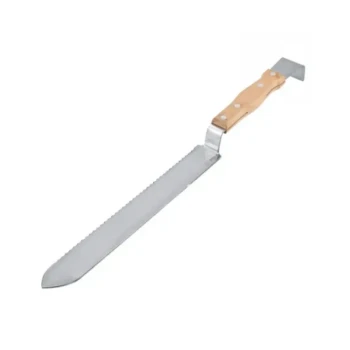
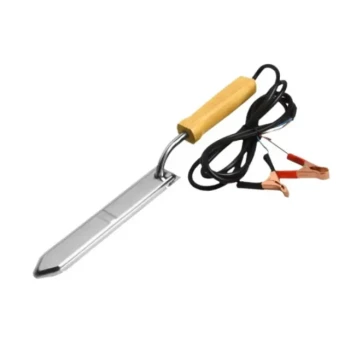
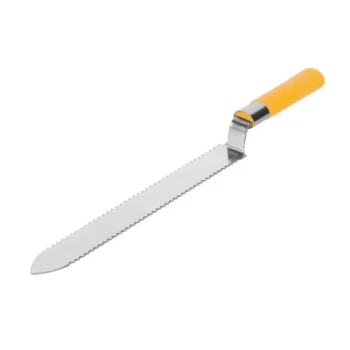
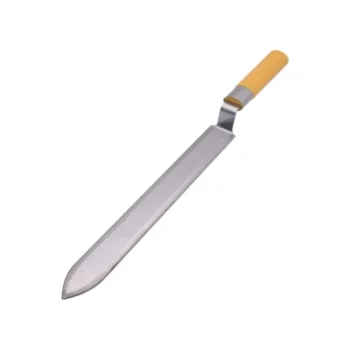
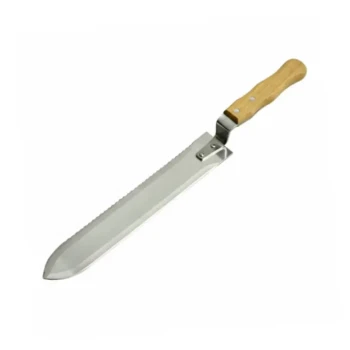
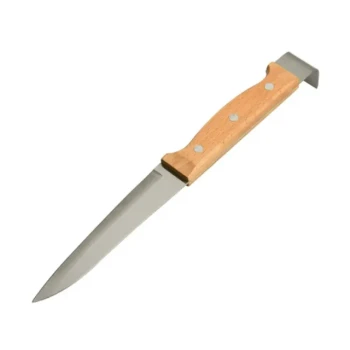
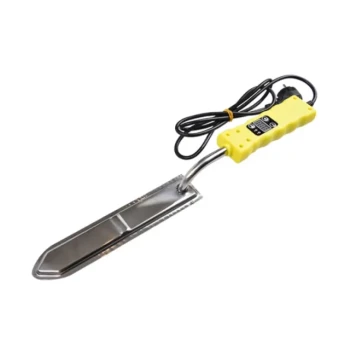
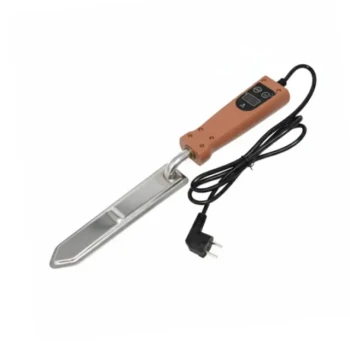
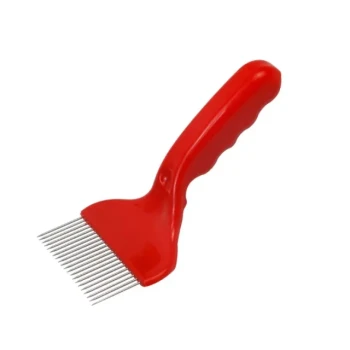
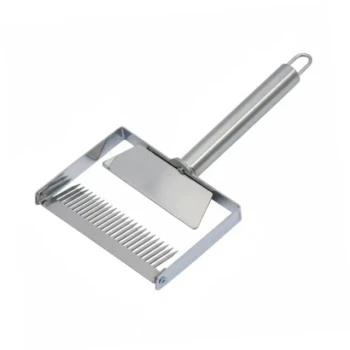
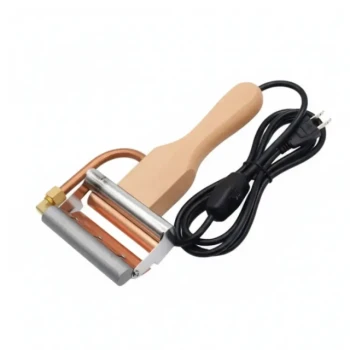
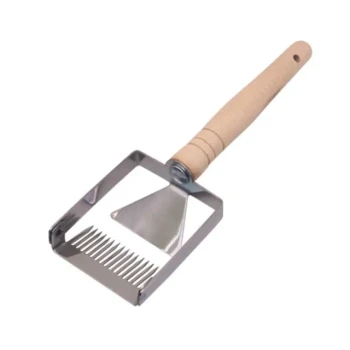
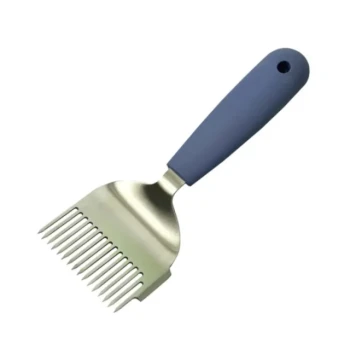
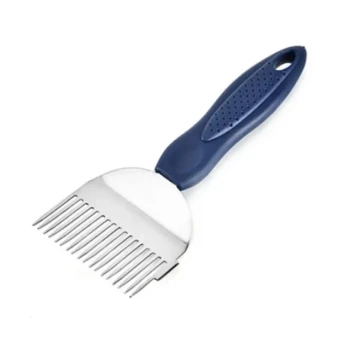
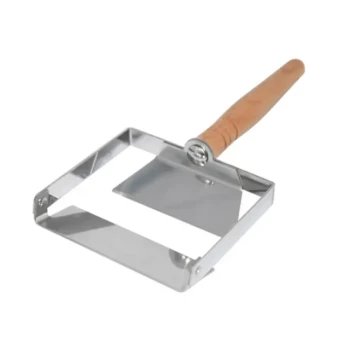
The specific purpose of an uncapping knife is to slice off the wax cappings that bees use to seal ripened honey inside honeycomb cells. This removal is the mandatory first step in the harvest process, transforming the honey from a physically sealed state into an exposed state that allows it to flow freely during mechanical extraction.
The Core Takeaway The uncapping knife acts as the vital transition point between the hive and the jar. It mechanically breaks the wax seal to allow honey to be expelled by centrifugal force, while ideally preserving the underlying cell structure for future reuse by the colony.
The Mechanical Function of Uncapping
Removing the Wax Barrier
Bees naturally seal mature honey with a thin layer of wax, known as the capping. The uncapping knife is designed to slice horizontally across the frame to sever this layer.
Exposing the Honey
Unlike crushing a comb, the knife targets only the surface seal. This action exposes the liquid honey stored within the hexagonal cells without destroying the comb itself.
The Role in Extraction Efficiency
Facilitating Centrifugal Force
Modern honey harvesting typically uses an extractor, which spins frames to pull honey out via centrifugal force. If the wax caps are intact, the honey remains trapped inside the cell. The knife creates the necessary opening for this force to work.
Overcoming Cell Slope
Honey cells are naturally sloped slightly upward to prevent dripping inside the hive. The uncapping knife removes the "lid" of this slope. This ensures that when the frame is spun, the honey can exit the cell efficiently.
Maximizing Yield
A precise cut with an uncapping knife ensures the maximum surface area of honey is exposed. This leads to a higher recovery rate, leaving less honey trapped behind ragged edges or missed spots.
Preserving Comb Integrity
Protecting the Foundation
A key advantage of using a specialized knife over crude methods is the preservation of the cell walls. The knife is meant to skim the top, leaving the depth of the cell intact.
Enabling Immediate Reuse
Because the cell structure remains largely undamaged, the empty frames can be returned to the hive. Bees can immediately begin refilling these cells without spending energy and time rebuilding the wax walls.
Understanding the Trade-offs
Heated vs. Cold Knives
Electric or steam-heated knives slice through wax rapidly with less physical effort, making them ideal for high volume. However, excessive heat can inadvertently scorch the honey if the knife moves too slowly.
Speed vs. Precision
Using a knife is significantly faster than using an uncapping scratcher or fork. However, knives can miss low spots on uneven combs. This often necessitates a secondary pass with a scratcher to ensure every cell is open.
Making the Right Choice for Your Goal
To select the right uncapping approach, assess the scale of your operation and your priorities:
- If your primary focus is speed and volume: Use a heated electric knife to process frames quickly with minimal physical strain.
- If your primary focus is budget or small-scale hobbyist: Use a cold knife, which is effective but requires more physical force and a sawing motion.
- If your primary focus is comb longevity: Ensure your knife depth is set shallowly to remove only the caps, preventing damage to the cell walls so bees can reuse them immediately.
Mastering the uncapping knife is about balancing the need to open the honey cells with the need to protect the comb infrastructure.
Summary Table:
| Feature | Cold Uncapping Knife | Heated Electric Knife | Uncapping Scratcher/Fork |
|---|---|---|---|
| Primary Use | Small-scale / Budget | Commercial / High Volume | Low spots & touch-ups |
| Mechanism | Manual sawing motion | Heat-assisted slicing | Manual scraping/piercing |
| Speed | Moderate | Fast | Slow |
| Pros | Affordable; No scorch risk | Minimal physical effort | Highly precise for uneven combs |
| Cons | Higher physical strain | Risk of scorching honey | Most labor-intensive |
Maximize Your Honey Yield with HONESTBEE Professional Equipment
At HONESTBEE, we specialize in empowering commercial apiaries and distributors with high-performance harvesting solutions. From precision uncapping knives and automated honey-filling machines to large-scale extraction machinery, our comprehensive wholesale portfolio is designed to streamline your production.
Whether you are scaling your operation or sourcing premium tools for distribution, we provide the industrial-grade hardware and essential consumables you need to succeed. Contact us today to discover how our tailored equipment solutions can enhance your efficiency and boost your harvest recovery.
References
- Dipak Khanal, Shreekrishna Neupane. An Overview of Bee Keeping in Rupandehi District, Nepal over Seven Years. DOI: 10.3126/nepjas.v29i01.85433
This article is also based on technical information from HonestBee Knowledge Base .
Related Products
- Professional All-Stainless Steel Uncapping Knife for Beekeeping
- Professional Z-Shaped Multi-Function Uncapping Knife for Beekeeping
- Professional 12V DC Electric Uncapping Knife for Beekeeping
- Professional Serrated Double-Sided Uncapping Knife for Beekeeping
- Professional Stainless Steel Double-Sided Honey Uncapping Knife
People Also Ask
- What is the use of a bee knife? Essential for Efficient Honey Harvesting
- What is an uncapping knife and its function in honey harvesting? Essential Tips for Efficient Extractions
- What is the primary difference between a cold and heated uncapping knife? Choose the Best Tool for Your Honey Harvest
- What is the function of uncapping knives or uncapping forks? Expert Tools for Honey Harvesting Productivity
- How do sustainable harvesting consumables support hive conservation? Boost Colony Health & Commercial Yield