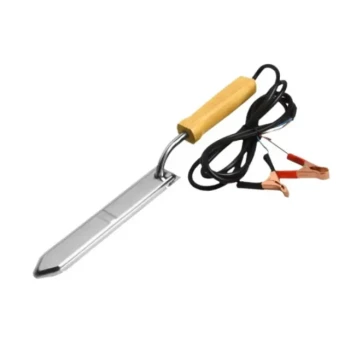
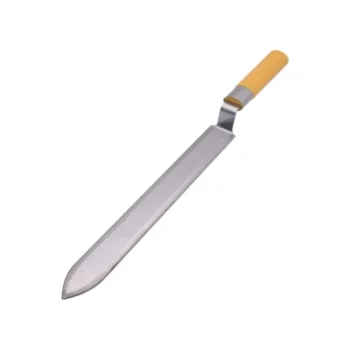
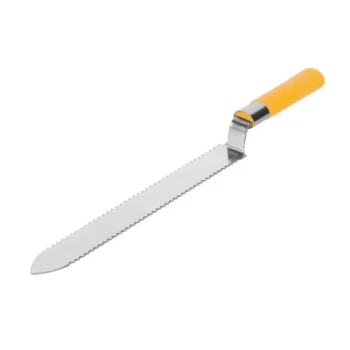
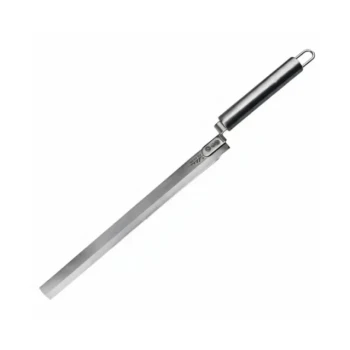
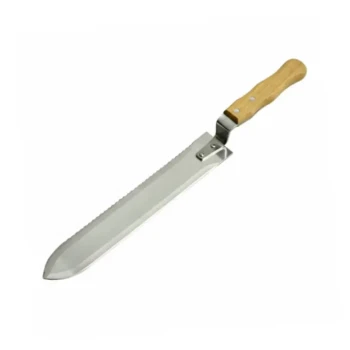
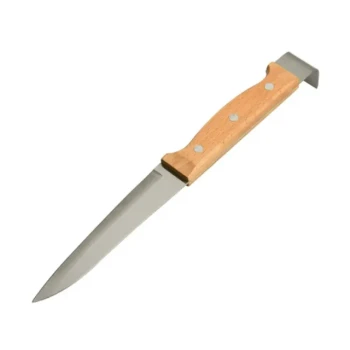
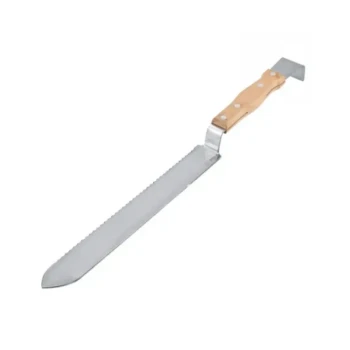
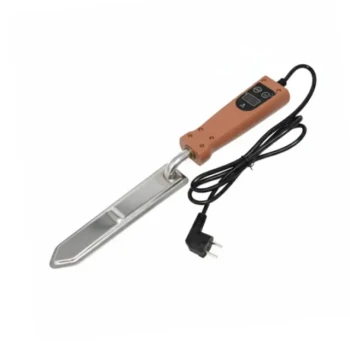
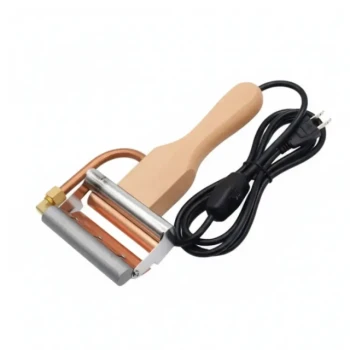
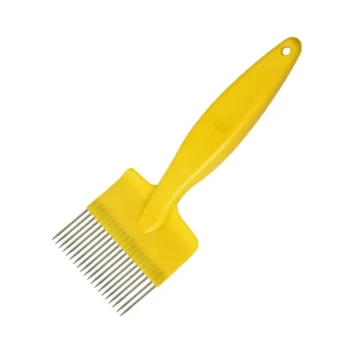
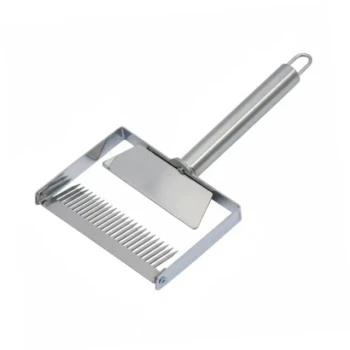
A cold uncapping knife is a specialized manual tool used to physically slice the wax seal off honeycombs. While it is designed with a sharp, flexible blade to cut through cappings at room temperature, the process is often optimized by dipping the blade in hot water to reduce friction and ease the cutting stroke.
The cold knife serves as a foundational tool for apiarists, offering a reliable, low-tech method for uncapping frames. Its effectiveness relies on a sharp, flexible blade that allows the beekeeper to shear off wax caps manually, often utilizing external heat sources like hot water to mimic the efficiency of electric alternatives.
The Mechanics of the Tool
Design Fundamentals
The standard cold knife features a 10-inch blade attached to a wooden handle. This length is specifically chosen to span the width of standard honey frames, allowing for broad, efficient strokes.
The Role of Flexibility
Unlike a rigid kitchen knife, the blade of a cold knife is designed with inherent flexibility. This allows the metal to bend slightly, conforming to the irregularities of the comb and facilitating a smoother uncapping process across the frame.
The Cutting Action
The knife functions by slicing, not sawing. The user slides the blade underneath the wax cappings that seal the honey cells, shearing them off in sheets to expose the honey for extraction.
Optimizing the Workflow
Using Thermal Assist
Although termed a "cold" knife because it lacks an internal heating element, it is frequently used as a warm tool. Beekeepers often keep a container of hot water nearby to heat the blade between frames.
Reducing Drag
Heating the blade in water serves two purposes: it melts the wax slightly upon contact and lubricates the cut. This makes the knife slide through the comb with significantly less resistance than a truly cold blade.
Addressing Missed Cells
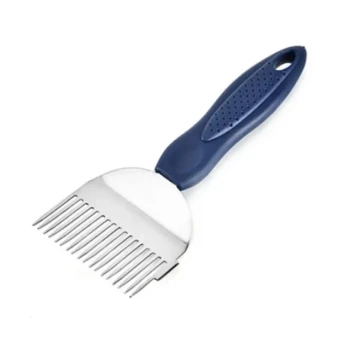
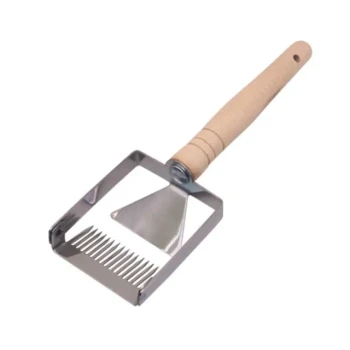
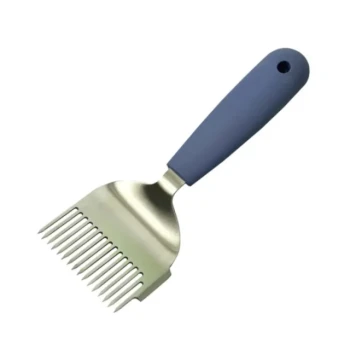
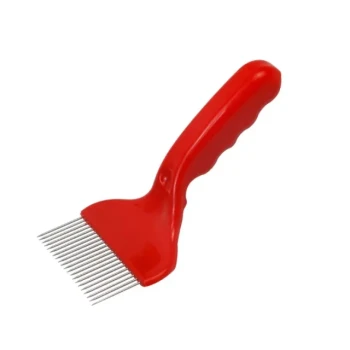
The knife is used to uncap both sides of the frame. Because comb surfaces can be uneven, the knife may miss lower spots. A cap scratcher or uncapping fork is typically used afterward to open these remaining individual cells.
Understanding the Trade-offs
Manual Effort vs. Speed
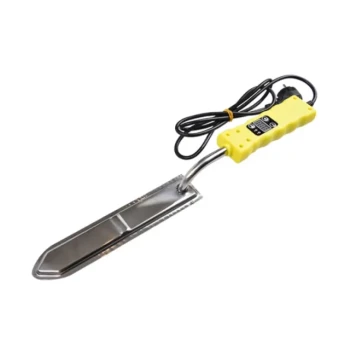
Using a cold knife requires more physical force and technique than an electric knife. While an electric version slices quickly and produces a cleaner cut with less wax debris, the cold knife is significantly more affordable and simpler to maintain.
Wax Filtration
A cold knife may produce more wax debris compared to the "cauterizing" cut of a heated electric knife. This means you may need to perform more thorough filtering of the honey after extraction to remove wax particles.
Scale of Operation
For smaller operations (ranging from 1 to 50 hives), a cold knife is often sufficient. However, as the number of hives increases, the manual effort required to use a cold knife becomes a limiting factor compared to automated or electric solutions.
Making the Right Choice for Your Goal
To select the best uncapping method for your apiary, consider your volume and resources:
- If your primary focus is cost-effectiveness and simplicity: The cold knife is the ideal choice, as it requires no electricity and effectively manages small-scale harvests.
- If your primary focus is speed and efficiency: An electric knife is superior, as it reduces physical strain and accelerates the workflow for larger harvests.
- If your primary focus is minimal wax removal: An uncapping roller or fork offers a non-invasive alternative that pierces cappings rather than slicing them off.
Mastering the cold knife provides a fundamental skill set that scales well until the volume of your harvest demands automation.
Summary Table:
| Feature | Cold Uncapping Knife Specification | Benefit |
|---|---|---|
| Blade Length | Standard 10-inch flexible steel | Spans full frame width for efficient strokes |
| Material | Stainless steel with wooden handle | Durable, rust-resistant, and comfortable grip |
| Operation | Manual slicing (often water-heated) | Low-cost, reliable, and no electricity required |
| Best Suitability | 1 - 50 Hives | Ideal for hobbyists and small-scale apiaries |
| Maintenance | Sharpening and manual cleaning | Extremely low maintenance and long lifespan |
Elevate Your Apiary Efficiency with HONESTBEE
Whether you are scaling a commercial apiary or managing a distribution network, HONESTBEE provides the professional-grade tools you need to succeed. From precision-engineered cold knives and uncapping forks to advanced honey-filling machines and hive-making hardware, our comprehensive wholesale catalog covers every aspect of modern beekeeping.
Why partner with HONESTBEE?
- Full Spectrum Supply: One-stop sourcing for tools, machinery, and industry consumables.
- Commercial Scale: Specialized equipment designed for high-volume efficiency.
- Niche Merchandise: Expand your brand with our unique honey-themed cultural products.
Ready to optimize your harvest and grow your business? Contact our wholesale experts today to discuss your customized equipment needs!
Related Products
- Professional 12V DC Electric Uncapping Knife for Beekeeping
- Professional Stainless Steel Double-Sided Honey Uncapping Knife
- Professional Serrated Double-Sided Uncapping Knife for Beekeeping
- Professional All-Stainless Steel Uncapping Knife for Beekeeping
- Honeycomb Uncapping Knife for Apiculture
People Also Ask
- What is an electric uncapping knife and how is it used? Master Faster Honey Extraction with Heat
- How should an electric uncapping knife be utilized? Master Efficient Honey Extraction with Heated Precision
- What are the advantages and disadvantages of using an electric knife for uncapping honey frames? Boost Extraction Speed
- What are the drawbacks of using an electric knife for uncapping honey frames? Cost and Power Constraints Explained
- How do electric uncapping tools function? A Guide to Faster, Cleaner Honey Harvests