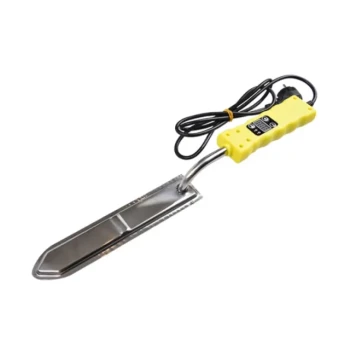
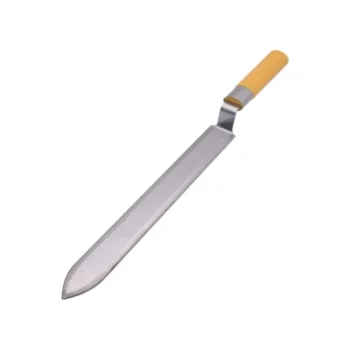
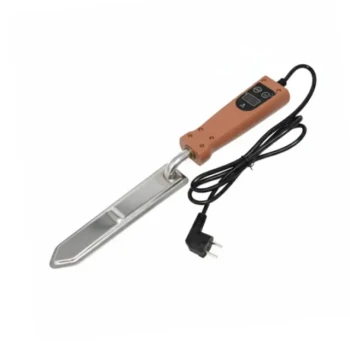
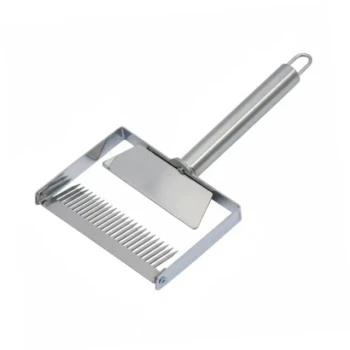
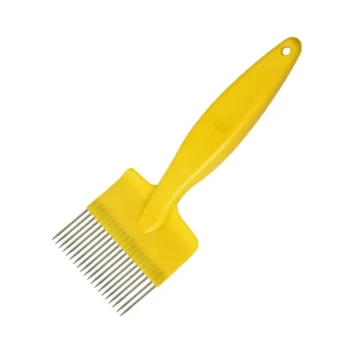
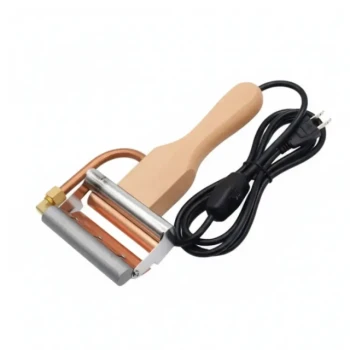
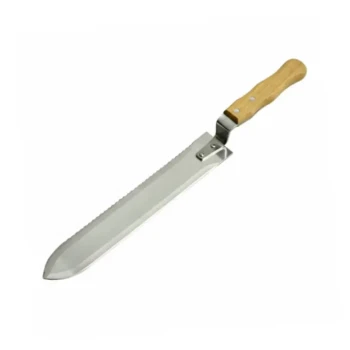
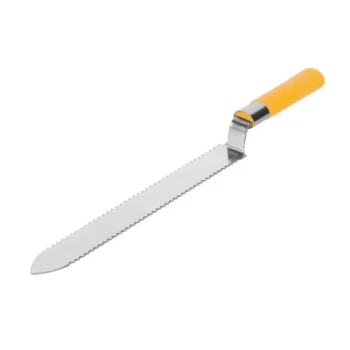
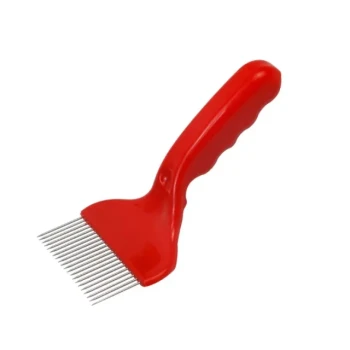
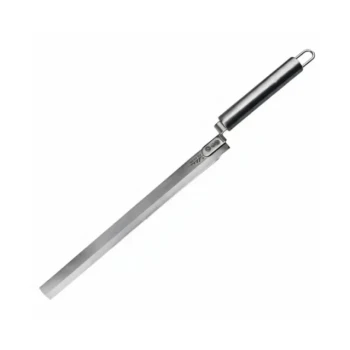
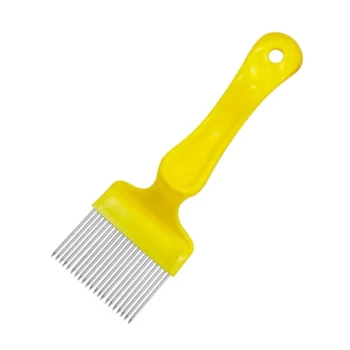
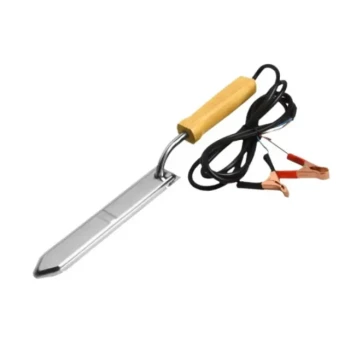
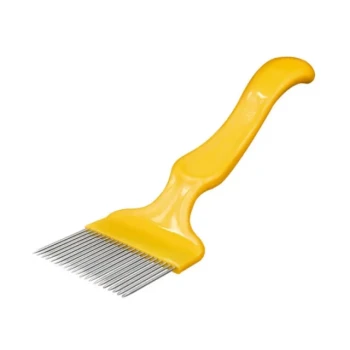
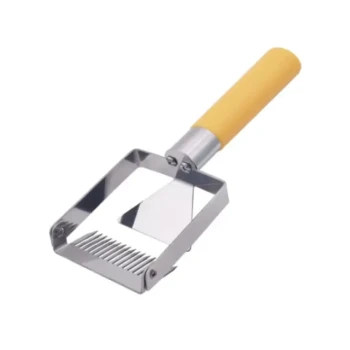
A professional honey uncapping knife specifically targets the beeswax cappings located on the surface of the honeycomb cells. This tool is engineered to slice through the thin wax layer that bees secrete to seal the cells, doing so without damaging the structural integrity of the comb beneath.
The uncapping knife serves as the primary instrument for transitioning honey from a biologically sealed state to an extractable resource. By removing the wax barrier, it grants access to mature honey that has undergone necessary biochemical transformations and moisture reduction.
The Role of Uncapping in Honey Collection
Targeting the Wax Barrier
The primary function of the knife is to manually remove the beeswax cappings. These are the seals bees place over cells once the honey has ripened.
The knife must slice precisely across the frame surface. It removes only the outer seal, exposing the liquid honey inside for subsequent processing.
Verifying Honey Maturity
Uncapping is not merely a physical opening of the cell; it is a confirmation of quality. The presence of a full wax cap indicates the honey has reached a state of reduced moisture.
As noted in the primary reference, this sealed state signifies that the honey has completed its biochemical transformation. Accessing honey at this stage ensures the sample is chemically representative and fully mature.
Mechanics of the Extraction Process
Preparing for Centrifugal Force
Once the wax cappings are sliced away, the honey is physically exposed but remains inside the hexagonal cells. This exposure is a prerequisite for the use of a honey extractor.
The extractor uses centrifugal force to sling the honey out of the uncapped cells. Without the precise removal of the cappings, this force would be ineffective, and the honey would remain trapped.
Preserving Comb Integrity
A professional uncapping knife is designed to be sharp and often heated to glide through wax without tearing. This precision protects the underlying cell walls.
By leaving the cell structure intact, beekeepers allow bees to reuse the comb. This significantly reduces the energy bees must expend rebuilding wax, increasing future productivity.
Understanding the Trade-offs
Precision vs. Speed
While the goal is to remove the cappings, there is a delicate balance in how deep the cut is made.
Cutting too shallow may leave some cells partially sealed. This prevents the honey from releasing during extraction, lowering your yield.
Cutting too deep removes the cappings but also slices into the cell walls. This increases the amount of wax mixed with your honey (slurry) and forces the bees to work harder to repair the damage later.
Making the Right Choice for Your Goal
To maximize your results, match your technique to your primary objective:
- If your primary focus is Chemical Analysis: Ensure you only uncap fully sealed frames, as this guarantees the honey has reached the correct moisture content and biochemical maturity.
- If your primary focus is Production Efficiency: Prioritize a clean, level cut that exposes 100% of the cells to maximize the recovery rate during centrifugal extraction.
- If your primary focus is Colony Health: Use a heated knife to minimize drag and preserve the cell walls, allowing the bees to refill the comb immediately without rebuilding.
Precision in uncapping is the defining factor between simply harvesting honey and efficiently managing a sustainable apiary.
Summary Table:
| Feature | Target/Impact | Benefit |
|---|---|---|
| Primary Target | Beeswax Cappings | Grants access to mature, ripened honey |
| Extraction Prep | Open Cells | Enables centrifugal force to release honey |
| Structural Goal | Cell Wall Integrity | Reduces bee energy expenditure on repairs |
| Maturity Check | Sealed Wax Layer | Confirms low moisture and biochemical maturity |
| Tool Precision | Heated/Sharp Blade | Ensures clean slices without tearing the comb |
Elevate Your Apiary Operations with HONESTBEE
At HONESTBEE, we specialize in empowering commercial apiaries and distributors with professional-grade beekeeping solutions. Whether you need precision honey uncapping tools, high-efficiency honey-filling machines, or durable hive-making equipment, our comprehensive wholesale portfolio is designed to maximize your production efficiency and honey quality.
From essential consumables to specialized industrial machinery, we provide the tools you need to scale your business and sustain colony health. Contact us today to discuss our wholesale offerings and discover how our expertise can streamline your honey collection process.
References
- Sharmin Sultana, Cornelia Locher. Estrogenic Isoflavones in Clover Plants, Flower Nectar, Unripe Honeys and Mature Honeys: A Natural Biochemical Transformation of Isoflavones by Honeybees. DOI: 10.3390/foods13111739
This article is also based on technical information from HonestBee Knowledge Base .
Related Products
- Professional Electric Honey Uncapping Knife with Heated Digital Temperature Control for Beekeeping
- Professional Stainless Steel Double-Sided Honey Uncapping Knife
- Digital Display Electric Honey Uncapping Knife for Beekeeping and Decapping
- Electric Heated Honey Uncapping Knife for Beekeeping
- Serrated Honey Uncapping Knife for Beekeeping and Bee Hive Maintenance
People Also Ask
- Why are electric honey uncapping knives essential? Boost Efficiency & Preserve Comb for Professional Honey Extraction
- What is an electric uncapping knife and how is it used? Master Faster Honey Extraction with Heat
- What are the advantages and disadvantages of using an electric knife for uncapping honey frames? Boost Extraction Speed
- What are the drawbacks of using an electric knife for uncapping honey frames? Cost and Power Constraints Explained
- How should an electric uncapping knife be utilized? Master Efficient Honey Extraction with Heated Precision